
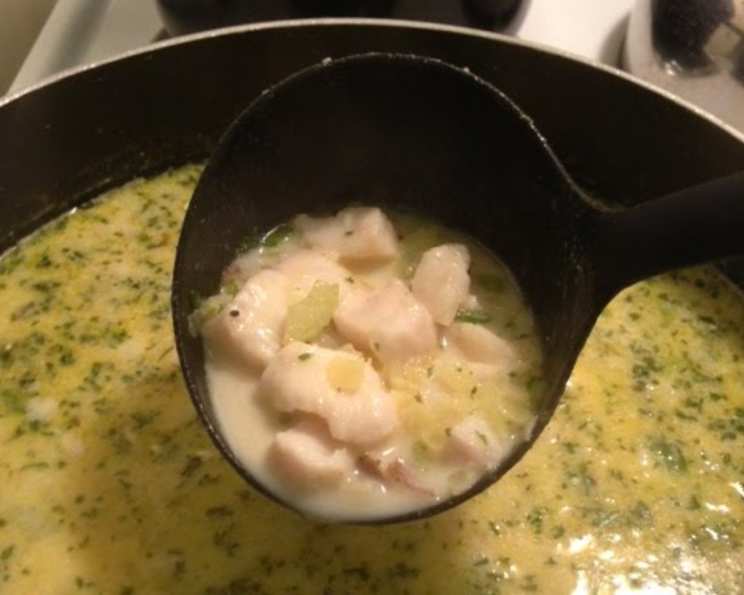
Fish and Potato Chowder: A Culinary Hug
The first time I tasted fish chowder was on a blustery autumn day in Maine. The wind was whipping off the Atlantic, the lobster boats bobbing in the harbor, and the air smelled of salt and woodsmoke. Stepping into that tiny, bustling diner, the warmth and aroma of simmering fish were instantly comforting. That first spoonful – the creamy broth, the tender potatoes, the flaky fish – was like a warm hug from the inside out. It was a simple dish, but it spoke of tradition, resourcefulness, and the enduring appeal of coastal comfort food. This recipe aims to recreate that comforting warmth, bringing a touch of New England charm to your own kitchen.
Recipe Overview
- Prep Time: 20 minutes
- Cook Time: 1 hour 25 minutes
- Total Time: 1 hour 45 minutes
- Servings: 6-8
- Yield: 1 large pot
- Dietary Type: Pescatarian
Ingredients
- 1 lb fish fillet (no bones) (catfish, cod, flounder, tilapia, or haddock recommended)
- 2 cups red potatoes (small dice)
- 1 stalk celery (thin sliced)
- 2 cups onions (small dice)
- 3-4 garlic cloves (minced fine)
- 5 green onions (sliced thin)
- 4-5 cups water
- 1 chicken stock cube
- 2 cups milk
- 1/8 cup butter
- 2 tablespoons plain flour
- 2 tablespoons oil
- 1/4 cup sour cream
- 1/2 teaspoon black pepper
- 1/2 teaspoon sea salt
- 1 tablespoon cajun seasoning
- 1/2 teaspoon turmeric
- 1/2 teaspoon garlic powder
- 1/4 teaspoon cayenne
- 2 bay leaves
- 1/4 teaspoon nutmeg
- 1 tablespoon parsley (minced)
Equipment Needed
- Medium-sized pot
- Large stock pot
- Knife
- Cutting board
- Measuring cups and spoons
- Stirring spoon
Instructions
- In a medium-sized pot, bring 5 cups of water to a boil. Add the chicken stock cube and the diced red potatoes. Cook for about 10-15 minutes, or until the potatoes are tender. Keep warm until needed. You want the potatoes to be easily pierced with a fork but not falling apart.
- In a larger stock pot, melt the butter over medium heat. Add the olive oil. Once the butter is melted and shimmering, add the diced onions, minced garlic, sliced celery, and sliced green onions. Sauté these aromatic vegetables together.
- Add the bay leaves, black pepper, sea salt, cajun seasoning, turmeric, garlic powder, and cayenne to the sautéing vegetables.
- Cook the vegetable and spice mixture for about 10 minutes, or until the onions are softened and translucent, stirring occasionally to prevent burning.
- Add the plain flour to the pot and stir constantly for about 5-6 minutes until the flour starts to brown slightly. This creates a roux, which will thicken the chowder. Be careful not to burn the flour, as this will impart a bitter taste.
- Bring the potatoes and their cooking water back up to temperature. Carefully pour the potato mixture into the larger stock pot with the sautéed vegetables and roux. Stir well to dissolve the flour and create a smooth base for the chowder.
- Bring the mixture to a boil, stirring occasionally. Then, add the milk and sour cream, stirring well to fully incorporate the sour cream and prevent it from curdling.
- Dice the fish fillet into small, bite-sized pieces. Add the diced fish to the chowder and stir gently.
- Turn the heat down to medium-low, cover the pot, and let the chowder cook for about 1 hour, stirring occasionally to ensure it’s not scorching or sticking to the bottom of the pot. The fish should be cooked through and flaky, and the flavors should have melded together beautifully.
- Before serving, stir in the minced parsley and nutmeg.
- Dish out and enjoy!
Expert Tips & Tricks
- Don’t overcook the fish: Overcooked fish will become rubbery and lose its flavor. Cook just until it’s opaque and flakes easily with a fork.
- Adjust the spice level: The amount of cayenne pepper can be adjusted to your preference. If you’re sensitive to spice, start with a smaller amount and add more to taste.
- Make it ahead: The chowder can be made a day ahead of time and reheated. This allows the flavors to meld together even more.
- Thickening the Chowder: If you prefer a thicker chowder, you can mix a tablespoon of cornstarch with two tablespoons of cold water and stir it into the chowder during the last 15 minutes of cooking.
- Fish Selection: For a richer flavor, consider using a combination of fish fillets. Smoked fish, in moderation, can also add a wonderful depth of flavor.
Serving & Storage Suggestions
Serve the fish and potato chowder hot, garnished with a sprinkle of fresh parsley and a dollop of sour cream (optional). Old-fashioned saltine crackers or crusty bread are excellent accompaniments. A dash of your favorite hot sauce can also add a pleasant kick.
Leftover chowder can be stored in an airtight container in the refrigerator for up to 3 days. For longer storage, freeze the chowder in freezer-safe containers for up to 2 months. To reheat, thaw the chowder in the refrigerator overnight and gently warm it on the stovetop over medium-low heat, stirring occasionally. Be careful not to boil it, as this can cause the milk to curdle. You can also reheat it in the microwave in 1-minute intervals, stirring in between.
Nutritional Information
| Nutrient | Amount per Serving | % Daily Value |
|---|---|---|
| Calories | 301 kcal | N/A |
| Calories from Fat | N/A | N/A |
| Total Fat | 14.2 g | 21% |
| Saturated Fat | 6.2 g | 31% |
| Cholesterol | 68.2 mg | 22% |
| Sodium | 550.2 mg | 22% |
| Total Carbohydrate | 21.3 g | 7% |
| Dietary Fiber | 2.5 g | 9% |
| Sugars | 3.7 g | N/A |
| Protein | 22.5 g | 45% |
Note: Nutritional information is an estimate and may vary based on specific ingredients and portion sizes.
Variations & Substitutions
- Seafood Medley: Instead of using just one type of fish, try a combination of seafood such as cod, shrimp, and scallops.
- Smoked Fish Chowder: Add a touch of smoked haddock or salmon for a smoky depth of flavor. Use about 4 ounces of smoked fish per recipe.
- Spicy Chowder: Increase the amount of cayenne pepper or add a pinch of red pepper flakes for a spicier kick.
- Vegetarian Chowder: Omit the fish and use vegetable broth instead of water and a chicken stock cube. Add extra vegetables such as corn, carrots, or peas.
- Dairy-Free Chowder: Substitute the milk with unsweetened almond milk or coconut milk and omit the sour cream or replace it with a dairy-free sour cream alternative.
FAQs (Frequently Asked Questions)
Q: What kind of fish is best for fish chowder?
A: Mild, white-fleshed fish such as cod, haddock, flounder, tilapia, or catfish work best. These fish have a delicate flavor that complements the creamy broth and don’t fall apart easily during cooking.
Q: Can I use frozen fish?
A: Yes, frozen fish can be used. Thaw it completely before dicing and adding it to the chowder. Pat it dry to remove excess moisture.
Q: How do I prevent the milk from curdling?
A: To prevent curdling, add the milk and sour cream at the end of the cooking process and heat gently over low heat. Avoid boiling the chowder after adding the dairy.
Q: Can I freeze fish chowder?
A: Yes, fish chowder can be frozen for up to 2 months. However, the texture of the potatoes and fish may change slightly after freezing and thawing.
Q: How can I make the chowder thicker?
A: You can thicken the chowder by adding a slurry of cornstarch and cold water (1 tablespoon cornstarch mixed with 2 tablespoons water) during the last 15 minutes of cooking. Stir it in gradually until the desired consistency is reached.
Final Thoughts
Fish and potato chowder is more than just a recipe; it’s an experience. It’s a taste of comfort, a celebration of simple ingredients, and a warm embrace on a chilly day. I encourage you to try this recipe and make it your own. Feel free to experiment with different types of fish, add your favorite vegetables, and adjust the spices to your liking. Whether you’re a seasoned chef or a novice cook, I hope this recipe brings you as much joy as it has brought me. Enjoy!