
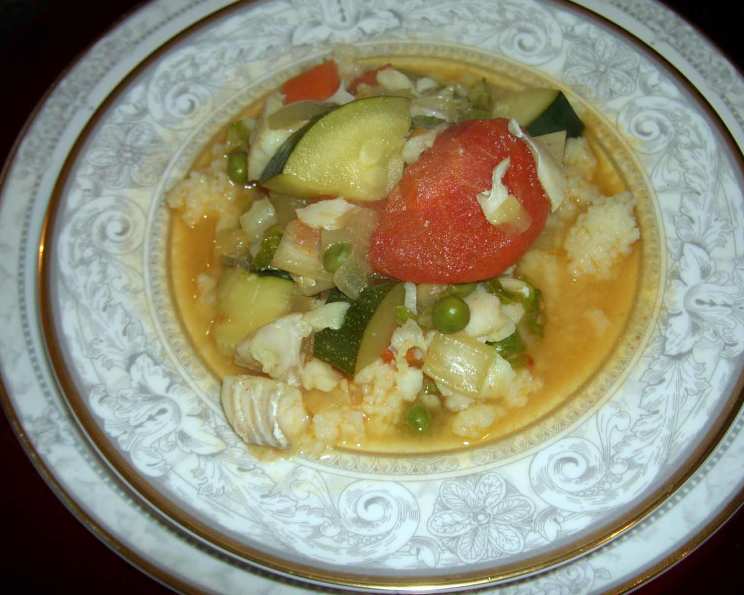
Fish Couscous: A Tunisian Coastal Delight
My first taste of fish couscous was a revelation. It wasn’t in Tunisia, mind you, but in a tiny, unassuming restaurant in Marseille. The aroma alone – a heady blend of saffron, cumin, and the briny scent of the sea – transported me. I remember the warmth of the earthenware bowl in my hands, the delicate flakes of fish mingling with the perfectly steamed couscous, and the slow burn of the harissa that lingered on my tongue. It was a dish that spoke of sun-drenched shores and generations of culinary tradition, and I’ve been chasing that flavor ever since.
Recipe Overview
- Prep Time: 30 minutes
- Cook Time: 1 hour 40 minutes
- Total Time: 2 hours 10 minutes
- Servings: 6
- Dietary Type: Dairy-Free
Ingredients
- 3 lbs firm-fleshed fish, cut into large slices
- 2 large onions, chopped
- 2 celery stalks, cut in chunks
- 3 carrots, cut in chunks
- 3 small turnips, quartered
- 3 zucchini, cut in chunks
- 1 cup cabbage, shredded
- ½ cup shelled peas
- 3 tomatoes, skinned and quartered
- Salt to taste
- 1 pinch cayenne
- 2 quarts water
- 1 lb couscous
- 3 tablespoons oil (vegetable or olive)
- ½ teaspoon saffron thread
- Harissa to taste (or chili garlic paste as a substitute)
For the Tabil Spice (or substitute ground cumin and coriander):
- 1 tablespoon coriander seed
- 1 ½ teaspoons caraway seeds
- 2 garlic cloves
- 1 teaspoon crushed dried chili
Equipment Needed
- Large heavy-bottomed pan or Dutch oven
- Large bowl
- Steamer or colander lined with cheesecloth
- Mortar and pestle (or spice grinder)
- Oven
Instructions
-
Begin by preparing a flavorful fish stock. In your large pan, combine the fish heads and any vegetable trimmings (carrot tops, celery ends, onion skins – all well-cleaned, of course!) with salt, a pinch of cayenne, and 5 cups of the water. Bring this mixture to a simmer.
-
Let the stock simmer gently for 20 minutes, allowing the flavors to meld and deepen. After simmering, strain the stock through a fine-mesh sieve or cheesecloth-lined colander. Reserve the strained stock; this will be the flavorful base for your couscous stew. Discard the solids.
-
While the stock simmers, focus on the couscous. In a large bowl, place the couscous grains and add 2 ½ cups of water. Stir well to ensure the grains are evenly moistened. Set aside for 10 minutes. This allows the couscous to absorb the water and soften.
-
After 10 minutes, use your fingers to fluff up the couscous grains, breaking up any clumps that may have formed. This ensures even steaming later on. Then, sprinkle the couscous with 2 tablespoons of the oil and mix thoroughly. This helps to prevent the couscous from sticking together during steaming.
-
Now, prepare the Tabil spice blend (or skip to the next step if you’re substituting ground cumin and coriander). In a mortar, combine the coriander seed, caraway seeds, garlic cloves, and crushed dried chili. Pound all of these ingredients with the pestle until they are coarsely ground.
-
Next, dry the spice mixture in a preheated oven at 200 degrees F for about 30 minutes. This drying process intensifies the flavors and aromas of the spices. Keep a close eye on it to ensure it doesn’t burn.
-
Once the spice mixture is very dry, grind it into a fine powder using the mortar and pestle or a spice grinder. This Tabil spice blend can be stored in an airtight container for up to 4 months.
-
In the same large, heavy pan used for the stock, heat the remaining 1 tablespoon of oil over medium heat. Add the chopped onions and sauté until they are softened and golden brown. This step is crucial for building the flavor base of the stew.
-
Add the celery, carrots, and turnips to the sautéed onions. Pour in the reserved fish stock, adding water, if necessary, to make up a total of 2 quarts of liquid.
-
Stir in the saffron threads, 1 ½ teaspoons of the prepared Tabil spice (or cumin and coriander to taste), and salt to taste. Give everything a good stir to combine the flavors.
-
Cover the pan and bring the mixture to a simmer. Reduce the heat and simmer gently for 15 minutes, allowing the vegetables to soften slightly.
-
After 15 minutes, add the remaining vegetables: the zucchini, shredded cabbage, shelled peas, and skinned and quartered tomatoes. Stir gently to incorporate them into the stew.
-
Now it’s time to steam the couscous. Place the prepared couscous into a steamer set over the pan of simmering vegetables. If you don’t have a steamer, you can use a colander lined with cheesecloth that fits snugly on top of the pan.
-
Steam the couscous for 10 minutes, ensuring that the steam penetrates the grains evenly. Check the liquid level in the pan and add more water if necessary, keeping it at a steady simmer so that the steam continues to cook the couscous.
-
After 10 minutes, add the fish slices to the simmering stock and vegetables. Simmer until the fish is cooked through, about 10-12 minutes. The fish should be opaque and flake easily with a fork. Be careful not to overcook the fish, as it will become dry.
-
Once the couscous is steamed and the fish is cooked, turn the couscous out into a large bowl. Use a fork to break up any lumps and fluff the grains.
-
To make a hot-tasting sauce, take out a ladleful of the stock from the stew and stir in harissa (or chili garlic paste) to taste. Adjust the amount of harissa to your desired level of spiciness.
-
Finally, serve the stew either on top of the couscous or separately, allowing diners to combine them as they please. Drizzle with the harissa-infused sauce.
Expert Tips & Tricks
- For an even richer stock, consider roasting the fish bones and vegetable trimmings before simmering. This adds depth of flavor.
- If you don’t have time to make your own Tabil spice blend, use a high-quality store-bought blend or simply substitute with ground cumin and coriander. Adjust the amounts to your taste.
- To prevent the couscous from becoming mushy, avoid over-steaming it. Check it periodically and fluff it with a fork to ensure even cooking.
- Don’t be afraid to experiment with different types of fish. Haddock, cod, sea bass, or even shrimp work well in this dish.
- If you like a thicker sauce, you can whisk a tablespoon of cornstarch with a little cold water and stir it into the stew during the last few minutes of cooking.
Serving & Storage Suggestions
Serve the fish couscous hot, garnished with fresh cilantro or parsley, if desired. The stew and couscous can be served separately, allowing each person to assemble their own plate. Leftovers can be stored in an airtight container in the refrigerator for up to 3 days. To reheat, gently warm the stew on the stovetop or in the microwave. Reheat the couscous separately by steaming it for a few minutes or microwaving it with a tablespoon of water. The fish may become slightly drier upon reheating.
Nutritional Information
Note: Nutritional information is an estimate and may vary based on specific ingredients and portion sizes.
| Nutrient | Amount per Serving | % Daily Value |
|---|---|---|
| Calories | 434 kcal | N/A |
| Total Fat | 8.1 g | 12% |
| Saturated Fat | 1.2 g | 6% |
| Cholesterol | 0 mg | 0% |
| Sodium | 83.9 mg | 3% |
| Total Carbohydrate | 78.2 g | 26% |
| Dietary Fiber | 9.4 g | 37% |
| Sugars | 9.4 g | N/A |
| Protein | 13.6 g | 27% |
Variations & Substitutions
- Spice Level: Adjust the amount of harissa or crushed dried chili to suit your preferred spice level.
- Vegetables: Feel free to swap out the vegetables based on seasonal availability or personal preference. Bell peppers, eggplant, or butternut squash would be delicious additions.
- Gluten-Free: Use gluten-free couscous for a gluten-free version.
- Protein: Substitute the fish with chicken or chickpeas for a different protein source.
FAQs (Frequently Asked Questions)
Q: Can I make this recipe ahead of time?
A: Yes, you can make the stew a day ahead of time. Store it in the refrigerator and reheat it before serving. Prepare the couscous fresh for the best texture.
Q: What kind of fish is best for this recipe?
A: Any firm-fleshed white fish works well, such as haddock, cod, sea bass, or grouper.
Q: Can I use pre-made fish stock instead of making my own?
A: Yes, you can use a good-quality pre-made fish stock if you’re short on time.
Q: How do I know when the fish is cooked through?
A: The fish is cooked when it is opaque and flakes easily with a fork. Be careful not to overcook it, as it will become dry.
Q: What is harissa, and can I substitute it?
A: Harissa is a hot chili paste commonly used in North African cuisine. If you can’t find harissa, you can substitute it with chili garlic paste, sriracha, or a mixture of paprika and cayenne pepper.
Final Thoughts
This Fish Couscous is more than just a recipe; it’s a journey to the sun-kissed shores of Tunisia, a celebration of vibrant flavors and simple, wholesome ingredients. I encourage you to try this recipe and let it transport you to your own happy place. Don’t hesitate to experiment with different fish, vegetables, and spice combinations to create your own signature version. And please, share your feedback and culinary adventures – I’d love to hear about your experience! This dish pairs wonderfully with a crisp, dry white wine, such as a Sauvignon Blanc or a Vermentino. Bon appétit!