
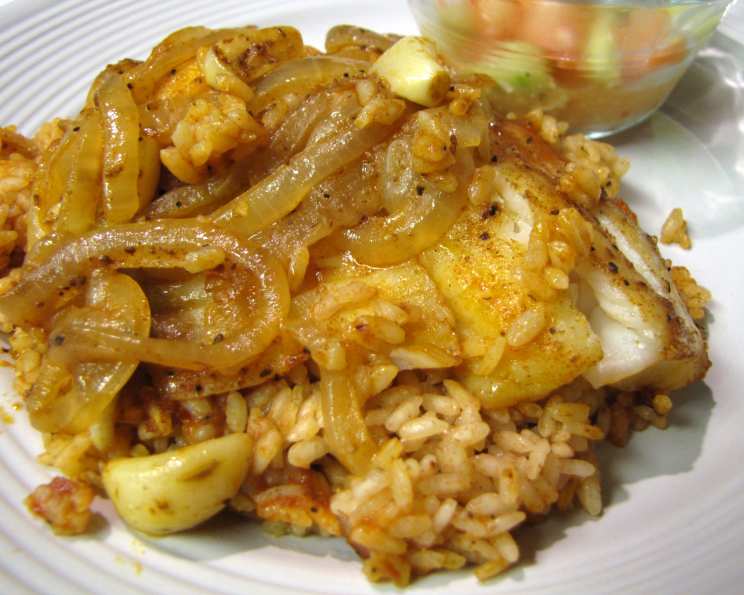
Fish Kabsa: A Taste of the Saudi Coast
The scent of warm spices always transports me back to a tiny beachfront restaurant I stumbled upon during my travels in Jeddah. The air was thick with the smell of the sea and the tantalizing aroma of simmering spices. I ordered a dish I’d never heard of – Fish Kabsa. The perfectly cooked fish, nestled atop a bed of fragrant rice, was an explosion of flavors. The first bite was pure magic, a harmonious blend of the ocean’s freshness and the warmth of the Arabian Peninsula. It was an experience that has stayed with me, and I’ve been on a quest to recreate that magic ever since.
Recipe Overview
- Prep Time: 15 minutes
- Cook Time: 22 minutes
- Total Time: 37 minutes
- Servings: 4-6
- Dietary Type: Pescatarian
Ingredients
- 1 kg fish fillet, cut into smallish large pieces (any white fish such as cod, haddock, or sea bass works well)
- ½ cup water
- 2 tablespoons tomato paste
- 6 garlic cloves
- 1 large white onion, diced
- 2 cups rice (Basmati recommended, soaked according to package instructions)
- 3 cups water
- 1 vegetable bouillon cube (or homemade vegetable stock)
- ½ tablespoon Arabic mixed spice (Baharat Aka Middle East Mixed Spices – the Real Mix)
- Sea salt & freshly ground black pepper, to taste
- 4 tablespoons butter
- ¼ cup pine nuts, toasted in a dry frying pan
- ¼ cup fresh cilantro
Equipment Needed
- Large pan with a lid
- Dry frying pan (for toasting pine nuts)
- Serving platter
Instructions
- In a large pan on medium heat, melt the butter. Add the diced onions and garlic cloves. Cook until the onions are tender and translucent, about 5-7 minutes. This is the aromatic base of your kabsa, so don’t rush this step.
- Add the Arabic spice mix (Baharat) to the pan with the onions and garlic. Stir well to combine, allowing the spices to bloom in the heat for about 30 seconds. This will release their essential oils and intensify the flavor.
- Carefully add the fish pieces to the pan. Cook the fish halfway on each side, just until it’s lightly pink-white and slightly firm. This should take about 1 minute or less per side, depending on the thickness of your fish. Remember, the fish will continue to cook with the rice, so avoid overcooking it at this stage. Gently remove the fish and onion mixture from the pan and set aside.
- Add the tomato paste and vegetable bouillon cube (or stock) to the same pan. Cook for a minute, stirring constantly, to allow the tomato paste to caramelize slightly. This will deepen the flavor of the sauce.
- Add the soaked and drained rice and water to the pan. Stir to combine.
- Carefully place the fish and onion mixture on top of the rice, distributing it evenly.
- Raise the heat to high and bring the mixture to a full boil. Once boiling, cover the pan tightly and immediately reduce the heat to low.
- Allow the kabsa to cook until the rice is tender and the fish is thoroughly cooked. The cooking time will vary depending on the thickness of the fish fillets and the type of rice you use. Basmati rice typically takes about 15-20 minutes. Check for doneness by gently fluffing the rice with a fork – it should be tender and all the liquid should be absorbed. The fish should flake easily with a fork.
- Once done, carefully arrange the fish kabsa on a serving platter. Garnish generously with fresh cilantro and toasted pine nuts.
Expert Tips & Tricks
- Soaking the rice: Don’t skip the soaking step! Soaking Basmati rice helps it cook more evenly and results in a fluffier texture.
- Spice Level: Adjust the amount of Arabic spice mix to your liking. If you prefer a milder flavor, start with a smaller amount and add more to taste.
- Fish Selection: Choose a firm white fish that holds its shape well during cooking. Cod, haddock, sea bass, or even tilapia are all good options. Avoid fish that flakes too easily, as it may fall apart during cooking.
- Toasting Pine Nuts: Toasting pine nuts in a dry pan brings out their nutty flavor and adds a delightful crunch to the dish. Watch them carefully, as they can burn quickly.
- Homemade Stock: Using homemade vegetable stock instead of a bouillon cube will enhance the flavor of your kabsa.
Serving & Storage Suggestions
Serve Fish Kabsa immediately while it’s hot. It’s traditionally served with a fresh salad of chopped tomatoes, cucumbers, and onions dressed with lemon juice and olive oil. This provides a refreshing contrast to the rich and flavorful kabsa.
Leftovers can be stored in an airtight container in the refrigerator for up to 3 days. To reheat, gently warm the kabsa in a pan over low heat, adding a splash of water or broth if needed to prevent it from drying out. You can also reheat it in the microwave, but be careful not to overcook the fish. Freezing is not recommended, as the texture of the rice and fish may change upon thawing.
Nutritional Information
| Nutrient | Amount per Serving | % Daily Value |
|---|---|---|
| Calories | 800.6 kcal | N/A |
| Calories from Fat | 180 g | 23% |
| Total Fat | 20.1 g | 30% |
| Saturated Fat | 8.3 g | 41% |
| Cholesterol | 168 mg | 56% |
| Sodium | 369.9 mg | 15% |
| Total Carbohydrate | 85 g | 28% |
| Dietary Fiber | 2.8 g | 11% |
| Sugars | 2.9 g | N/A |
| Protein | 65.9 g | 131% |
Note: Nutritional information is an estimate and may vary based on specific ingredients and portion sizes.
Variations & Substitutions
- Chicken or Lamb Kabsa: Replace the fish with chicken or lamb for a different take on this classic dish. Adjust the cooking time accordingly to ensure the meat is cooked through.
- Vegetarian Kabsa: Omit the fish and add more vegetables, such as zucchini, eggplant, or bell peppers, to make a vegetarian version.
- Spicy Kabsa: Add a pinch of red pepper flakes or a chopped chili pepper to the spice mixture for a touch of heat.
- Nut Variations: Use almonds or cashews instead of pine nuts for a different nutty flavor.
- Herb Variations: Experiment with different fresh herbs, such as parsley or dill, instead of cilantro.
FAQs (Frequently Asked Questions)
Q: Can I use brown rice instead of Basmati rice?
A: Yes, you can use brown rice, but you’ll need to adjust the cooking time and water ratio. Brown rice typically requires more water and a longer cooking time than Basmati rice.
Q: What if I don’t have Arabic mixed spice (Baharat)?
A: You can create your own blend by combining equal parts of cumin, coriander, black pepper, cinnamon, cloves, and cardamom.
Q: Can I make this dish ahead of time?
A: While it’s best served fresh, you can prepare the rice and fish mixture ahead of time and store them separately in the refrigerator. Reheat them together before serving.
Q: How can I prevent the rice from sticking to the bottom of the pan?
A: Ensure that you are using a heavy-bottomed pan and that the heat is set to low once the mixture comes to a boil. This will help prevent the rice from sticking.
Q: What is the best way to tell if the fish is cooked through?
A: The fish is cooked through when it flakes easily with a fork and is no longer translucent in the center.
Final Thoughts
Fish Kabsa is more than just a recipe; it’s a journey to the heart of Saudi Arabian cuisine. Don’t be intimidated by the list of ingredients – the process is simpler than it seems. Embrace the aromatic spices, savor the tender fish, and enjoy the fluffy rice. I encourage you to try this recipe and share your own experiences. Consider pairing it with a cooling yogurt sauce or a side of grilled vegetables for a complete and satisfying meal. Happy cooking!