
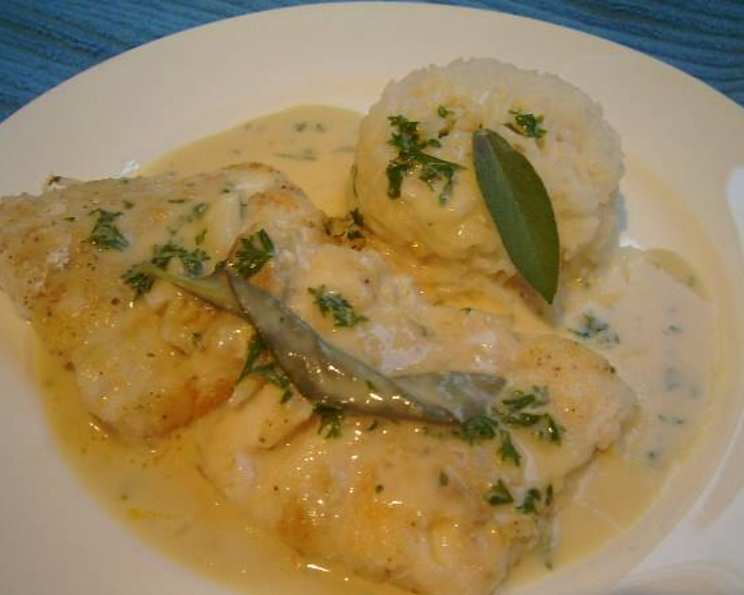
Fish with Sage and Garlic Sauce: A Culinary Symphony
The first time I made this dish, it was a desperate attempt to use up leftover herbs from my garden before the first frost. The aroma that filled my kitchen – the sweet perfume of garlic melding with the earthy notes of sage, underscored by the subtle scent of the sea – was an instant revelation. It transformed a simple weeknight dinner into something truly special, a reminder that even the humblest ingredients, when treated with care, can create a culinary masterpiece. And now, I’m excited to share this magic with you.
Recipe Overview
- Prep Time: 25 minutes
- Cook Time: 30 minutes
- Total Time: 55 minutes
- Servings: 2
- Dietary Type: Pescatarian
Ingredients
- 1 head garlic
- 2 (8 ounce) fish fillets (cod, halibut, or sea bass recommended)
- Salt
- Pepper
- ½ cup all-purpose flour
- 6 tablespoons olive oil
- 1 ½ cups chicken broth
- 6 sage leaves
- ½ cup heavy cream
- 2 tablespoons chopped fresh parsley, for garnish
Equipment Needed
- Large pot
- Fine-mesh strainer
- Large skillet
- Oven-safe baking dish
Instructions
-
Begin by preparing the garlic. Separate the cloves from one head of garlic. Peel all the cloves. Place the peeled garlic in a large pot and cover with water. Bring the water to a simmer over medium heat. Simmer the garlic until it is very soft, approximately 20 minutes.
-
After 20 minutes, remove several whole garlic cloves from the pot using a slotted spoon and set them aside. Let the remaining garlic continue to simmer for an additional 10 minutes.
-
After the additional 10 minutes of simmering, drain the garlic and transfer it to a fine-mesh strainer. Use a spoon or spatula to push the softened garlic through the strainer, creating a smooth garlic puree. You should have about ¼ cup of garlic puree.
-
Preheat your oven to 400 degrees F (200 degrees C).
-
Season the fish fillets generously with salt and pepper. Dredge each fillet in flour, ensuring both sides are evenly coated. Shake off any excess flour.
-
Heat olive oil in a large skillet over high heat. Once the oil is hot, carefully place the floured fish fillets in the skillet along with the reserved whole garlic cloves.
-
Sear the fish fillets for about 2-3 minutes per side, until they are lightly browned. The internal temperature of the fish should be around 130 degrees F before you transfer to the oven, but you don’t need to fully cook it through on the skillet. Be careful not to overcrowd the pan; you may need to work in batches.
-
Transfer the skillet with the fish and garlic cloves to the preheated oven, or transfer the fish to an oven-safe dish. Bake the fish until it is firm and flakes easily with a fork, about 8-12 minutes, depending on the thickness of the fillets.
-
While the fish is baking, prepare the sage and garlic sauce. In a saucepan, combine the chicken broth, sage leaves, and garlic puree. Bring the mixture to a simmer over medium heat.
-
Once simmering, reduce the heat to low and gently whisk in the heavy cream. Continue to whisk the sauce until it thickens slightly, about 5 minutes. Be careful not to boil the sauce, as this can cause the cream to separate. Remove the sauce from heat and discard the sage leaves.
-
A few minutes before the fish is done baking, spoon some of the sage and garlic sauce over the fish fillets in the oven. This will help keep the fish moist and infuse it with the flavors of the sauce.
-
Once the fish is fully cooked, remove it from the oven and transfer it to serving plates. Spoon a generous amount of the sage and garlic sauce over each fillet.
-
Garnish with chopped fresh parsley before serving.
Expert Tips & Tricks
- Achieving the Perfect Sear: Pat the fish fillets dry with paper towels before dredging them in flour. This helps them brown more evenly in the skillet. Make sure the oil is hot before adding the fish, but not smoking. This ensures a beautiful sear without burning the fish.
- Garlic Infusion: Simmering the garlic in water first mellows its pungent flavor and creates a delicate sweetness in the puree. Don’t skip this step!
- Sauce Consistency: If the sauce is too thin, whisk in a small amount of cornstarch slurry (1 teaspoon cornstarch mixed with 1 tablespoon cold water) while simmering. If the sauce is too thick, add a little more chicken broth or cream until you reach your desired consistency.
- Spice it up: If you are feeling adventurous, add a pinch of red pepper flakes to the sage and garlic sauce for a slight kick.
Serving & Storage Suggestions
Serve this delectable Fish with Sage and Garlic Sauce immediately for the best flavor and texture. It pairs beautifully with roasted vegetables, steamed asparagus, or a simple side salad.
Leftovers can be stored in an airtight container in the refrigerator for up to 2 days. To reheat, gently warm the fish in a skillet over low heat, adding a splash of broth or water to prevent it from drying out. Alternatively, you can reheat it in the oven at 300 degrees F (150 degrees C) for about 10-15 minutes. The sauce can be reheated separately in a saucepan over low heat. Freezing is not recommended, as the texture of the fish and sauce may be affected.
Nutritional Information
| Nutrient | Amount per Serving | % Daily Value |
|---|---|---|
| Calories | 495 kcal | 25% |
| Total Fat | 33g | 51% |
| Saturated Fat | 10g | 50% |
| Cholesterol | 103mg | 34% |
| Sodium | 384mg | 16% |
| Total Carbohydrate | 18g | 6% |
| Dietary Fiber | 1g | 4% |
| Sugars | 1g | 2% |
| Protein | 31g | 62% |
Nutritional information is an estimate and can vary based on specific ingredients and portion sizes.
Variations & Substitutions
- Dairy-Free: Substitute the heavy cream with coconut cream or cashew cream for a dairy-free version. The flavor will be slightly different, but still delicious.
- Gluten-Free: Ensure you are using gluten-free flour for dredging the fish. Almond flour or a gluten-free all-purpose blend works well.
- Herb Variations: Experiment with other fresh herbs, such as thyme, rosemary, or oregano, in place of or in addition to the sage.
- Fish Options: This recipe works well with a variety of white fish, including cod, haddock, flounder, or even salmon. Adjust the cooking time based on the thickness of the fillet.
FAQs (Frequently Asked Questions)
Q: Can I use dried sage instead of fresh sage?
A: Yes, you can use dried sage, but the flavor will be more concentrated. Use about 1 teaspoon of dried sage for every 6 fresh sage leaves.
Q: Can I make the garlic puree ahead of time?
A: Absolutely! The garlic puree can be made up to 2 days in advance and stored in an airtight container in the refrigerator.
Q: Can I use vegetable broth instead of chicken broth?
A: Yes, you can substitute vegetable broth for chicken broth. However, chicken broth adds a richer, more savory flavor to the sauce.
Q: How do I know when the fish is done cooking?
A: The fish is done when it flakes easily with a fork and the internal temperature reaches 145 degrees F (63 degrees C).
Q: What is the best way to prevent the fish from sticking to the skillet?
A: Make sure the skillet is well-heated and the oil is hot before adding the fish. Also, avoid overcrowding the pan.
Final Thoughts
This Fish with Sage and Garlic Sauce is a truly versatile dish that can be adapted to your personal preferences and dietary needs. Whether you’re looking for a quick and easy weeknight meal or an elegant dish to impress your guests, this recipe is sure to deliver. Don’t be afraid to experiment with different herbs, spices, and vegetables to create your own unique culinary masterpiece. And most importantly, enjoy the process of cooking and sharing this delicious dish with those you love! I encourage you to give it a try, and I welcome your feedback and any creative twists you might add!