
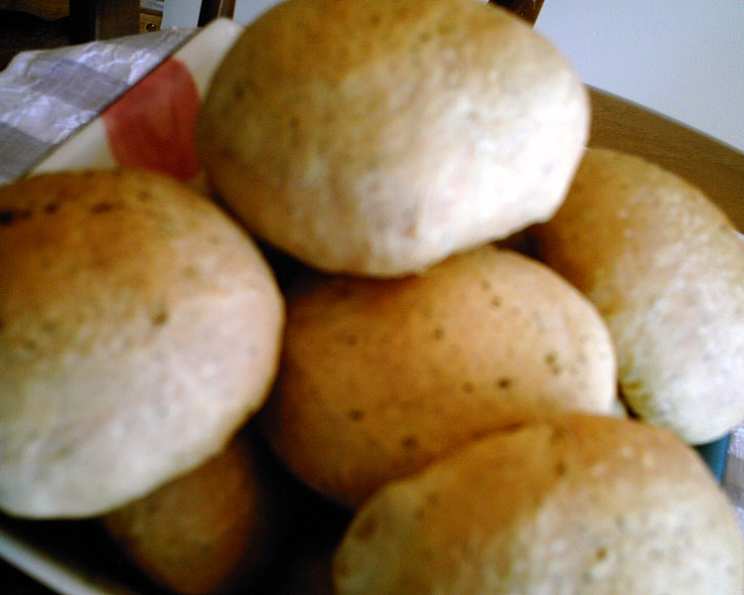
Focaccia Buns: A Culinary Journey
The scent of baking bread has always been my happy place. I vividly remember my grandmother’s kitchen, filled with the aroma of yeast and olive oil. She would let me pinch off bits of focaccia dough to shape into tiny animals, a delightful mess of flour on my small hands. These focaccia buns evoke that same feeling of warmth and simple joy, each bite a reminder of cherished family moments.
Recipe Overview
- Prep Time: 48 hours 25 minutes
- Cook Time: 25 minutes
- Total Time: 48 hours 50 minutes
- Servings: 12
- Yield: 12 buns
- Dietary Type: Vegetarian
Ingredients
- 1 1⁄4 cups warm water
- 1 tablespoon active dry yeast
- 1⁄4 cup olive oil (divided)
- 2 teaspoons salt
- 1 teaspoon basil (divided)
- 1 teaspoon thyme (divided)
- 1 teaspoon rosemary (divided)
- 3 1⁄2 cups all-purpose flour (approx.) or 3 1/2 cups bread flour (approx.)
- Optional toppings: thinly sliced yellow and red tomatoes, caramelized onions
Equipment Needed
- Large mixing bowl
- Whisk
- Floured bread board or work surface
- Large bowl (for rising)
- Plastic wrap
- Baking sheet
Instructions
-
In a large bowl, pour the warm water. Sprinkle the active dry yeast over the water. Let it stand for at least ten minutes, or until frothy, to ensure the yeast is active and ready to leaven the dough.
-
Whisk in 2 tablespoons of the olive oil, along with the salt, 1/2 teaspoon of basil, 1/2 teaspoon of thyme, and 1/2 teaspoon of rosemary. These herbs will infuse the dough with a lovely, aromatic flavor.
-
In a separate bowl, combine the remaining olive oil, basil, thyme, and rosemary. This will be used as a flavorful brushing oil just before baking. Set aside.
-
Add 3 cups of the flour to the wet ingredients and mix to form a soft dough. The amount of flour may vary depending on humidity, so start with 3 cups and add more gradually if needed.
-
Turn the dough out onto a floured bread board or work surface. Knead the dough for 10 to 15 minutes, adding just enough flour as needed to prevent it from sticking. The dough should be smooth and elastic. A good knead develops the gluten, resulting in a chewy texture.
-
Place the dough in a large oiled bowl, turning to coat all sides. This prevents the dough from drying out.
-
Cover the bowl with plastic wrap to create a draft-free environment.
-
Set the bowl in a warm, draft-free area and let the dough double in size, which should take about 2 hours. This first rise is crucial for developing the dough’s flavor and texture.
-
Grease a baking sheet and set it aside. This will prevent the focaccia buns from sticking during baking.
-
After the dough has doubled, punch it down to release the air.
-
Divide the dough into twelve portions, to make 12 buns.
-
Roll, pinch, and form the dough portions into buns by tucking the edges underneath.
-
Place the formed buns onto the prepared baking sheet.
-
Cover the baking sheet loosely with plastic wrap and place it in the refrigerator for at least 12 hours and up to 24 hours. This long, cold fermentation is key to developing the lacy texture and chewier crust that make these focaccia buns unique.
-
When ready to bake, remove the baking sheet from the refrigerator and let the buns come to room temperature, which will take about an hour or so. This allows the dough to relax and rise slightly before baking.
-
Preheat your oven to 400 degrees Fahrenheit (200 degrees Celsius).
-
Mix the remaining oil and herbs (if you haven’t already done so) and brush the tops of each bun generously with the herb-infused oil.
-
Bake at 400 degrees Fahrenheit (200 degrees Celsius) for 25 minutes, or until the buns are golden brown and the bottoms sound hollow when tapped.
-
Optional: Before baking, thinly slice red or yellow tomatoes (or use halved grape tomatoes) and place them on top of the buns. You can also caramelize a thinly sliced onion and place that on top of each bun. The tomatoes will dry slightly and the onions will become crispy while baking, adding delightful flavor and texture.
Expert Tips & Tricks
- For a crisper crust: Place a baking stone in the oven while preheating. The stone helps maintain a consistent temperature and promotes a crispy bottom crust.
- Don’t skip the refrigeration: The long, cold fermentation in the refrigerator is crucial for developing the characteristic texture and flavor of these focaccia buns.
- Use high-quality olive oil: The flavor of the olive oil will shine through in the finished product, so choose a good-quality extra virgin olive oil.
- Experiment with herbs: Feel free to use other herbs, such as oregano, marjoram, or sage, to customize the flavor profile of the buns.
- Kneading time: If you have a stand mixer, you can use it to knead the dough. Knead with the dough hook for about 8-10 minutes.
Serving & Storage Suggestions
Serve the focaccia buns warm, either on their own or as part of a sandwich or appetizer platter. They are delicious with a drizzle of olive oil and a sprinkle of sea salt.
Store leftover buns in an airtight container at room temperature for up to 2 days, or in the refrigerator for up to 5 days. To freeze, wrap the buns individually in plastic wrap and then place them in a freezer bag. They can be frozen for up to 2 months.
To reheat, thaw frozen buns at room temperature. Then, warm them in a 350 degrees Fahrenheit (175 degrees Celsius) oven for 5-10 minutes, or until heated through. You can also reheat them in a microwave, but be careful not to overcook them, as they can become tough.
Nutritional Information
| Nutrient | Amount per Serving | % Daily Value |
|---|---|---|
| Calories | 175.6 kcal | N/A |
| Calories from Fat | 44 g | 25% |
| Total Fat | 4.9 g | 7% |
| Saturated Fat | 0.7 g | 3% |
| Cholesterol | 0 mg | 0% |
| Sodium | 389.4 mg | 16% |
| Total Carbohydrate | 28.2 g | 9% |
| Dietary Fiber | 1.2 g | 4% |
| Sugars | 0.1 g | 0% |
| Protein | 4.2 g | 8% |
Note: Nutritional information is an estimate and may vary based on ingredient substitutions and specific brands used.
Variations & Substitutions
- Gluten-Free: Substitute the all-purpose or bread flour with a gluten-free all-purpose flour blend. You may need to adjust the amount of liquid, as gluten-free flours tend to absorb more moisture.
- Vegan: This recipe is already vegan! Just ensure that the yeast you use is certified vegan.
- Flavor Infusions: Add other herbs, spices, or flavorings to the dough, such as garlic powder, onion powder, chili flakes, or sun-dried tomatoes.
- Cheese Topping: Sprinkle grated Parmesan cheese or other hard cheese on top of the buns before baking for a savory twist.
FAQs (Frequently Asked Questions)
Q: Why is it important to refrigerate the dough for so long?
A: The long, cold fermentation in the refrigerator allows the dough to develop a unique flavor and texture, resulting in a chewier crust and a lacy interior.
Q: Can I use a bread machine to make the dough?
A: Yes, you can use a bread machine to make the dough. Simply add the ingredients in the order recommended by your bread machine manufacturer and use the dough cycle.
Q: What if my dough doesn’t double in size during the first rise?
A: Ensure that the yeast is fresh and active. Also, make sure the dough is in a warm, draft-free area. If the dough is taking longer than expected to rise, give it more time.
Q: Can I make these buns ahead of time and freeze them?
A: Yes, you can freeze the baked buns. Wrap them individually in plastic wrap and then place them in a freezer bag. They can be frozen for up to 2 months.
Q: What can I serve with these focaccia buns?
A: These buns are delicious with soups, salads, or as part of a sandwich. They also make a great appetizer served with olive oil and balsamic vinegar.
Final Thoughts
I hope you enjoy making these focaccia buns as much as I do. The combination of the flavorful herbs, the chewy texture, and the beautiful golden crust makes them a truly special treat. Don’t be afraid to experiment with different toppings and flavors to create your own unique version. I encourage you to give this recipe a try and share your feedback. These buns are perfect served alongside a hearty bowl of minestrone soup or a fresh Caprese salad!