
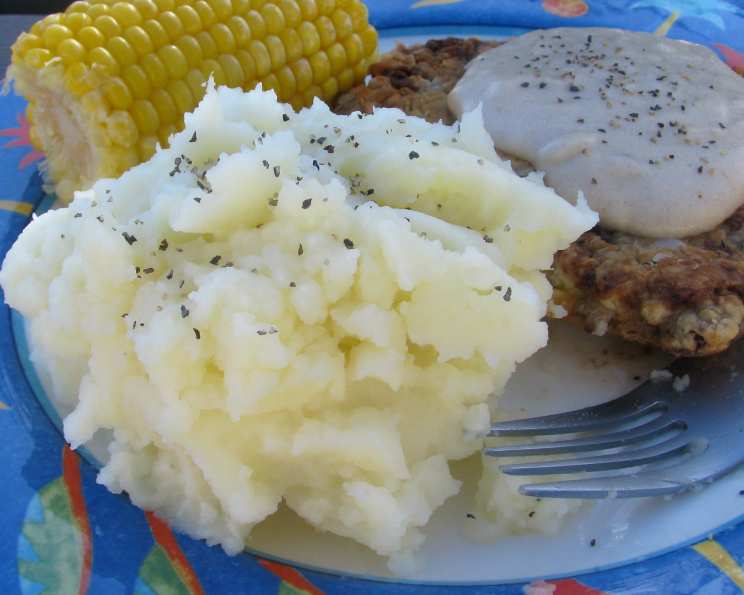
Foolproof Traditional Mashed Potatoes
My grandmother, bless her heart, was a woman of simple tastes. Fancy ingredients and elaborate sauces were lost on her. What she truly craved, and what brought the biggest smile to her face, were perfectly creamy, comforting mashed potatoes. I remember standing beside her in the kitchen, perched on a stool so I could reach the counter, watching her peel potatoes with practiced ease. The rhythmic thud of the masher, the gentle steam rising from the pot, the simple satisfaction of transforming humble potatoes into a delectable side dish – these are memories etched in my mind, and the reason why I’ve spent years perfecting this classic recipe.
Recipe Overview
- Prep Time: 15 minutes
- Cook Time: 25 minutes
- Total Time: 40 minutes
- Servings: 6
- Dietary Type: Vegetarian
Ingredients
- 7 medium russet potatoes, peeled and cubed
- 1 cup milk (must be warmed before using)
- 1/3 cup butter or margarine
- 3/4 teaspoon salt (to taste)
- 3/4 teaspoon pepper (fresh ground and to taste)
Equipment Needed
- Large saucepan
- Potato masher (or electric mixer)
- Measuring cups and spoons
- Colander or strainer
Instructions
-
Begin by preparing the potatoes. Peel the 7 medium russet potatoes and cut them into roughly 1-inch cubes. Uniform size ensures even cooking.
-
Place the cubed potatoes in a large saucepan. Cover the potatoes completely with cold water. Adding cold water ensures the potatoes cook evenly from the inside out.
-
Cover the saucepan and bring the water to a boil over high heat. Once boiling, reduce the heat slightly to maintain a steady boil.
-
Cook the potatoes for 20-25 minutes, or until they are very tender. A fork should easily pierce through the potatoes without resistance.
-
Once the potatoes are tender, carefully drain them in a colander or strainer to remove all the water. Ensure that the potatoes are well-drained; excess water will result in watery mashed potatoes.
-
Return the drained potatoes to the saucepan.
-
While the potatoes are cooking, warm 1 cup of milk in a separate saucepan or in the microwave. Warmed milk helps maintain the temperature of the potatoes and prevents them from becoming gluey. It also emulsifies more easily with the butter.
-
Add the warmed milk, 1/3 cup of butter (or margarine), 3/4 teaspoon of salt, and 3/4 teaspoon of pepper to the potatoes.
-
Using a potato masher (or an electric mixer for a smoother consistency), mash the potatoes until they are light and fluffy. If using an electric mixer, be careful not to overmix, as this can lead to gummy potatoes. Start on a low speed and gradually increase until desired consistency is achieved.
-
Taste the mashed potatoes and adjust the seasoning with additional salt and pepper as needed. Remember, seasoning is key to bringing out the natural flavors of the potatoes.
Expert Tips & Tricks
-
Potato Selection: Russet potatoes are ideal for mashed potatoes due to their high starch content, which results in a light and fluffy texture. Yukon Gold potatoes can also be used for a slightly creamier and more flavorful result.
-
Warming the Milk: Warming the milk is crucial. Cold milk can lower the temperature of the cooked potatoes, causing them to become dense and potentially gummy.
-
Don’t Overmix: Overmixing mashed potatoes, especially with an electric mixer, can release too much starch, resulting in a gluey texture. Mash or mix until just combined.
-
Brown Butter Option: For an added layer of flavor, brown the butter before adding it to the potatoes. Heat the butter in a saucepan over medium heat until it melts, then continue cooking until it turns a nutty brown color and emits a fragrant aroma. Be careful not to burn it.
-
Make-Ahead Tip: Mashed potatoes can be made ahead of time. Prepare as directed, then transfer to a heat-safe dish, cover tightly, and refrigerate for up to 2 days. To reheat, add a splash of milk or cream and gently warm over low heat on the stovetop or in the microwave, stirring occasionally.
-
Fixing Gluey Potatoes: If your mashed potatoes become gluey, try adding a tablespoon or two of warm milk or cream at a time, gently folding it in until the desired consistency is achieved. Avoid overmixing.
Serving & Storage Suggestions
Serve the mashed potatoes hot as a side dish alongside your favorite main courses, such as roasted chicken, grilled steak, or pot roast. They also pair well with vegetables like steamed green beans, roasted Brussels sprouts, or glazed carrots.
For an elegant presentation, transfer the mashed potatoes to a serving bowl and swirl the top with a spoon. Garnish with a pat of butter, a sprinkle of fresh herbs (such as parsley or chives), or a drizzle of olive oil.
Leftover mashed potatoes can be stored in an airtight container in the refrigerator for up to 3-4 days. To reheat, add a splash of milk or cream and warm gently on the stovetop or in the microwave, stirring occasionally until heated through. You can also freeze mashed potatoes for longer storage. Portion into freezer-safe bags or containers, removing as much air as possible, and freeze for up to 2-3 months. Thaw in the refrigerator overnight before reheating.
Nutritional Information
| Nutrient | Amount per Serving | % Daily Value |
|---|---|---|
| Calories | 200 kcal | 10% |
| Total Fat | 8g | 12% |
| Saturated Fat | 5g | 25% |
| Cholesterol | 20mg | 7% |
| Sodium | 300mg | 13% |
| Total Carbohydrate | 30g | 10% |
| Dietary Fiber | 3g | 12% |
| Sugars | 2g | – |
| Protein | 4g | 8% |
Variations & Substitutions
-
Garlic Mashed Potatoes: Add 2-3 cloves of minced garlic to the potatoes while they are cooking, or roast the garlic and mash it in with the potatoes.
-
Sour Cream Mashed Potatoes: Substitute half of the milk with sour cream for a tangy flavor and extra creaminess.
-
Chive Mashed Potatoes: Stir in a generous amount of chopped fresh chives at the end for a fresh, herbaceous flavor.
-
Vegan Mashed Potatoes: Use plant-based milk (such as almond milk, soy milk, or oat milk) and vegan butter or olive oil instead of dairy products.
-
Loaded Mashed Potatoes: Stir in cooked bacon, shredded cheese, and chopped green onions for a decadent and flavorful twist.
FAQs (Frequently Asked Questions)
Q: Why are my mashed potatoes gummy?
A: Overmixing is the most common cause of gummy mashed potatoes. Avoid overworking the potatoes, especially with an electric mixer.
Q: Can I use a food processor to mash the potatoes?
A: It’s generally not recommended to use a food processor, as it can easily overprocess the potatoes and result in a gluey texture. A potato masher or ricer is a better option.
Q: How can I keep my mashed potatoes warm for a party?
A: Keep the mashed potatoes warm in a slow cooker on the “warm” setting, or in a heat-safe dish in a preheated oven at 200°F (93°C). Stir occasionally to prevent them from drying out.
Q: Can I freeze mashed potatoes?
A: Yes, mashed potatoes can be frozen for up to 2-3 months. Portion into freezer-safe bags or containers, removing as much air as possible, and thaw in the refrigerator overnight before reheating.
Q: What can I do if my mashed potatoes are too thick?
A: Gradually add warm milk or cream, one tablespoon at a time, until the desired consistency is reached.
Final Thoughts
There’s something truly magical about a bowl of perfectly mashed potatoes. It’s a simple comfort food that transcends generations, bringing people together with its creamy texture and comforting flavor. I encourage you to try this recipe and experience the joy of creating a truly classic dish. Don’t be afraid to experiment with variations and substitutions to make it your own. And most importantly, share it with the people you love. After all, good food is always best when shared. Bon appétit!