
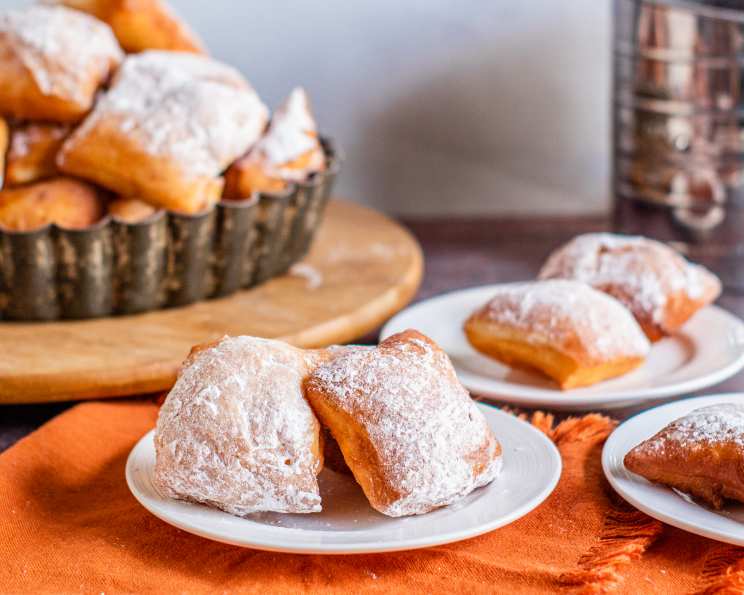
French Market Beignets: A Taste of New Orleans in Your Own Kitchen
The first time I tasted a beignet, I was wandering through the French Quarter in New Orleans, the humid air thick with the scent of jasmine and chicory coffee. I remember the warm, pillowy dough, practically dissolving on my tongue under a blizzard of powdered sugar. That simple square of fried dough was pure magic—a sweet, comforting bite that perfectly captured the spirit of the city. I’ve been chasing that flavor ever since, and now I’m delighted to share this recipe, inspired by the flavors of New Orleans.
Recipe Overview
- Prep Time: 2 hours 3 minutes (includes overnight refrigeration)
- Cook Time: 3 minutes
- Total Time: 24 hours 6 minutes (includes overnight refrigeration)
- Yields: 3 dozen or more
- Dietary Type: Not specified
Ingredients
- 1 1/2 cups water
- 1 (1/4 ounce) packet yeast
- 1/2 cup sugar
- 2 eggs
- 7 cups flour
- 1 teaspoon salt
- 1 cup evaporated milk
- 1/4 cup Crisco shortening, softened
- Confectioners’ sugar
- Oil (for deep frying)
Equipment Needed
- Large bowl
- Plastic wrap
- Floured board
- Deep fryer or large pot
- Slotted spoon or spider
- Paper towels
- Large bag (for tossing in confectioners’ sugar)
Instructions
- Begin by preparing the dough. In a large bowl, add 1 1/2 cups of warm water. The water should be warm to the touch, but not hot, to properly activate the yeast.
- Sprinkle 1 (1/4 ounce) packet of yeast over the warm water. Stir well to completely dissolve the yeast. Let it stand for about 5-10 minutes, or until the yeast starts to froth and bubble. This indicates that the yeast is active and ready to use.
- Once the yeast has frothed, add 1/2 cup of sugar, 1 teaspoon of salt, and 1 cup of evaporated milk to the bowl.
- In a separate small bowl, beat the 2 eggs lightly. Add the beaten eggs to the yeast mixture.
- Add 1/4 cup of softened Crisco shortening to the bowl. Ensure the shortening is softened for easier incorporation into the dough.
- Stir all the ingredients together thoroughly until well combined.
- Gradually add the 7 cups of flour to the wet ingredients. Stir continuously until the flour is completely mixed in and the dough forms a large ball. The dough will be slightly sticky.
- Cover the bowl tightly with plastic wrap to prevent the dough from drying out. Place the covered bowl in the refrigerator overnight. This chilling period is crucial for developing the flavor and texture of the beignets.
- The next day, remove the dough from the refrigerator. Lightly flour a board or clean countertop.
- Take a small piece of dough and roll it out on the floured surface as thinly as possible, aiming for about 1/4 inch thickness. The thinner the dough, the lighter and airier the beignets will be.
- Cut the rolled-out dough into 2-inch squares using a knife or pizza cutter.
- Using a sharp knife, make a double slash through the center of each square. These slashes help the center of the beignets cook through evenly and prevent them from puffing up too much.
- Heat the oil in a deep fryer or large pot to 360°F (182°C). If you don’t have a thermometer, test the oil by dropping a small piece of dough into it; if it browns in about 3 minutes, the oil is ready.
- Carefully drop the dough squares into the hot oil, a few at a time, being careful not to overcrowd the fryer.
- Fry the beignets for approximately 3 minutes, or until they are golden brown on all sides. Turn them occasionally to ensure even cooking.
- Remove the fried beignets from the oil using a slotted spoon or spider and place them on a plate lined with paper towels to drain excess oil.
- While the beignets are still warm, place them in a large bag filled with confectioners’ sugar. Shake the bag vigorously to coat the beignets thoroughly with the sugar.
- Serve immediately and enjoy! C’est Bon!
Expert Tips & Tricks
- Dough Consistency: The dough should be slightly sticky but manageable. If it’s too sticky, add a little more flour, one tablespoon at a time, until you achieve the desired consistency.
- Oil Temperature: Maintaining a consistent oil temperature is crucial for perfect beignets. If the oil is too hot, the beignets will brown too quickly on the outside while remaining doughy inside. If the oil is not hot enough, they will absorb too much oil and become greasy.
- Rolling the Dough: Roll the dough as thinly as possible without tearing it. This will result in light and airy beignets.
- Make-Ahead Tip: The dough can be made up to 2 days in advance and stored in the refrigerator. This allows the flavors to develop further.
- Preventing Over-Browning: If your beignets are browning too quickly, lower the oil temperature slightly.
- Crisco Substitution: If you don’t have Crisco shortening, you can use another type of vegetable shortening or melted butter, although the flavor will be slightly different.
- Ensuring Doneness: The double slash in the center of each beignet helps the inside cook evenly. If the inside still seems doughy, reduce the oil temperature slightly and cook for a bit longer.
Serving & Storage Suggestions
Serve beignets immediately while they are still warm and coated in confectioners’ sugar. They are best enjoyed fresh, as they tend to lose their crispness over time. If you have leftovers, store them in an airtight container at room temperature. They will be best consumed within 1-2 days. Reheating is not recommended, as it can make them soggy. If you must reheat, a brief warming in a low oven (200°F or 93°C) can help, but they won’t be quite as good as fresh. Beignets are traditionally enjoyed with a cup of strong coffee, such as café au lait.
Nutritional Information
Please note that these values are estimates and can vary based on specific ingredients and preparation methods.
| Nutrient | Amount per Serving | % Daily Value |
|---|---|---|
| Calories | 1510 kcal | N/A |
| Calories from Fat | 266 kcal | 18% |
| Total Fat | 29.6 g | 45% |
| Saturated Fat | 9.7 g | 48% |
| Cholesterol | 148.4 mg | 49% |
| Sodium | 922.5 mg | 38% |
| Total Carbohydrate | 265.5 g | 88% |
| Dietary Fiber | 8.5 g | 34% |
| Sugars | 34.2 g | 136% |
| Protein | 41 g | 81% |
Variations & Substitutions
- Cinnamon Sugar: Instead of confectioners’ sugar, toss the warm beignets in cinnamon sugar for a warm, spiced twist.
- Lemon Zest: Add lemon zest to the dough for a bright, citrusy flavor.
- Chocolate-Filled: Before frying, place a small piece of chocolate in the center of each square. As the beignets fry, the chocolate will melt, creating a delicious surprise.
- Gluten-Free: Substitute a gluten-free all-purpose flour blend for the regular flour. You may need to adjust the amount of liquid slightly to achieve the desired dough consistency.
- Dairy-Free: Replace the evaporated milk with almond milk or another non-dairy alternative.
- Spiced Beignets: Add a pinch of nutmeg or cardamom to the dough for a warm, aromatic flavor.
FAQs (Frequently Asked Questions)
Q: Why is the dough refrigerated overnight?
A: Refrigerating the dough allows the gluten to relax, which results in a more tender and flavorful beignet. It also makes the dough easier to handle.
Q: Can I use active dry yeast instead of instant yeast?
A: Yes, but you’ll need to proof the active dry yeast in warm water for about 10 minutes before adding it to the other ingredients.
Q: How can I tell if the oil is hot enough without a thermometer?
A: Drop a small piece of dough into the oil. If it turns golden brown in about 3 minutes, the oil is at the correct temperature.
Q: My beignets are greasy. What am I doing wrong?
A: The oil temperature may not be hot enough. Ensure the oil is at 360°F (182°C) before frying. Also, avoid overcrowding the fryer, as this can lower the oil temperature.
Q: Can I bake these instead of frying them?
A: While you can bake them, they won’t be true beignets. Baked beignets will have a different texture and won’t be as light and airy as the fried version.
Final Thoughts
These French Market Beignets are more than just a recipe; they’re an invitation to experience a little bit of New Orleans magic in your own kitchen. Don’t be intimidated by the overnight refrigeration – the result is well worth the wait. Gather your ingredients, embrace the process, and get ready to enjoy a taste of the South. And while you’re at it, brew a pot of strong coffee and let the good times roll! I hope you enjoy making and devouring these as much as I do. Feel free to share your beignet triumphs (or troubleshooting questions!) with me. Bon appétit!