
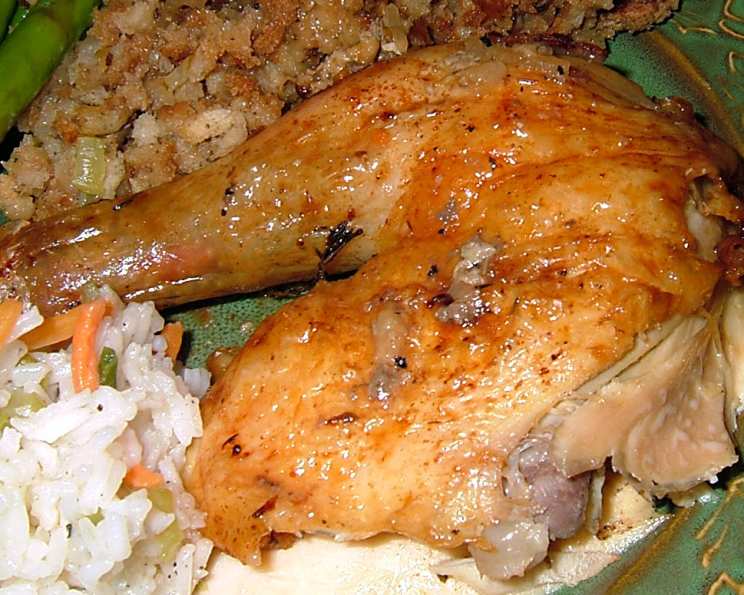
French Roast Chicken: A Culinary Classic
The memory is etched in my mind: the scent of roasting chicken, the golden-brown skin crackling ever so slightly as my grandmother pulled it from the oven. It wasn’t just Sunday dinner; it was love made edible. She had a well-worn copy of “Mastering the Art of French Cooking,” its pages stained with culinary triumphs. This French Roast Chicken, adapted from Julia Child’s iconic book, was a dish she returned to time and again, a testament to its simplicity and profound flavor. Every bite was a journey back to her warm kitchen, a reminder of the power of food to create connection and comfort.
Recipe Overview
- Prep Time: 20 minutes
- Cook Time: 1 hour 1 minute
- Total Time: 1 hour 21 minutes
- Servings: 4-6
- Yield: 1 bird
- Dietary Type: Not specified
Ingredients
- 3 lbs broiler-fryer chicken
- 1/4 teaspoon salt (for inside the chicken)
- 2 tablespoons softened butter (for inside the chicken)
- 1 small carrot, sliced
- 1 small onion, sliced
For Basting:
- 2 tablespoons melted butter
- 1 tablespoon cooking oil
- 1/4 teaspoon salt (for basting)
For Sauce Reduction:
- 1/2 tablespoon minced shallots (or 1/2 tablespoon green onion)
- 1 cup brown chicken stock (or 1 cup canned chicken broth)
- Salt (to taste, for sauce)
- Pepper (to taste, for sauce)
- 1 -2 tablespoons softened butter (for finishing sauce)
Equipment Needed
- Small roasting pan
- Small saucepan
- Basting brush
- Wooden spoon
Instructions
-
Preheat your oven to 425°F (220°C). This high initial heat is crucial for achieving that beautifully browned skin.
-
Prepare the chicken. Sprinkle the inside of the chicken with 1/4 teaspoon of salt, then smear in 1 tablespoon of softened butter. Distribute the butter evenly to ensure the entire cavity is seasoned and will release moisture during cooking.
-
Truss and dry the chicken thoroughly. Trussing helps the chicken cook evenly, while drying the skin ensures it browns properly. Pat the skin dry with paper towels. Then, rub the skin with the remaining 1 tablespoon of butter. This creates a flavorful barrier and promotes even browning.
-
Prepare the baste. In a small saucepan, melt 2 tablespoons of butter with 1 tablespoon of cooking oil. Add 1/4 teaspoon of salt to the melted butter mixture. Leave the saucepan on the stovetop with a basting brush for later use.
-
Position the chicken. Place the chicken, breast side up, in a shallow roasting pan. Scatter the sliced carrot and onion around the chicken. These vegetables will add flavor to the pan drippings, which will later be used for the sauce.
-
Roast at high heat. Set the roasting pan on the rack in the preheated oven. Allow the chicken to brown slightly for 15 minutes, turning it onto the left side after 5 minutes, then onto the right side for the last 5 minutes. This ensures even browning on all sides.
-
Baste frequently. Baste the chicken quickly with the melted butter mixture after each turn so that the oven does not lose a lot of heat.
-
Reduce heat and continue roasting. Reduce the oven temperature to 350°F (175°C).
-
Continue basting every 8 to 10 minutes, using the butter in the bottom of the roasting pan once you have used up all of the baste in your bowl. Watch and adjust the oven heat so that the chicken is noisy (sizzling), but the fat is not burning.
-
Salt and turn. Halfway through the estimated roasting time (which is 70-80 minutes; so after about 35 minutes), salt the chicken again and turn it onto its other side. Continue to baste regularly.
-
Finish roasting. 15 minutes before the end of the estimated roasting time, salt the chicken again and flip the chicken breast side up. Continue to baste regularly.
-
Check for doneness. The chicken will be done when the drumstick moves easily in its socket and the juices run clear yellow when the thigh is pierced with a fork. An instant-read thermometer inserted into the thickest part of the thigh should register 165°F (74°C).
-
Rest the chicken. Let the chicken sit on a platter for 5 to 10 minutes before carving. This allows the juices to redistribute, resulting in a more moist and flavorful bird.
-
Make the sauce. Remove all but 2 tablespoons of fat from the roasting pan. Stir in the minced shallots (or green onion) and cook slowly for 1 minute, scraping the bottom of the pan.
-
Deglaze the pan. Add the brown chicken stock (or canned chicken broth) and boil rapidly over high heat, scraping up the browned bits that are stuck in the pan with a wooden spoon. These bits are packed with flavor and will enrich the sauce.
-
Reduce the sauce. Continue boiling the sauce until it is reduced to about 1/2 cup. This will concentrate the flavors.
-
Season the sauce. Season the sauce with salt and pepper to taste.
-
Finish the sauce. Off heat, just before serving, swirl in the last 1 to 2 tablespoons of softened butter by bits until it is absorbed. This adds richness and shine to the sauce.
-
Serve. Pour a spoonful of the sauce onto the chicken, then pour the rest into a gravy boat and serve with the chicken.
Expert Tips & Tricks
- Drying is Key: A truly crispy skin comes from dry skin. After washing your chicken, pat it thoroughly dry, inside and out, with paper towels. You can even leave it uncovered in the refrigerator for a few hours before roasting to further dry the skin.
- Don’t overcrowd the pan: Make sure your roasting pan is large enough for the chicken to sit comfortably without being crowded. Overcrowding will steam the chicken instead of roasting it, preventing the skin from browning properly.
- Use a thermometer: While visual cues are helpful, the most accurate way to determine doneness is with an instant-read thermometer. Insert it into the thickest part of the thigh, avoiding the bone. The internal temperature should reach 165°F (74°C).
- Spice it up: Feel free to add herbs like thyme, rosemary, or sage to the cavity of the chicken for extra flavor.
Serving & Storage Suggestions
Serve the French Roast Chicken immediately after carving. A simple platter garnished with fresh herbs is elegant. For side dishes, consider buttered green beans or peas, as Julia Child suggests, or roasted potatoes. Leftover chicken should be cooled completely and stored in an airtight container in the refrigerator for up to 3-4 days. It can be reheated in the oven at 325°F (160°C) or in the microwave. You can also shred the leftover chicken and use it in salads, sandwiches, or soups. The sauce can also be stored in the refrigerator and reheated gently on the stovetop. If frozen, it will keep for 2-3 months.
Nutritional Information
| Nutrient | Amount per Serving | % Daily Value |
|---|---|---|
| Calories | 924 kcal | N/A |
| Calories from Fat | 628 g | 68% |
| Total Fat | 69.8 g | 107% |
| Saturated Fat | 24.4 g | 122% |
| Cholesterol | 295.3 mg | 98% |
| Sodium | 896.4 mg | 37% |
| Total Carbohydrate | 5.2 g | 1% |
| Dietary Fiber | 0.7 g | 2% |
| Sugars | 2.3 g | N/A |
| Protein | 65.3 g | 130% |
Note: Nutritional information is an estimate and may vary based on specific ingredients and preparation methods.
Variations & Substitutions
- Herb Butter: Instead of plain butter, create an herb butter by mixing softened butter with chopped herbs like rosemary, thyme, and sage, along with minced garlic and lemon zest.
- Citrus Infusion: Place lemon or orange slices inside the chicken cavity for a bright, citrusy flavor.
- Spice Rub: For a bolder flavor, rub the chicken with a spice mixture before roasting. Consider a blend of paprika, garlic powder, onion powder, cayenne pepper, and dried herbs.
- Wine Reduction: Deglaze the pan with a dry white wine instead of chicken stock for a richer, more complex sauce.
FAQs (Frequently Asked Questions)
Q: Why is it important to dry the chicken before roasting?
A: Drying the chicken removes excess moisture from the skin, which allows it to crisp up and brown beautifully during roasting.
Q: Can I use olive oil instead of butter for basting?
A: Yes, you can substitute olive oil for butter. However, butter adds a richness and flavor that is unique to this dish.
Q: How do I prevent the chicken from drying out during roasting?
A: Basting the chicken regularly with butter or pan juices helps to keep it moist and flavorful. Also, avoid overcooking the chicken.
Q: Can I make the sauce ahead of time?
A: Yes, you can make the sauce ahead of time and store it in the refrigerator. Reheat it gently on the stovetop before serving.
Q: What are some good side dishes to serve with French Roast Chicken?
A: Classic sides include buttered green beans or peas, roasted potatoes, mashed potatoes, or a simple salad.
Final Thoughts
This French Roast Chicken is more than just a recipe; it’s an invitation to create a memory. Gather your loved ones, preheat your oven, and let the aroma of roasting chicken fill your home. Don’t be intimidated by the seemingly frequent basting; it’s a small effort that yields a truly remarkable result. Share your experience, experiment with variations, and most importantly, enjoy the process. And if you happen to serve it with buttered green beans and roasted potatoes, well, my grandmother would approve!