
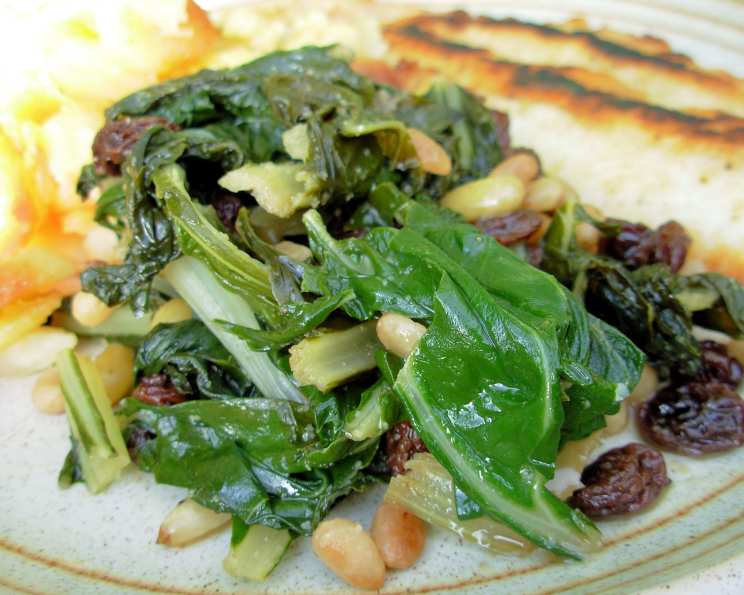
French Swiss Chard: A Culinary Journey
My earliest memory of Swiss chard involves a summer garden overflowing with vibrant green leaves and ruby-red stems. My grandmother, a true champion of simple, fresh ingredients, would always find a way to transform this humble vegetable into something extraordinary. This particular recipe, which I believe she picked up during her travels in France, always stood out. The combination of earthy chard, rich butter, fragrant rosemary, sweet raisins, and crunchy pine nuts created a symphony of flavors and textures that was both comforting and surprisingly elegant. It’s a dish that embodies the magic of taking simple ingredients and elevating them to something truly special.
Recipe Overview
- Prep Time: 10 minutes
- Cook Time: 5 minutes
- Total Time: 15 minutes
- Servings: 4
- Yield: 4 side dish servings
- Dietary Type: Vegetarian
Ingredients
- 1 bunch Swiss chard
- 3 tablespoons butter
- 1 tablespoon olive oil
- 1 tablespoon fresh rosemary, chopped
- 1/3 cup raisins (golden raisins especially nice)
- 2 tablespoons pine nuts
- Salt, to taste
- Freshly-ground black pepper, to taste
Equipment Needed
- Large, heavy-bottomed frying pan
- Cutting board
- Knife
Instructions
- Begin by preparing the Swiss chard. Remove the chard stems and the thick central vein from each leaf. These stems can be tough, so setting them aside for another use, such as a vegetable stock, is a great way to avoid waste.
- Chop the leaves very coarsely. Don’t worry about being too precise; the chard will wilt down significantly during cooking.
- Place a large, heavy-bottomed frying pan over medium-high heat. Melt the butter with the olive oil until it begins to sizzle. The combination of butter and olive oil provides both richness and prevents the butter from burning.
- Add the chard and the rosemary to the pan, stirring well to coat the chard with the butter mixture. The rosemary will infuse the chard with its fragrant aroma.
- Cook, stirring constantly, for about a minute, until the chard has wilted to about half its original volume. Continuous stirring ensures even cooking and prevents scorching.
- Add the raisins and pine nuts, stirring to combine evenly. The raisins will plump up slightly, adding a burst of sweetness, while the pine nuts will toast and become wonderfully nutty.
- Continue cooking until any moisture has evaporated. You want the chard to be tender but not watery. This entire cooking process should take no more than about 3 minutes.
- Season with salt and pepper to taste. Adjust the seasoning according to your preference.
- Serve immediately. This dish is best enjoyed fresh and hot.
Expert Tips & Tricks
- Stem Utilization: Don’t discard the chard stems! Dice them finely and sauté them separately before adding the chard leaves for a bit of extra texture and flavor. They take a few minutes longer to cook than the leaves.
- Herb Infusion: For a deeper rosemary flavor, gently bruise the rosemary sprigs with the back of a spoon before chopping. This releases more of the herb’s essential oils.
- Nut Toasting: Toast the pine nuts in a dry pan for a few minutes before adding them to the chard. This enhances their flavor and adds a delightful crunch. Watch them carefully, as they can burn quickly.
- Acidity Balance: A squeeze of fresh lemon juice or a splash of balsamic vinegar at the end can brighten the flavors and balance the richness of the butter.
- Spice it up: A pinch of red pepper flakes can add a subtle kick to the dish.
Serving & Storage Suggestions
Serve this French Swiss chard as a vibrant side dish alongside roasted chicken, grilled fish, or a hearty omelet. It also makes a delicious and healthy addition to a vegetarian or vegan meal. Garnish with a sprinkle of fresh rosemary or a drizzle of olive oil for an extra touch of elegance.
Leftovers can be stored in an airtight container in the refrigerator for up to 3 days. To reheat, gently warm in a skillet over medium heat, stirring occasionally, until heated through. Adding a little extra butter or olive oil during reheating will help to prevent the chard from drying out. While this dish is best served fresh, it can still be enjoyed as leftovers. Freezing is not recommended, as the chard may become watery upon thawing.
Nutritional Information
| Nutrient | Amount per Serving | % Daily Value |
|---|---|---|
| Calories | 190 kcal | 10% |
| Total Fat | 15g | 23% |
| Saturated Fat | 6g | 30% |
| Cholesterol | 23mg | 8% |
| Sodium | 267mg | 11% |
| Total Carbohydrate | 14g | 5% |
| Dietary Fiber | 2g | 8% |
| Sugars | 8g | – |
| Protein | 3g | 6% |
Note: Nutritional information is an estimate and may vary based on specific ingredients and portion sizes.
Variations & Substitutions
- Kale or Spinach: Substitute Swiss chard with kale or spinach for a similar earthy flavor. Keep in mind that kale may require slightly longer cooking time.
- Different Dried Fruit: Use dried cranberries, apricots, or chopped dates instead of raisins for a different sweetness profile.
- Other Nuts: Replace pine nuts with slivered almonds, chopped walnuts, or pistachios.
- Garlic Infusion: Add a minced clove of garlic to the pan along with the rosemary for an extra layer of flavor.
- Vegan Option: Substitute butter with a plant-based butter alternative or simply use olive oil for a dairy-free version.
- Citrus Zest: A touch of lemon or orange zest adds brightness and complements the other flavors.
FAQs (Frequently Asked Questions)
Q: Can I use frozen Swiss chard?
A: Yes, you can use frozen Swiss chard, but be sure to thaw it completely and squeeze out any excess water before cooking to prevent a watery dish.
Q: How do I know when the chard is cooked properly?
A: The chard is cooked properly when the leaves are wilted and tender, but still retain some texture. Avoid overcooking, as it can become mushy.
Q: Can I make this ahead of time?
A: While it’s best served fresh, you can chop the chard and rosemary in advance and store them separately in the refrigerator. Combine them just before cooking.
Q: What other herbs can I use besides rosemary?
A: Thyme, sage, or oregano would also be delicious additions to this dish. Adjust the amount to your personal preference.
Q: Is this dish gluten-free?
A: Yes, this recipe is naturally gluten-free. Ensure that any butter or other ingredients you use are also gluten-free.
Final Thoughts
This French Swiss chard recipe is a testament to the beauty of simple, fresh ingredients. It’s a dish that’s easy to prepare, yet bursting with flavor and texture. I encourage you to try it and experiment with different variations to create your own unique twist. Share your creations and feedback – I’d love to hear about your culinary adventures! Pair it with a crisp white wine for a truly delightful experience. Bon appétit!