
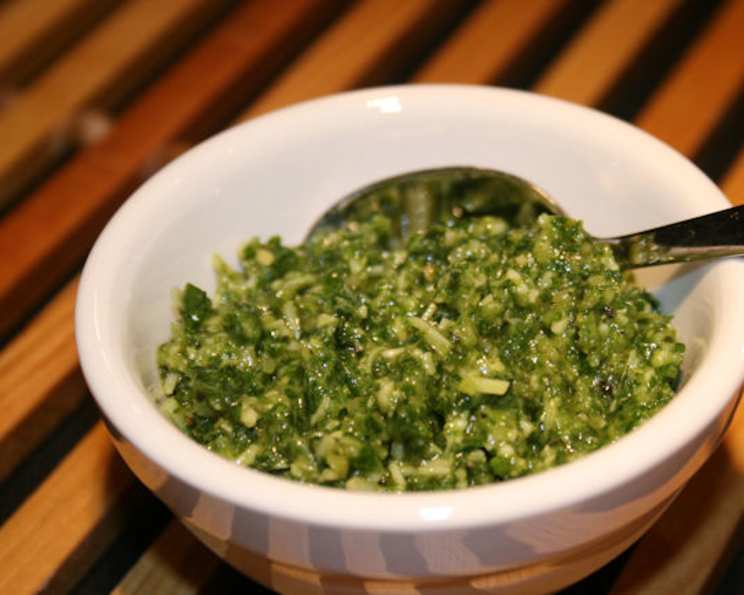
Vibrant Fresh Basil Pesto: A Symphony of Flavors
The aroma of fresh basil always transports me back to my grandmother’s sun-drenched garden in Italy. I can almost feel the warmth of the Tuscan sun on my skin as I helped her pick the fragrant leaves, their verdant hue a promise of the delicious pesto we’d make together. The rhythmic thud of the mortar and pestle, the laughter echoing through the courtyard – those are memories I cherish, and this recipe is my way of sharing a piece of that joy with you.
Recipe Overview
- Prep Time: 10 minutes
- Cook Time: 0 minutes
- Total Time: 10 minutes
- Yields: 1 cup
- Serves: 12
- Dietary Type: Vegetarian (can be vegan without Parmesan)
Ingredients
- 2 cups fresh basil leaves
- 3 garlic cloves, minced
- ½ cup extra virgin olive oil
- ⅓ cup pine nuts
- ½ teaspoon salt (finely ground sea salt or kosher recommended)
- 1 teaspoon fresh ground black pepper
- ¼ cup parmesan cheese, shredded (optional; omit for vegan)
Equipment Needed
- Food processor
- Small bowl
- Spatula
Instructions
- Fit your food processor with the steel blade attachment.
- Add the basil leaves, minced garlic, olive oil, pine nuts, salt, and pepper to the bowl of the food processor.
- Pulse the mixture several times, scraping down the sides of the bowl as needed to ensure even processing.
- Continue to pulse until the mixture forms a smooth paste. If the mixture becomes too thick, add a tiny bit more olive oil to help it blend.
- Once the pesto reaches your desired consistency, transfer it to a small bowl.
- Fold in the shredded parmesan cheese (if using) until it is evenly distributed throughout the pesto.
To Serve:
Stir a few tablespoons of pesto with a splash of cooking water from your favorite pasta. Toss with hot pasta until coated. This creates a light and creamy sauce that perfectly complements the fresh basil flavor. Pesto is also a fantastic condiment for grilled panini sandwiches, spread on toast points for an appetizer, used as a pizza sauce base, or as a flavorful garnish for fresh soups.
To Store:
To prevent oxidation and browning, cover the surface of the pesto with a thin layer of olive oil or spray it with non-stick cooking oil. Store in the refrigerator for several weeks. For long-term storage, fill ice cube trays with pesto and freeze. Once frozen, pop the pesto cubes out of the trays and transfer them to a resealable plastic bag. This allows you to thaw just the right amount of fresh pesto for your meal whenever you need it.
Expert Tips & Tricks
- Toast the pine nuts: Lightly toasting the pine nuts in a dry skillet over medium heat for a few minutes before adding them to the food processor enhances their nutty flavor and adds depth to the pesto. Watch them carefully, as they can burn quickly.
- Use high-quality olive oil: Since olive oil is a key ingredient in pesto, using a good quality extra virgin olive oil will make a noticeable difference in the final flavor. Look for one with a fruity and slightly peppery taste.
- Don’t over-process: Over-processing the basil can cause it to release bitter compounds. Pulse the ingredients in short bursts, scraping down the sides of the bowl as needed, until the pesto reaches your desired consistency.
- Add lemon juice for brightness: A squeeze of fresh lemon juice can brighten the flavors of the pesto and help to preserve its vibrant green color. Add a teaspoon or two of lemon juice to the food processor along with the other ingredients.
- Adjust the consistency: If your pesto is too thick, add more olive oil or a tablespoon of warm water at a time until it reaches your desired consistency. If it’s too thin, add more pine nuts or parmesan cheese.
- Blanch the basil: For a more vibrant green pesto that lasts longer, blanch the basil leaves in boiling water for a few seconds, then immediately transfer them to an ice bath. This helps to preserve their color and prevent them from oxidizing. Be sure to dry the blanched basil thoroughly before adding it to the food processor.
- Freeze in small portions: Freezing pesto in small portions, such as ice cube trays, allows you to easily thaw only what you need, preventing waste and ensuring that your pesto stays fresh.
Serving & Storage Suggestions
Pesto is best served fresh, but it can be stored in the refrigerator for up to a week. To prevent it from browning, cover the surface with a thin layer of olive oil or plastic wrap pressed directly onto the surface.
For longer storage, freeze pesto in ice cube trays or small containers. Frozen pesto can be stored for up to 3 months. Thaw in the refrigerator overnight or at room temperature for a few hours before using.
Pesto can be used in a variety of ways, including:
- As a sauce for pasta
- As a spread for sandwiches and wraps
- As a topping for pizza
- As a marinade for chicken or fish
- As a dip for vegetables
- Stirred into soups or stews
Nutritional Information
| Nutrient | Amount per Serving | % Daily Value |
|---|---|---|
| Calories | 117 kcal | N/A |
| Total Fat | 12.2 g | 18% |
| Saturated Fat | 1.8 g | 8% |
| Cholesterol | 1.8 mg | 0% |
| Sodium | 129.5 mg | 5% |
| Total Carbohydrate | 1.2 g | 0% |
| Dietary Fiber | 0.5 g | 1% |
| Sugars | 0.2 g | 0% |
| Protein | 1.6 g | 3% |
Variations & Substitutions
- Vegan Pesto: Omit the parmesan cheese for a delicious vegan pesto. You can add a tablespoon of nutritional yeast for a cheesy flavor, or simply enjoy the vibrant taste of the basil and other ingredients.
- Sun-Dried Tomato Pesto: Add ½ cup of oil-packed sun-dried tomatoes to the food processor along with the other ingredients for a rich and flavorful twist. Adjust the salt accordingly, as sun-dried tomatoes can be quite salty.
- Cilantro-Lime Pesto: Replace the basil with fresh cilantro and add the zest and juice of one lime for a zesty and refreshing pesto that’s perfect for Mexican-inspired dishes.
- Walnut Pesto: Substitute the pine nuts with walnuts for a more affordable and earthy pesto. Toast the walnuts lightly before adding them to the food processor for a deeper flavor.
- Spinach Pesto: Add a cup of fresh spinach to the basil for a milder and more nutritious pesto. This is a great way to sneak in extra greens!
- Arugula Pesto: Replace half of the basil with arugula for a peppery and slightly bitter pesto that pairs well with grilled meats and vegetables.
- Herb Combinations: Experiment with different combinations of herbs, such as basil and parsley, basil and mint, or basil and oregano.
FAQs (Frequently Asked Questions)
Q: Can I make pesto without a food processor?
A: Yes, you can! Traditionally, pesto is made with a mortar and pestle, which allows you to control the texture and release the flavors of the ingredients. You can also finely chop all the ingredients with a good knife or a mezzaluna.
Q: How long does pesto last in the refrigerator?
A: Pesto will last for up to a week in the refrigerator if stored properly. Cover the surface with a thin layer of olive oil or plastic wrap to prevent browning.
Q: Can I freeze pesto?
A: Yes, freezing pesto is a great way to preserve it for longer. Freeze it in ice cube trays for easy portioning.
Q: What can I use pesto on?
A: Pesto is incredibly versatile! Use it as a sauce for pasta, a spread for sandwiches, a topping for pizza, a marinade for meat or fish, or a dip for vegetables.
Q: Can I use different types of nuts in pesto?
A: Absolutely! Pine nuts are traditional, but you can also use walnuts, almonds, or pecans. Just be sure to toast them lightly before adding them to the food processor for the best flavor.
Final Thoughts
This fresh basil pesto is more than just a recipe; it’s a celebration of fresh flavors and cherished memories. I encourage you to experiment with different herbs, nuts, and cheeses to create your own signature pesto. Share it with friends and family, and let the vibrant taste of basil transport you to a sunny garden, just like it does for me. Bon appétit!