
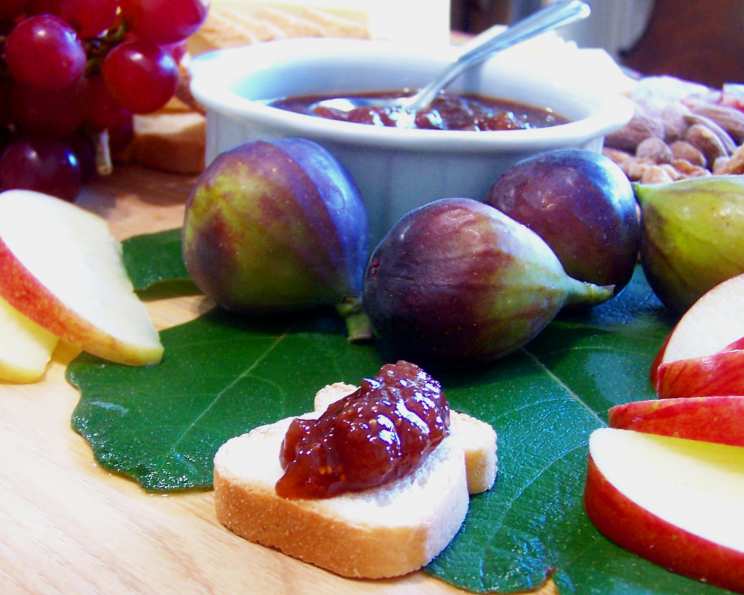
Fresh Fig and Ginger Chutney from the Auberge
The scent always transports me back. It’s late summer, the air thick with the promise of autumn, and the kitchen window is slightly ajar, letting in the last buzzing of bees drawn to the overripe figs in the garden. Sunlight catches the garnet glints of the simmering chutney on the stove, and the sharp tang of vinegar mingles with the warm, spicy whisper of ginger. This isn’t just a recipe; it’s a memory bottled, a taste of sunshine preserved against the coming winter.
Recipe Overview
- Prep Time: 20 minutes
- Cook Time: 2 hours
- Total Time: 2 hours 20 minutes
- Yields: 5 x 350g jars
- Dietary Type: Vegetarian, Gluten-Free
Ingredients
- 850g fresh figs, chopped
- 400g dried figs, chopped
- 3 large red onions, finely chopped
- 3 medium Bramley apples, peeled, cored, and diced
- 40g fresh gingerroot, cut into fine matchsticks
- 2 teaspoons ground allspice
- 1 pinch dried chili pepper flakes
- 2 teaspoons finely grated lemon zest
- 700g demerara sugar
- 2 teaspoons salt
- 800ml red wine vinegar
- 2 teaspoons fresh ground black pepper
Equipment Needed
- Large, heavy-bottomed saucepan or preserving pan
- Wooden spoon
- Sterilized jars with lids
Instructions
-
Start by preparing your ingredients. Thoroughly wash and chop the fresh figs. Then, chop the dried figs. These add a concentrated sweetness and a slightly chewy texture.
-
Peel and finely chop the red onions. Don’t skimp on this step – the finer the chop, the better they’ll melt into the chutney during cooking.
-
Peel, core, and dice the Bramley apples. Their tartness balances the sweetness of the figs. Any tart cooking apple will work if you can’t find Bramleys.
-
Next, prepare the gingerroot. Peel it and then carefully cut it into fine matchsticks. This releases the ginger’s pungent aroma and ensures it distributes evenly throughout the chutney.
-
Now, in the large saucepan, combine all the prepared ingredients: the chopped fresh figs, dried figs, red onions, Bramley apples, ginger matchsticks, ground allspice, chili pepper flakes, lemon zest, demerara sugar, salt, red wine vinegar, and fresh ground black pepper.
-
Place the saucepan over medium heat and bring the mixture to a boil, stirring occasionally to prevent sticking.
-
Once boiling, reduce the heat to low and simmer, covered, for 30 minutes. This allows the flavors to meld and the fruit to begin to soften.
-
Uncover the pan and continue to simmer for approximately 1 hour and 30 minutes, stirring frequently, until the chutney has reduced, thickened, and developed a rich, deep flavor. Monitor the chutney closely during this stage, as it can easily catch and burn if left unattended. The mixture should be thick enough to mound slightly on a spoon.
-
Keep a close eye on the moisture content. If the chutney starts to look too dry at any point during the uncovered simmering, add a splash of water to prevent it from burning and to help it reach the desired consistency.
-
Taste the chutney and correct the seasoning as needed. You might want to add a little more brown sugar if it’s not sweet enough, a splash of vinegar for extra tang, or a few more chili flakes for a bit more heat. Remember that the flavors will intensify slightly as the chutney cools.
-
Note that cooking times can vary depending on the moisture content of the figs. In some cases, the chutney may take over 2 hours to reach the desired consistency. Be patient and allow it to simmer until it’s thick and richly flavored.
-
Once the chutney is ready, carefully spoon it into the sterilized jars, leaving about 1cm of headspace at the top.
-
Seal the jars immediately with their lids. Process the jars in a boiling water bath for 10 minutes to ensure a proper seal, if desired.
-
Allow the chutney to cool completely before storing.
Expert Tips & Tricks
- For a smoother chutney, use an immersion blender to pulse the mixture a few times after it has simmered for an hour. Be careful not to over-blend, as you still want some texture.
- Don’t be afraid to adjust the spices to your taste. A pinch of ground cloves or nutmeg can add a warm, aromatic note.
- If you don’t have demerara sugar, you can substitute it with light or dark brown sugar. The flavor will be slightly different, but still delicious.
- Sterilizing your jars is crucial for long-term storage. You can do this by boiling them in water for 10 minutes or by placing them in a preheated oven at 160°C (320°F) for 10 minutes.
Serving & Storage Suggestions
This Fresh Fig and Ginger Chutney is incredibly versatile. Serve it alongside a cheese board with crusty bread or crackers. It’s also delicious with cold meats, charcuterie, or grilled sausages. Try it as a condiment for roasted vegetables or as a glaze for grilled chicken or pork. For a simple yet satisfying snack, spread it on a toasted sandwich with your favorite cheese.
Unopened, the chutney will keep for up to 8 or 9 months in a cool, dark place. Once opened, refrigerate and use within 4 weeks.
Nutritional Information
Please note that these values are estimates and may vary depending on the specific ingredients used.
| Nutrient | Amount per Serving | % Daily Value |
|---|---|---|
| Calories | 380 kcal | 19% |
| Total Fat | 2g | 3% |
| Saturated Fat | 0.5g | 3% |
| Cholesterol | 0mg | 0% |
| Sodium | 320mg | 13% |
| Total Carbohydrate | 85g | 28% |
| Dietary Fiber | 6g | 24% |
| Sugars | 75g | – |
| Protein | 1g | 2% |
Variations & Substitutions
- Spicy Fig Chutney: Increase the amount of chili flakes or add a chopped fresh chili pepper for a spicier kick.
- Fig and Orange Chutney: Substitute the lemon zest with orange zest and add a splash of orange juice during the simmering process.
- Fig and Walnut Chutney: Add toasted walnuts to the chutney during the last 30 minutes of cooking for added texture and nutty flavor.
- Fig and Balsamic Chutney: Replace a portion of the red wine vinegar with balsamic vinegar for a richer, more complex flavor.
FAQs (Frequently Asked Questions)
Q: Can I use other types of figs for this recipe?
A: Yes, you can use any variety of figs you prefer. Black Mission figs will give a richer, deeper flavor, while Kadota figs will be slightly milder.
Q: Do I have to use Bramley apples?
A: No, you can substitute Bramley apples with any tart cooking apple, such as Granny Smith or Braeburn.
Q: How do I know when the chutney is ready?
A: The chutney is ready when it has thickened and reduced to a jam-like consistency. A good test is to place a spoonful of chutney on a cold plate and let it cool for a minute. If it wrinkles when you push it with your finger, it’s ready.
Q: Can I freeze this chutney?
A: While it’s best enjoyed fresh, you can freeze chutney. Allow it to cool completely, then portion it into freezer-safe containers, leaving some headspace for expansion. Thaw overnight in the refrigerator before using.
Q: Why is my chutney too runny?
A: If your chutney is too runny, continue simmering it uncovered until it reaches the desired consistency. Make sure to stir it frequently to prevent sticking.
Final Thoughts
This Fresh Fig and Ginger Chutney from the Auberge is more than just a condiment; it’s an experience. The blend of sweet, tart, and spicy flavors is truly captivating, and the homemade touch elevates any dish. I encourage you to try this recipe and experience the joy of creating something special in your own kitchen. Share your creations with friends and family, and don’t hesitate to experiment with variations to make it your own. This chutney pairs beautifully with a glass of chilled Sauvignon Blanc or a robust red wine. Enjoy!