
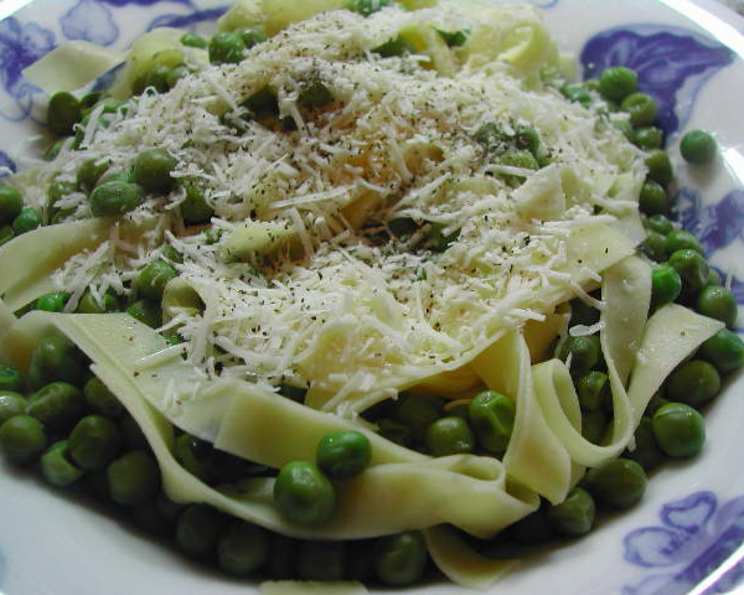
Fresh Pasta and Peas: A Springtime Symphony on Your Plate
I remember summers in my grandmother’s garden, the air thick with the scent of tomato leaves and freshly turned earth. One of my fondest memories is shelling peas with her on the porch swing, our fingers stained green, the discarded pods piling up in a worn enamel bowl. Those sweet, tender peas always found their way into Nonna’s simple yet exquisite pasta dish, a true taste of spring that I still crave to this day. It’s a dish that embodies the beauty of simple ingredients, transformed into something extraordinary.
Recipe Overview
- Prep Time: 10 minutes
- Cook Time: 20 minutes
- Total Time: 30 minutes
- Servings: 6
- Dietary Type: Vegetarian
Ingredients
- 500 g fresh peas
- Salt, to taste
- 2 spring onions, chopped
- 3 tablespoons olive oil
- 1 teaspoon parsley, chopped
- 1 cup water
- 500 g fresh tagliatelle pasta noodles
- Pecorino cheese, for grating
Equipment Needed
- Large saucepan
- Smaller saucepan
- Colander
- Cheese grater
Instructions
- Begin by preparing the peas. In a large saucepan, combine the fresh peas, salt, chopped spring onions, olive oil, chopped parsley, and water.
- Bring the mixture to a simmer over medium heat. Once simmering, reduce the heat to low, cover the saucepan, and cook gently for 15 minutes, or until the peas are tender and have released their sweetness into the sauce. Ensure the peas don’t overcook; they should retain a slight bite.
- While the peas are simmering, prepare the tagliatelle. In a separate saucepan, bring a large pot of salted water to a rolling boil.
- Add the fresh tagliatelle pasta noodles to the boiling water and cook according to package directions, typically for just a few minutes (fresh pasta cooks very quickly!).
- Once the tagliatelle is cooked al dente (tender but firm to the bite), carefully drain the pasta using a colander, reserving about a cup of the pasta water.
- Return the drained tagliatelle to the saucepan.
- Pour the cooked peas and their flavorful juices over the tagliatelle.
- Mix well, ensuring that the pasta is thoroughly coated in the pea sauce. If the sauce seems too thick, add a little of the reserved pasta water to loosen it to your desired consistency.
- Serve the pasta immediately, garnished with freshly grated pecorino cheese.
Expert Tips & Tricks
- Fresh is Best: The sweetness and tenderness of fresh peas are key to this dish. If fresh peas are unavailable, you can substitute frozen peas, but be sure to thaw them completely before adding them to the saucepan and reduce the cooking time to prevent them from becoming mushy.
- Salt Matters: Don’t be shy with the salt! Salting the pasta water and adding salt to the pea mixture helps to enhance the flavors of the ingredients.
- Pasta Water is Your Friend: The starchy pasta water is a secret weapon for creating a creamy, emulsified sauce. Don’t discard it after draining the pasta!
- Flavor Boost: For an extra layer of flavor, consider adding a small knob of butter to the pea sauce just before adding the pasta. The butter will add richness and help to bind the sauce together.
- Herb It Up: While parsley is the traditional herb, feel free to experiment with other fresh herbs like mint or basil for a different flavor profile. Add them at the very end to preserve their freshness.
- Make Ahead Tip: The pea sauce can be made ahead of time and stored in the refrigerator for up to 2 days. Simply reheat it gently before adding the cooked pasta.
Serving & Storage Suggestions
Serve this Fresh Pasta and Peas immediately after cooking for the best flavor and texture. The warmth of the pasta and the freshness of the peas create a delightful combination.
Leftovers can be stored in an airtight container in the refrigerator for up to 2 days. When reheating, add a splash of water or broth to prevent the pasta from drying out. Reheat gently in a saucepan over low heat or in the microwave.
This dish is best enjoyed fresh, but it can be frozen. To freeze, allow the pasta and pea mixture to cool completely before transferring it to an airtight container. Freeze for up to 1 month. Thaw in the refrigerator overnight before reheating. Note that the texture of the pasta may change slightly after freezing and thawing.
Nutritional Information
| Nutrient | Amount per Serving | % Daily Value |
|---|---|---|
| Calories | 450 kcal | 23% |
| Total Fat | 12g | 18% |
| Saturated Fat | 3g | 15% |
| Cholesterol | 15mg | 5% |
| Sodium | 100mg | 4% |
| Total Carbohydrate | 70g | 25% |
| Dietary Fiber | 8g | 32% |
| Sugars | 7g | 14% |
| Protein | 18g | 36% |
Variations & Substitutions
- Gluten-Free: Use gluten-free tagliatelle or another gluten-free pasta shape.
- Vegan: Omit the pecorino cheese or substitute with a vegan parmesan alternative.
- Different Cheese: If you don’t have pecorino, parmesan cheese works well too.
- Add Protein: Add some cooked shrimp, pancetta, or grilled chicken for a heartier meal.
- Spring Vegetables: Incorporate other seasonal spring vegetables like asparagus tips or fava beans for a more complex flavor.
- Lemon Zest: Add a grating of lemon zest to the pea mixture for a bright, citrusy flavor.
FAQs (Frequently Asked Questions)
Q: Can I use dried pasta instead of fresh?
A: While fresh pasta is preferred for its delicate texture, you can use dried tagliatelle or another pasta shape. Cook the dried pasta according to package directions.
Q: How do I prevent the peas from becoming mushy?
A: Avoid overcooking the peas. Cook them gently until they are tender but still slightly firm to the bite.
Q: Can I use frozen peas instead of fresh?
A: Yes, you can substitute frozen peas, but be sure to thaw them completely before adding them to the saucepan and reduce the cooking time.
Q: What if I don’t have spring onions?
A: You can substitute with a small shallot or a quarter of a regular onion, finely chopped.
Q: Can I add other vegetables to this dish?
A: Absolutely! Asparagus, zucchini, or spinach would be delicious additions.
Final Thoughts
This Fresh Pasta and Peas recipe is a celebration of spring’s bounty, a testament to the beauty of simplicity. The combination of sweet, tender peas and perfectly cooked pasta is a match made in culinary heaven. It’s a dish that’s both comforting and elegant, perfect for a weeknight dinner or a special occasion. I encourage you to try this recipe and experience the joy of creating something truly delicious. Don’t hesitate to experiment with variations and make it your own. And, of course, I’d love to hear your feedback! Consider pairing this dish with a crisp, dry white wine like a Pinot Grigio or a Sauvignon Blanc to enhance the flavors. Buon appetito!