
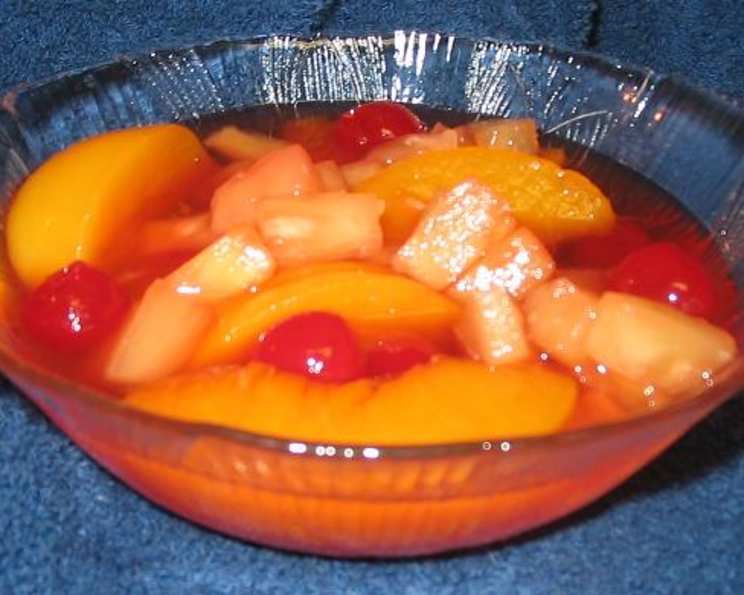
Friendship Brandy Fruit Starter: A Culinary Legacy
The memory still warms me – my grandmother’s sun-drenched kitchen, the air thick with the intoxicating aroma of fermented fruit and brandy. She’d always have a large glass jar bubbling away on the counter, a mysterious potion she called her “Friendship Fruit.” As a child, I was fascinated by the transformation of the ordinary into something so fragrant and rich. The vibrant colors of the macerated fruit, suspended in the amber liquor, hinted at the treasures it held. It wasn’t just a recipe; it was a tradition, a symbol of sharing and connection that she lovingly passed down.
Recipe Overview
- Prep Time: 15 minutes
- Stand Time: 3 weeks + continuous
- Servings: Varies (Starter yields approximately 6 cups initially)
- Dietary Type: Not suitable for children (alcohol content)
Ingredients
- 1 (20 ounce) can pineapple chunks, drained
- 1 (16 ounce) can peach slices, drained
- 1 (10 ounce) jar maraschino cherries, drained
- 1 1/4 cups sugar
- 1 1/4 cups brandy
- Additional fruit for feeding (suggestions: fruit cocktail, apricots, mandarin oranges, pears)
- Additional sugar for feeding
Equipment Needed
- Large, clean glass jar (at least 1-gallon capacity)
- Wooden spoon
Instructions
- Combine all the initial ingredients in the clean, large glass jar: the drained pineapple chunks, drained peach slices, drained maraschino cherries, sugar, and brandy.
- Stir the ingredients gently with a wooden spoon.
- Cover the jar (a loose lid or cheesecloth secured with a rubber band works well to allow for fermentation) and let it stand at room temperature for three weeks, stirring at least twice a week. This initiates the fermentation process.
- During these initial three weeks, observe the fruit. It is considered fermented when it begins to look translucent. This indicates the sugars are breaking down.
- After the initial three-week period, begin the “care and feeding” process. Stir the mixture daily.
- Every two weeks, add one cup of sugar and one cup of fruit to the jar, stirring gently to incorporate. Alternate the types of fruit you add each time to create a more complex flavor profile. For example, you might add fruit cocktail one feeding and apricots the next.
- After each feeding (adding sugar and fruit), cover the jar again and let it stand at room temperature for at least three days before using. This allows the added ingredients to ferment and integrate into the starter.
- It’s important to maintain a regular feeding schedule. Do not add fruit more often than once every two weeks. Similarly, do not delay adding fruit for more than one or two days past the scheduled feeding, as this can disrupt the fermentation balance.
- To keep the starter going indefinitely, always retain at least three cups of the fermented fruit mixture in the jar. This “mother” culture ensures the continued fermentation and flavor development.
- Sharing is a key aspect of Friendship Fruit Starter. Whenever you have more than six cups of fermented fruit, you can divide it into two portions, ensuring that each portion contains at least three cups of the starter base.
- Do this division just before you would normally feed the starter.
- Feed each portion separately with one cup of sugar and one cup of fruit, following the regular feeding instructions.
- Give one portion to a friend along with the “Care and Feeding” directions so they can continue the tradition!
- Keep the other portion for yourself to use in various recipes or enjoy as a topping.
- Search online for “friendship fruit recipes” to discover a wide variety of cakes, pies, and other desserts that incorporate this unique ingredient.
Expert Tips & Tricks
- Use a non-reactive container: A glass jar is best as it won’t impart any flavors to the starter. Avoid metal containers.
- Maintaining the temperature: Keep the starter at a consistent room temperature, ideally between 68-78°F (20-26°C). Avoid placing it near direct sunlight or heat sources, as this can affect the fermentation process.
- Check for mold: Regularly inspect the starter for any signs of mold growth. If you notice any, discard the entire batch.
- Adjust sweetness: If you prefer a less sweet starter, you can slightly reduce the amount of sugar added during feedings. However, remember that sugar is crucial for the fermentation process.
- Alcohol content: Be mindful that this starter contains alcohol due to the brandy and fermentation. The alcohol content will vary depending on the fermentation time and temperature.
- Don’t be afraid to experiment: While the core recipe is important, feel free to experiment with different types of fruit during feedings. Just be sure to avoid oily fruits like avocados, as they can negatively impact the fermentation.
- If you forget to feed it: If you miss a feeding by a day or two, it’s usually okay. Just feed it as soon as you remember. If you’ve missed it by more than a few days, the starter may become too acidic. You can try feeding it extra sugar and fruit to revive it, but if it still smells off or looks unhealthy, it’s best to start a new batch.
Serving & Storage Suggestions
Friendship Brandy Fruit Starter can be used in various ways. It’s delicious served as a topping over ice cream, pound cake, or yogurt. You can also incorporate it into cake mixes, muffins, or pies for a unique flavor and texture.
To store the starter, keep it in the glass jar at room temperature. Follow the “Care and Feeding” instructions to maintain its health and flavor. It is not recommended to refrigerate or freeze the starter, as this can slow down or stop the fermentation process. If you need to store it for a short period (e.g., while you’re on vacation), you can refrigerate it for a week, but be sure to bring it back to room temperature and feed it as soon as possible. Discard if you notice any off-putting odors or mold.
Nutritional Information
Please note that nutritional information is an estimate and may vary based on specific ingredients used.
| Nutrient | Amount per Serving (1/2 cup) | % Daily Value* |
|---|---|---|
| Calories | 250 kcal | 13% |
| Total Fat | 0g | 0% |
| Saturated Fat | 0g | 0% |
| Cholesterol | 0mg | 0% |
| Sodium | 5mg | 0% |
| Total Carbohydrate | 45g | 16% |
| Dietary Fiber | 1g | 4% |
| Sugars | 40g | – |
| Protein | 0g | 0% |
| Alcohol | Varies | – |
*Percent Daily Values are based on a 2,000 calorie diet.
Variations & Substitutions
- Different Spirits: While brandy is traditional, you can experiment with other spirits like rum or whiskey. Keep in mind that each spirit will impart its own unique flavor to the starter.
- Fruit Combinations: Get creative with the types of fruit you add during feedings. Consider using seasonal fruits or fruits that complement the base flavors.
- Spice Infusion: Add a cinnamon stick or a few cloves to the jar during the initial fermentation to infuse the starter with warm spices. Remove them before using the starter in recipes.
- Sweetener Alternatives: While sugar is essential for the fermentation process, you can experiment with different types of sugar, such as brown sugar or coconut sugar, for a slightly different flavor profile. However, be mindful that some sugar substitutes may not work as effectively.
FAQs (Frequently Asked Questions)
Q: Can I use fresh fruit instead of canned?
A: Yes, you can use fresh fruit, but be sure to cut it into small pieces and remove any pits or seeds. Canned fruit is often used because it’s readily available and already soft.
Q: How do I know if my starter is still good?
A: A healthy starter will have a pleasantly sweet and fruity aroma with a slight alcoholic tang. If it smells off, moldy, or vinegary, it’s best to discard it.
Q: What if my starter isn’t bubbling?
A: Bubbling is a sign of active fermentation, but it’s not always visible. As long as the starter smells good and the fruit looks healthy, it’s likely still fermenting. Ensure the room temperature is warm enough.
Q: Can I give this to children?
A: Due to the alcohol content from the brandy and fermentation, this starter is not suitable for children unless it is baked into a recipe where the alcohol evaporates during cooking.
Q: What can I do with the leftover fruit pulp after using the liquid?
A: The fruit pulp is delicious! Use it as a topping for yogurt, oatmeal, or ice cream. You can also blend it into smoothies or add it to muffins or quick breads.
Final Thoughts
Friendship Brandy Fruit Starter is more than just a recipe; it’s a living tradition, a symbol of generosity, and a delicious way to connect with loved ones. Whether you bake it into a comforting cake or simply spoon it over ice cream, this unique ingredient will add a touch of warmth and nostalgia to your creations. Don’t be afraid to experiment and make it your own, and most importantly, remember to share the love by passing on the starter to a friend. This culinary adventure promises a rewarding experience, steeped in history and bursting with flavor.