
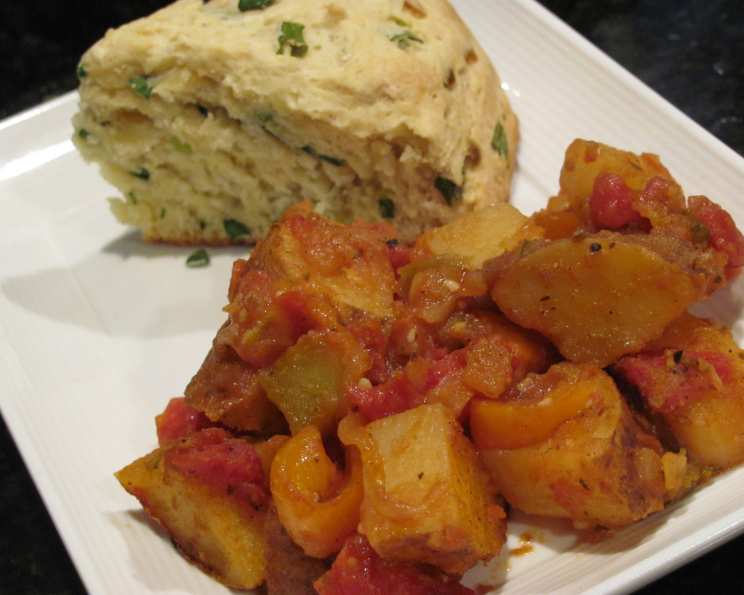
Friggione: A Rustic Celebration of Simple Flavors
My grandmother, Nonna Emilia, had a garden that was more like a sprawling edible landscape. I remember, as a child, the sheer joy of plucking sun-warmed tomatoes, their skins still dusted with earth, and running my fingers along the waxy leaves of bell peppers. She always had a pot of something simmering on the stove, and often, it was a version of this dish, Friggione. The aroma of slowly caramelized onions mingling with sweet tomatoes and earthy potatoes is a scent indelibly etched in my memory, a fragrant reminder of her love and the bounty of her garden. This recipe is my humble attempt to recreate that magic.
Recipe Overview
- Prep Time: 20 minutes
- Cook Time: 50 minutes
- Total Time: 1 hour 10 minutes
- Servings: 4-6
- Yield: About 6 cups
- Dietary Type: Vegan
Ingredients
- 1/4 cup olive oil
- 5 medium potatoes, cubed (approximately 750g)
- 2 large onions, sliced
- 2 large red peppers (or one red and one green), sliced, or 2 green peppers, sliced
- 1 (420g) can tomatoes seasoned with basil, garlic, and oregano (or “Italian Seasoned Tomatoes”)
- 1 1/2 teaspoons salt
- 1 teaspoon sugar
- Fresh ground black pepper to taste
- 2 tablespoons chopped parsley (optional)
Equipment Needed
- Large non-stick frying pan or skillet with a lid
- Knife
- Cutting board
- Measuring cups and spoons
- Spatula or wooden spoon
Instructions
-
Heat the olive oil in a large non-stick frying pan or skillet over medium heat. A non-stick pan is highly recommended to prevent the vegetables from sticking and burning during the long cooking process.
-
While the oil is heating, prepare the vegetables. Peel the potatoes and cut them into approximately 1cm cubes. Slice the onions and the peppers into strips. Uniformity in size will help the vegetables cook evenly.
-
Add the cubed potatoes, sliced onions, and sliced peppers to the hot olive oil. Stir to coat the vegetables evenly with the oil.
-
Cover the pan with a lid and cook over low to moderate heat for about 20 minutes, stirring several times. This allows the vegetables to soften and lightly brown without burning. It’s crucial to maintain a low to moderate heat to prevent sticking and encourage caramelization. Do not try to hurry this step by cooking on a high heat.
-
After 20 minutes, add the can of tomatoes and their juice to the pan. Break up the tomatoes with a spoon.
-
Season the mixture with salt, sugar, and fresh ground black pepper. The sugar helps to balance the acidity of the tomatoes.
-
Cook uncovered for a further 15-30 minutes, or until the mixture darkens in color and the liquid has reduced significantly, leaving only a small amount of sauce coating the vegetables. Stir occasionally to prevent sticking and ensure even cooking. Again, do not use a high heat. The consistency you’re aiming for is a thick, almost jam-like mixture.
-
Taste and adjust the seasoning as needed. Add more salt, pepper, or even a pinch of red pepper flakes for a little heat.
-
If using, sprinkle with the chopped parsley before serving.
-
Serve hot or warm. This dish reheats well, making it perfect for making ahead.
Expert Tips & Tricks
- The secret to great Friggione is patience. The slow cooking process allows the flavors to meld and intensify. Don’t rush it!
- Choose the right tomatoes. Canned tomatoes seasoned with basil, garlic, and oregano add a depth of flavor, but you can use plain diced tomatoes and add your own Italian seasoning blend (about 1 teaspoon).
- Control the moisture. If the mixture is too watery after 30 minutes of uncovered cooking, increase the heat slightly to encourage evaporation, but be careful not to burn the vegetables.
- Enhance the flavor. A splash of balsamic vinegar towards the end of cooking can add a lovely tangy note.
- Make it ahead. Friggione actually tastes better the next day, as the flavors continue to develop. Store it in the refrigerator and reheat gently before serving.
- Prevent Sticking: Adding a tablespoon of water if the mixture begins to stick during the uncovered cooking phase can help to deglaze the pan and prevent burning, without adding excessive liquid.
Serving & Storage Suggestions
Friggione is incredibly versatile. It can be served as a side dish alongside grilled sausages, pork chops, steak, or roasted chicken. It’s also delicious as a vegetarian main course, served with crusty bread for dipping.
To store leftovers, allow the Friggione to cool completely before transferring it to an airtight container. It will keep in the refrigerator for up to 3-4 days. Reheat gently in a saucepan over low heat, stirring occasionally, or in the microwave. You can also freeze Friggione for up to 2 months. Thaw it overnight in the refrigerator before reheating.
Nutritional Information
| Nutrient | Amount per Serving | % Daily Value |
|---|---|---|
| Calories | 320 kcal | 16% |
| Total Fat | 12g | 18% |
| Saturated Fat | 2g | 10% |
| Cholesterol | 0mg | 0% |
| Sodium | 750mg | 31% |
| Total Carbohydrate | 50g | 17% |
| Dietary Fiber | 7g | 28% |
| Sugars | 9g | 18% |
| Protein | 5g | 10% |
Note: Nutritional information is an estimate and may vary based on specific ingredients and portion sizes.
Variations & Substitutions
- Spicy Friggione: Add a pinch of red pepper flakes or a finely chopped chili pepper to the pan along with the other vegetables for a spicy kick.
- Herby Friggione: Experiment with different herbs, such as thyme, rosemary, or oregano, in addition to the parsley.
- Smoked Paprika Friggione: A teaspoon of smoked paprika adds a smoky depth of flavor.
- Sweet Potato Friggione: Substitute some of the potatoes with sweet potatoes for a slightly sweeter and more vibrant dish.
- Eggplant Friggione: Add diced eggplant to the pan along with the other vegetables.
- Dairy-Free Creamy Friggione: Stir in a tablespoon or two of nutritional yeast at the end of cooking for a cheesy, creamy flavor.
FAQs (Frequently Asked Questions)
Q: Can I use fresh tomatoes instead of canned?
A: Yes, absolutely! Use about 1 kg of ripe, peeled, and chopped fresh tomatoes. You may need to adjust the cooking time to allow the excess moisture from the fresh tomatoes to evaporate.
Q: Can I add meat to Friggione?
A: While traditionally vegetarian, you can certainly add cooked sausage, bacon, or pancetta to the pan along with the other vegetables for a heartier dish.
Q: How do I know when the Friggione is done?
A: The Friggione is done when the vegetables are tender, the sauce has thickened, and the mixture has darkened in color. There should only be a small amount of sauce left coating the vegetables.
Q: Can I make this in a slow cooker?
A: Yes, you can! Add all the ingredients to a slow cooker and cook on low for 6-8 hours, or on high for 3-4 hours. There is no need to pre-cook the vegetables. You may need to remove the lid during the last hour of cooking to allow the sauce to thicken.
Q: What if my Friggione is too acidic?
A: The teaspoon of sugar usually balances the acidity of the tomatoes, but if it’s still too acidic for your taste, add another 1/2 teaspoon of sugar or a pinch of baking soda to neutralize the acidity.
Final Thoughts
Friggione is more than just a side dish; it’s a celebration of simple, fresh ingredients transformed into something truly special through the magic of slow cooking. I encourage you to try this recipe and experience the comforting flavors for yourself. Feel free to experiment with different variations and substitutions to make it your own. And please, share your creations and feedback – I’d love to hear how you make this rustic dish your own! Serve it with a glass of chilled red wine for the perfect Mediterranean meal. Buon appetito!