
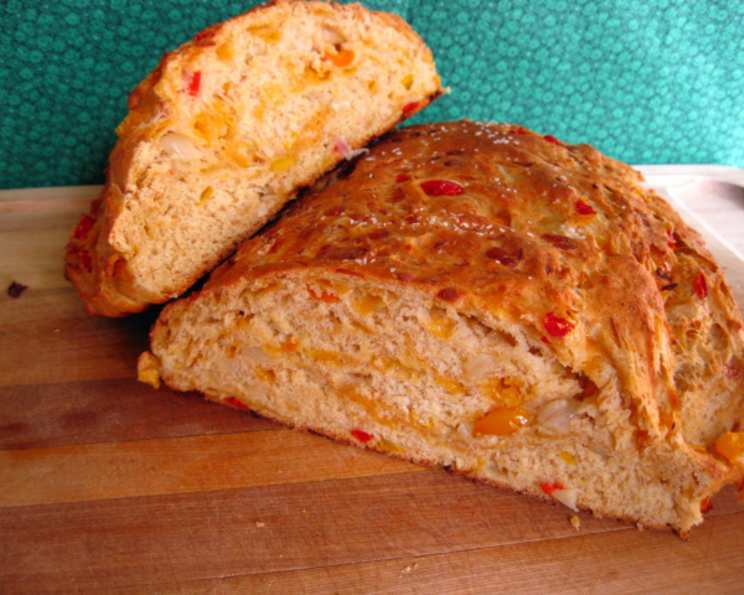
Fugassa: A Cheesy Pepper Bread Symphony
The scent of baking bread always transports me back to my grandmother’s kitchen. But it wasn’t just any bread – it was her signature Fugassa. I remember standing on a stool, barely tall enough to see over the counter, watching her knead the dough with strong, flour-dusted hands. The vibrant colors of the bell peppers she’d sautéed filled the air with sweetness, a welcome contrast to the savory aroma of cheddar cheese that would soon fill our home. It was a simple pleasure, but one that remains etched in my memory as the epitome of comfort and love.
Recipe Overview
- Prep Time: 45 minutes
- Cook Time: 30 minutes
- Total Time: 2 hours 30 minutes
- Yields: 1 loaf
- Dietary Type: Vegetarian
Ingredients
- 2 tablespoons olive oil
- 1/2 cup finely chopped onion
- 1 1/2 cups chopped bell peppers (a combination of colors is recommended for visual appeal)
- 1 (2 teaspoon) package dry yeast
- 1 1/4 cups lukewarm water (110°F)
- 1 teaspoon salt
- 1 tablespoon granulated sugar
- 4 cups unbleached all-purpose flour (such as King Arthur Unbleached All-Purpose Flour, or 3 cups white and 1 cup whole wheat)
- 2 cups shredded sharp cheddar cheese, divided
- Coarse sea salt (optional)
Equipment Needed
- Large skillet
- Large bowl
- Measuring cups and spoons
- Mixing spoon or stand mixer
- Floured surface
- Oiled bowl
- Kitchen towel
- Baking sheet
- Cooling rack
Instructions
-
Begin by preparing the vegetable base. In a large skillet, heat the olive oil over medium-low heat. Add the finely chopped onion and cook slowly until it becomes transparent, approximately 5-7 minutes. Slow cooking allows the natural sugars in the onions to caramelize, enhancing their sweetness.
-
Add the chopped bell peppers to the skillet with the softened onions. Continue to cook slowly, stirring occasionally, until the peppers are slightly softened and their flavors have melded with the onions. This should take another 5-7 minutes. Remove the skillet from the heat and set aside to cool to lukewarm. Ensure the mixture isn’t too hot when added to the yeast, as excessive heat can inhibit its activity.
-
In a large bowl, proof the dry yeast by stirring it into the lukewarm water. Allow it to sit for a few minutes until it softens and begins to foam, indicating that the yeast is active. This step is crucial for a good rise in the dough.
-
Add the salt, sugar, 2 cups of the flour, 1 cup of the shredded cheddar cheese, and the cooled peppers and onions to the yeast mixture. Beat vigorously for 2 minutes, ensuring all ingredients are well combined. This initial mixing helps develop the gluten structure in the flour.
-
Gradually add the remaining flour, a little at a time, until you have a dough that is stiff enough to knead. The amount of flour needed may vary depending on humidity and the type of flour used, so add it cautiously.
-
Turn the dough out onto a lightly floured surface. Knead the dough, adding flour as necessary to prevent sticking, until it becomes smooth and elastic. This process typically takes 8-10 minutes. Proper kneading is essential for developing the gluten, which gives the bread its structure and chewiness.
-
Place the kneaded dough into an oiled bowl, turning it once to coat the entire ball with oil. This prevents the dough from drying out during the rising process. Cover the bowl with a clean kitchen towel and let it rise in a warm place until doubled in size, about 1 hour. The rising time may vary depending on the temperature of your environment.
-
Once the dough has doubled, turn it out onto a work surface. Knead in the remaining 1 cup of cheddar cheese, leaving large streaks of cheese visible throughout the dough. These streaks will toast beautifully during baking, adding both visual appeal and a burst of cheesy flavor.
-
Shape the dough into a ball. Flatten the top slightly and place it on a well-greased baking sheet. This prevents the loaf from sticking during baking. Cover the dough with a towel and let it rise for another 45 minutes. This second rise allows the dough to relax and develop further flavor.
-
Just before baking, brush the top of the loaf with cold water. This creates a crispier crust. Sprinkle the top with coarse sea salt, if desired, for added flavor and texture.
-
Using a sharp knife or lame, slit the loaf in three places, about 1/2-inch deep, across the top. These slits allow the bread to expand during baking and prevent it from cracking unevenly.
-
For added crispness, create steam in the oven during the first 10 minutes of baking. One method is to place 2 cups of ice cubes directly on the floor of the preheated oven. Alternatively, you can place a pan of boiling water on the bottom shelf of the oven and remove it after the first 10 minutes. Work quickly to minimize heat loss.
-
Bake in a preheated 400°F (200°C) oven for 30 minutes, or until the bread is golden brown and sounds hollow when tapped on the bottom. Baking times may vary depending on your oven, so monitor the bread closely.
-
Immediately remove the bread from the baking sheet and place it on a cooling rack to cool completely before slicing and serving. This prevents the bottom of the bread from becoming soggy.
Expert Tips & Tricks
- Cheese Streaks: Don’t over-knead after adding the second portion of cheese. The visible streaks create pockets of intense flavor and visual interest.
- Pepper Prep: Roasting the bell peppers before chopping will intensify their sweetness and add a smoky depth to the bread.
- Dough Consistency: The dough should be slightly sticky but manageable. Resist the urge to add too much flour, as this can result in a dry bread.
- Steam is Key: If you don’t have ice or a pan, a quick spritz of water inside the oven right as you close the door will also help.
Serving & Storage Suggestions
Fugassa is delicious served warm or at room temperature. It pairs perfectly with cold cuts, cheeses, pasta salad, or a refreshing chilled soup. It’s also fantastic on its own, perhaps with a drizzle of olive oil.
Store leftover Fugassa in an airtight container at room temperature for up to 2 days, or in the refrigerator for up to 5 days. For longer storage, freeze the bread, tightly wrapped, for up to 2 months. To reheat, wrap in foil and warm in a 350°F (175°C) oven for 10-15 minutes, or until heated through.
Nutritional Information
| Nutrient | Amount per Serving | % Daily Value |
|---|---|---|
| Calories | 3121 kcal | N/A |
| Calories from Fat | 970 g | 31 % |
| Total Fat | 108 g | 165% |
| Saturated Fat | 52 g | 262% |
| Cholesterol | 237 mg | 79% |
| Sodium | 3763 mg | 156% |
| Total Carbohydrate | 418 g | 139% |
| Dietary Fiber | 21 g | 83% |
| Sugars | 24 g | N/A |
| Protein | 114 g | 227% |
Note: Nutritional information is an estimate and may vary based on specific ingredients and portion sizes.
Variations & Substitutions
- Gluten-Free: Substitute the all-purpose flour with a high-quality gluten-free blend. Be sure to add a binder like xanthan gum to improve the texture.
- Vegan: Replace the cheddar cheese with a plant-based alternative. Nutritional yeast can add a cheesy flavor.
- Herbed Fugassa: Add fresh herbs like rosemary, thyme, or oregano to the dough for an aromatic twist.
- Spicy: Incorporate a pinch of red pepper flakes or chopped jalapeños for a touch of heat.
- Seasonal Vegetables: Experiment with different seasonal vegetables, such as zucchini, eggplant, or sun-dried tomatoes.
FAQs (Frequently Asked Questions)
Q: Can I use active dry yeast instead of instant yeast?
A: Yes, you can. Activate the active dry yeast in the lukewarm water for about 5-10 minutes before adding the other ingredients.
Q: Why is my dough not rising?
A: Possible reasons include using expired yeast, water that is too hot or too cold, or a room that is too cold for the dough to rise properly. Ensure your yeast is fresh and the water is at the correct temperature.
Q: Can I make the dough ahead of time?
A: Yes, you can prepare the dough and let it rise in the refrigerator overnight. This slow fermentation will enhance the flavor of the bread.
Q: How do I prevent the cheese from burning during baking?
A: Make sure the cheese is incorporated well into the dough and that the oven temperature is accurate. If the cheese starts to brown too quickly, tent the loaf with foil.
Q: Can I freeze the baked bread?
A: Yes, wrap the baked bread tightly in plastic wrap and then in foil before freezing. Thaw completely before reheating.
Final Thoughts
This Fugassa recipe is more than just a bread; it’s an experience. The combination of sweet peppers, savory cheese, and the comforting aroma of baking bread is sure to delight your senses. Don’t be afraid to experiment with different vegetables, herbs, and cheeses to create your own unique masterpiece. Share your creation with friends and family, and let the warmth of this homemade bread fill your home with love and joy. I encourage you to try this recipe and share your results – and any creative twists you’ve added! – with me. Happy baking!