
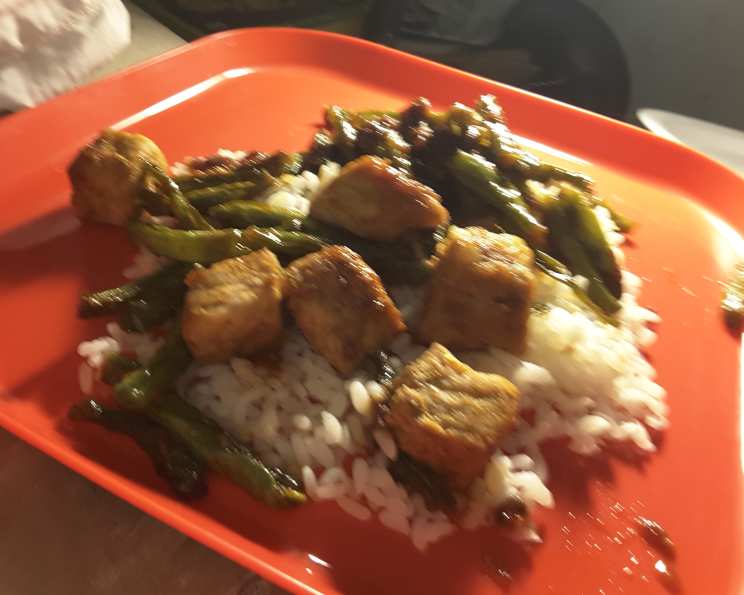
Gai Pad Khing: A Taste of Thai Home Cooking
The scent of ginger sizzling in hot oil takes me straight back to my culinary school days. We had a Thai exchange student named Pim who, homesick and missing her family’s cooking, would occasionally whip up a batch of Gai Pad Khing in our shared kitchen. The aroma, a symphony of pungent ginger, savory fish sauce, and sweet sugar, would fill the entire floor, drawing us all in like moths to a flame. More than just a dish, it was a warm hug on a cold day, a little piece of Thailand shared with friends.
Recipe Overview
- Prep Time: 15 minutes
- Cook Time: 25 minutes
- Total Time: 40 minutes
- Servings: 3
- Dietary Type: Adaptable (see variations)
Ingredients
- 1 cup chicken breast, cut into bite-sized pieces
- 3 cups green beans, fresh or frozen
- 3 tablespoons curry paste, start with 1 and adjust to taste
- 3 tablespoons oil (vegetable, canola, or peanut)
- 4 tablespoons fish sauce
- 1 tablespoon sugar
Equipment Needed
- Cutting board
- Knife
- Wok or large skillet
- Spatula or wooden spoon
Instructions
-
Begin by prepping your ingredients. Cut the chicken breast into bite-sized pieces. If using fresh green beans, wash them thoroughly and cut them into 1-inch pieces. If using frozen green beans, there is no need to thaw them beforehand.
-
Place your wok or large skillet over medium-high heat. Once heated, add the oil. Allow the oil to heat up for a few seconds.
-
Carefully add the curry paste to the hot oil. Stir-fry the curry paste for about 1-2 minutes, or until fragrant. Be careful not to burn the curry paste, as this can make the dish bitter. Start with 1 tablespoon of curry paste and add more according to your spice preference.
-
Add the chicken to the wok. Stir-fry until the chicken is cooked through and no longer pink. This should take approximately 5-7 minutes, depending on the size of the chicken pieces.
-
Add the green beans to the wok. Stir-fry for about 5-8 minutes, or until the green beans are crisp-tender. If you prefer softer green beans, cook them for a longer period.
-
Add the fish sauce and sugar to the wok. Stir well to combine all the ingredients and ensure the sugar is dissolved.
-
Continue to cook for another 2-3 minutes, allowing the sauce to thicken slightly and the flavors to meld together. Taste and adjust the seasoning as needed. You may want to add a little more fish sauce for saltiness or sugar for sweetness, depending on your preference.
-
Remove from heat and serve immediately.
Expert Tips & Tricks
- Ginger Power: The secret to a truly authentic Gai Pad Khing lies in the ginger. If you have fresh ginger available, consider adding about 1 tablespoon of minced fresh ginger to the stir-fry along with the curry paste for an extra burst of flavor.
- Spice Level Control: The amount of curry paste dictates the heat level of the dish. Start small and increase incrementally, tasting as you go. Remember, it’s easier to add spice than to take it away!
- Chicken Perfection: To ensure perfectly cooked chicken, cut the pieces uniformly and don’t overcrowd the wok. Overcrowding lowers the temperature and can result in uneven cooking.
- Crisp Green Beans: For crisp-tender green beans, use high heat and avoid overcooking. They should still have a slight bite to them.
- Don’t Forget the Aromatics: A dash of sesame oil at the end can add a nutty aroma and enhance the overall flavor profile. Consider adding a sprinkle of toasted sesame seeds as a garnish.
Serving & Storage Suggestions
Gai Pad Khing is best served hot and fresh, ideally with a side of fluffy jasmine rice to soak up all that delicious sauce. A sprinkle of fresh cilantro or chopped green onions adds a pop of color and freshness. For a complete Thai meal, pair it with a refreshing cucumber salad or a spicy bowl of Tom Yum soup.
Leftovers can be stored in an airtight container in the refrigerator for up to 3 days. To reheat, simply microwave until heated through, or stir-fry in a pan with a little oil until warmed. A splash of water or chicken broth can help to rehydrate the chicken and green beans.
Nutritional Information
(Estimates, may vary based on specific ingredients and portion sizes)
| Nutrient | Amount per Serving | % Daily Value |
|---|---|---|
| Calories | 320 kcal | 16% |
| Total Fat | 18g | 28% |
| Saturated Fat | 4g | 20% |
| Cholesterol | 75mg | 25% |
| Sodium | 1200mg | 50% |
| Total Carbohydrate | 20g | 7% |
| Dietary Fiber | 5g | 20% |
| Sugars | 7g | |
| Protein | 20g | 40% |
Variations & Substitutions
- Vegetarian Delight: Replace the chicken with firm tofu or tempeh for a vegetarian version. Press the tofu to remove excess water and cut it into bite-sized pieces before stir-frying.
- Protein Power: Use shrimp, beef, or pork instead of chicken for a different protein source. Adjust cooking times accordingly.
- Veggie Variety: Add other vegetables such as bell peppers, mushrooms, onions, or carrots for extra nutrients and flavor.
- Spice It Up: Add a pinch of red pepper flakes or a finely chopped chili pepper for an extra kick.
- Nut-Free Option: While traditionally peanuts might be added, you can easily omit these for a nut-free version. Consider adding sunflower seeds for a bit of crunch.
- Lower Sodium: Use low-sodium fish sauce and adjust the amount to control the salt content.
FAQs (Frequently Asked Questions)
Q: Can I use dried curry powder instead of curry paste?
A: While curry powder can be used in a pinch, curry paste provides a much richer and more complex flavor. If using curry powder, start with 1 tablespoon and adjust to taste.
Q: Can I use frozen green beans for this recipe?
A: Yes, frozen green beans work perfectly well in this recipe. There is no need to thaw them before adding them to the wok.
Q: How do I prevent the green beans from becoming mushy?
A: Use high heat and cook the green beans for a shorter period to maintain their crisp-tender texture.
Q: Can I make this dish ahead of time?
A: While it’s best served fresh, you can prepare the chicken and vegetables ahead of time and store them separately in the refrigerator. When ready to serve, simply stir-fry them together with the sauce.
Q: What is fish sauce, and can I substitute it?
A: Fish sauce is a fermented fish sauce that is a staple in Thai cuisine. It adds a salty and umami flavor to the dish. If you don’t have fish sauce, you can substitute it with soy sauce, but the flavor will be slightly different.
Final Thoughts
Gai Pad Khing is more than just a recipe; it’s an invitation to explore the vibrant flavors of Thai cuisine. It’s a dish that’s both comforting and exciting, simple enough for a weeknight dinner but impressive enough for a special occasion. So, grab your wok, gather your ingredients, and let the aroma of ginger transport you to the bustling streets of Thailand. Don’t be afraid to experiment with variations and make it your own. And, most importantly, share your culinary creation with loved ones and enjoy the joy of good food and good company!