
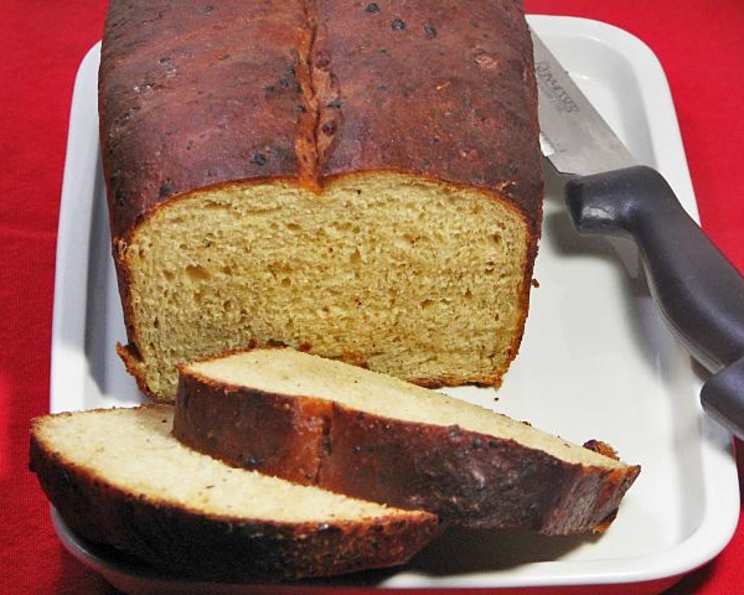
Garlic Asiago Bread (ABM): A Culinary Embrace
The aroma always hits me first. It’s a memory woven into the very fabric of my childhood—the heady scent of garlic mingling with the nutty tang of Asiago, rising from a loaf of bread, still warm from the bread machine. My grandmother, a practical but passionate cook, would often whip up this Garlic Asiago Bread on chilly afternoons. It wasn’t just food; it was a hug in edible form, a symbol of comfort and home. This recipe is my attempt to recreate that feeling, to share a little piece of that warmth with you.
Recipe Overview
- Prep Time: 15 minutes
- Cook Time: Varies (depending on bread machine)
- Total Time: Approximately 3 hours 15 minutes (including machine cycle)
- Servings: Approximately 12 slices
- Yield: 1 1/2 pound loaf
- Dietary Type: Not suitable for gluten-free, dairy-free, or vegan diets
Ingredients
- 1 3⁄4 cups whole wheat flour
- 1 cup white bread flour
- 1⁄4 cup gluten flour (or add 1/4 cup all purpose flour)
- 3⁄4 cup Asiago cheese, grated (or 3/4 cup Parmesan cheese)
- 2 tablespoons dry milk
- 3 garlic cloves, crushed
- 1 tablespoon fresh basil, minced (or 1 teaspoon dried basil)
- 2 teaspoons fresh oregano, minced (or 3/4 teaspoon dried oregano)
- 2 teaspoons fresh rosemary, minced (or 1/2 teaspoon dried rosemary)
- 1 1⁄2 teaspoons sea salt (or coarse salt)
- 1 1⁄4 cups water
- 2 tablespoons olive oil
- 1 teaspoon honey
- 4 teaspoons active dry yeast
Equipment Needed
- Bread Machine
- Measuring cups and spoons
- Grater (for cheese)
- Knife and cutting board (for herbs and garlic)
- Cooling rack
Instructions
- Ensure your bread machine pan is clean and dry. This helps prevent sticking and ensures even baking.
- Add the ingredients to the bread machine pan in the order specified by your bread machine manufacturer. Generally, this means starting with the wet ingredients.
- Pour in 1 1/4 cups of water. Make sure the water is at room temperature or slightly warm. Too hot, and it might kill the yeast; too cold, and the yeast won’t activate properly.
- Add 2 tablespoons of olive oil to the pan. Olive oil helps to keep the bread moist and contributes to a softer crust.
- Drizzle in 1 teaspoon of honey. The honey provides a touch of sweetness and helps to activate the yeast.
- Now, for the dry ingredients. Begin with 1 3/4 cups of whole wheat flour. Whole wheat flour adds a nutty flavor and hearty texture to the bread.
- Follow this with 1 cup of white bread flour. Bread flour has a higher protein content than all-purpose flour, which helps to create a stronger gluten structure and a chewier texture.
- If you have it, add 1/4 cup of gluten flour. If you don’t have gluten flour, you can substitute with 1/4 cup of all-purpose flour. Gluten flour enhances the elasticity and rise of the bread.
- Add 2 tablespoons of dry milk. Dry milk adds richness and helps to tenderize the crumb of the bread.
- Measure out 1 1/2 teaspoons of sea salt. Salt controls the yeast activity and enhances the flavor of the bread.
- Now comes the flavor explosion. Add 3 crushed garlic cloves. Don’t be shy with the garlic; it’s what makes this bread so special. Freshly crushed is best for maximum flavor.
- Add 1 tablespoon of minced fresh basil (or 1 teaspoon dried basil), 2 teaspoons of minced fresh oregano (or 3/4 teaspoon dried oregano), and 2 teaspoons of minced fresh rosemary (or 1/2 teaspoon dried rosemary). The combination of these herbs creates a delightful aromatic profile.
- Then add 3/4 cup of grated Asiago cheese (or 3/4 cup Parmesan cheese). Asiago cheese is a semi-hard cow’s milk cheese with a nutty, slightly tangy flavor. Parmesan cheese can be used as a substitute if Asiago is unavailable.
- Make a small well in the center of the dry ingredients, and add 4 teaspoons of active dry yeast. Be sure to check the expiration date of your yeast to ensure it’s still active.
- Secure the bread machine pan in the machine.
- Set the bread machine to the whole wheat cycle. This cycle typically includes a longer kneading and rising time, which is necessary for whole wheat bread.
- Press start.
- Once the bread machine has finished its cycle, carefully remove the bread pan. Use oven mitts, as the pan will be hot.
- Turn the pan upside down and gently shake to release the loaf. If the bread doesn’t come out easily, try using a heat-resistant spatula to loosen the sides.
- Place the loaf on a cooling rack and let it cool completely before slicing. This is crucial for preventing a gummy texture.
Expert Tips & Tricks
- Cheese Placement: For a more even distribution of cheese, consider adding half of the cheese at the beginning and the other half during the kneading cycle (if your machine allows). This prevents the cheese from clumping together at the bottom.
- Herb Infusion: To enhance the herbal flavors, gently heat the olive oil with the herbs for a few minutes before adding it to the bread machine. This infuses the oil with the herbs’ essential oils. Allow the oil to cool slightly before adding it.
- Dough Consistency: If the dough appears too dry, add water one tablespoon at a time until it reaches the desired consistency. If it’s too wet, add flour one tablespoon at a time. The dough should be slightly sticky but not overly so.
- Proofing Yeast: To ensure your yeast is active, proof it before adding it to the bread machine. In a small bowl, combine the yeast with a tablespoon of warm water and a teaspoon of sugar or honey. If the mixture becomes foamy after 5-10 minutes, the yeast is active and ready to use.
- Garlic Intensity: For a stronger garlic flavor, roast the garlic cloves before crushing them. Roasting mellows the garlic and brings out its sweetness.
Serving & Storage Suggestions
Serve this Garlic Asiago Bread warm or at room temperature. It’s delicious on its own, with a drizzle of olive oil, or alongside soups, salads, or pasta dishes. It also makes a fantastic sandwich bread.
To store, wrap the cooled bread tightly in plastic wrap or place it in an airtight container. It will keep at room temperature for 2-3 days, in the refrigerator for up to a week, or in the freezer for up to 2 months. To reheat frozen bread, thaw it completely and then warm it in a 350°F (175°C) oven for 5-10 minutes.
Nutritional Information
| Nutrient | Amount per Serving (approximate) | % Daily Value (approximate) |
|---|---|---|
| Calories | 1128.9 kcal | N/A |
| Calories from Fat | 237 g | 21% |
| Total Fat | 26.4 g | 40% |
| Saturated Fat | 5.2 g | 25% |
| Cholesterol | 9.9 mg | 3% |
| Sodium | 2387.6 mg | 99% |
| Total Carbohydrate | 183.1 g | 61% |
| Dietary Fiber | 21.5 g | 86% |
| Sugars | 8.7 g | 34% |
| Protein | 49.8 g | 99% |
Note: Nutritional information is an estimate and can vary based on specific ingredients and portion sizes.
Variations & Substitutions
- Parmesan Asiago Bread: As mentioned before, you can substitute Parmesan cheese for Asiago if needed. The flavor will be slightly different, but still delicious.
- Herb Variations: Feel free to experiment with different herbs. Thyme, sage, or chives would all be wonderful additions.
- Spicy Garlic Asiago Bread: Add a pinch of red pepper flakes to the dough for a touch of heat.
- Olive Addition: Incorporate 1/2 cup of chopped Kalamata olives or green olives into the dough for a Mediterranean twist.
- Sun-Dried Tomato: Mix in 1/2 cup of chopped sun-dried tomatoes (oil-packed, drained) for a burst of tangy sweetness.
FAQs (Frequently Asked Questions)
Q: My bread machine doesn’t have a whole wheat cycle. What should I do?
A: Use the closest setting to a whole wheat cycle, such as a “basic” or “rapid” cycle. Monitor the dough and adjust the baking time if necessary.
Q: Can I use instant yeast instead of active dry yeast?
A: Yes, you can. Use the same amount (4 teaspoons) and add it directly to the dry ingredients. You don’t need to proof instant yeast.
Q: My bread is too dense. What could be the problem?
A: This could be due to several factors, including using old yeast, not enough water, or over-kneading the dough. Make sure your yeast is fresh and that you’re using the correct amount of water. Also, avoid over-kneading the dough, as this can develop too much gluten and result in a dense loaf.
Q: Can I make this bread by hand without a bread machine?
A: Yes, you can. Mix the ingredients in a bowl, knead the dough for 8-10 minutes, let it rise in a warm place for 1-2 hours, then bake in a preheated oven at 375°F (190°C) for 30-40 minutes.
Q: The crust is too dark. How can I prevent this?
A: If the crust is browning too quickly, tent the bread with aluminum foil during the last 15-20 minutes of baking.
Final Thoughts
This Garlic Asiago Bread is more than just a recipe; it’s an invitation to create memories, to share warmth, and to savor the simple pleasures of life. I encourage you to try it, to experiment with the variations, and to make it your own. Share your creations and feedback, and perhaps even pair it with a comforting bowl of tomato soup or a glass of robust red wine. From my kitchen to yours, happy baking!