
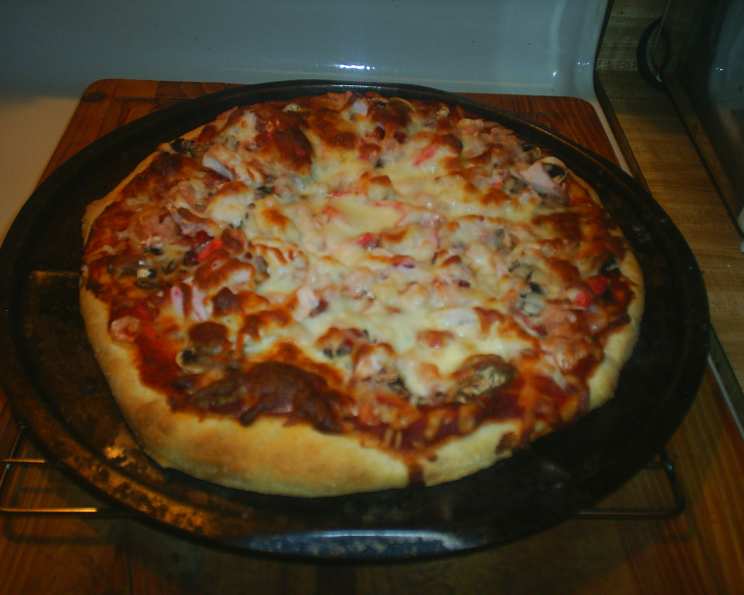
Garlic Rosemary Pizza Crust: A Taste of Tuscany in Your Kitchen
The scent of garlic and rosemary mingling with warm, yeasty dough… it takes me back to a tiny trattoria tucked away in the Tuscan hills. The owner, a kind woman named Nonna Emilia, would let me help stretch the dough for the evening’s pizzas, her hands gnarled but gentle. This recipe is my attempt to capture that simple, rustic magic – the perfect canvas for any pizza creation.
Recipe Overview
- Prep Time: 20 minutes
- Cook Time: 30 minutes
- Total Time: 1 hour 50 minutes (includes rising time)
- Servings: 8
- Yield: 2 large pizzas
- Dietary Type: Vegetarian
Ingredients
- 1 package (1/4 ounce) yeast
- 1 cup warm water (100-120 degrees F)
- 3 cups flour
- 1 tablespoon sugar
- 1/2 teaspoon salt
- 1 1/2 garlic cloves, minced (approximately 3/4 teaspoon)
- 1/2 teaspoon dried rosemary, crushed
- 1/4 cup oil (olive oil recommended)
Equipment Needed
- Mixing bowl
- Measuring cups and spoons
- Dough hook (for stand mixer, optional)
- Pizza pan(s)
- Damp towel
- Greased pizza pan
Instructions
-
Begin by activating the yeast. In a small bowl, combine the yeast with the warm water. Allow the mixture to sit for approximately 10 minutes, or until the yeast has completely dissolved and becomes foamy. This step is crucial to ensure your crust rises properly. If the yeast doesn’t foam, it’s likely inactive and you’ll need to start with fresh yeast.
-
While the yeast is activating, prepare the dry ingredients. In the bowl of a stand mixer fitted with a dough hook (or in a large mixing bowl if kneading by hand), combine the flour, sugar, salt, crushed rosemary, and minced garlic. Make sure the ingredients are evenly distributed for a consistent flavor throughout the crust.
-
Once the yeast is dissolved, it’s time to bring everything together. With the mixer on low speed, slowly add the yeast mixture and oil to the dry ingredients. Mix until a shaggy dough begins to form.
-
Continue to mix on low speed until the dough forms a ball and pulls away from the sides of the bowl. If the dough is too sticky, add a tablespoon of flour at a time until it reaches the right consistency.
-
Increase the mixer speed to medium and knead the dough for 10 minutes. This develops the gluten, resulting in a chewy, flavorful crust. If kneading by hand, turn the dough out onto a lightly floured surface and knead for 10-12 minutes until smooth and elastic.
-
Now it’s time for the dough to rise. Cover the dough with a damp towel and place it in a warm place. Let it sit until the dough has doubled in size, which should take approximately 1 hour. This process allows the yeast to work its magic, creating a light and airy crust.
-
Once the dough has risen, punch it down to release the air. Transfer the dough to a lightly floured surface and knead it by hand 5-6 times. This helps to redistribute the yeast and gluten, resulting in a more even texture.
-
Divide the dough in half. Each half will make one large pizza. Roll out one half of the dough to approximately 1/8 inch thickness. A thinner crust will be crispier, while a thicker crust will be softer.
-
Carefully transfer the rolled-out dough to a greased pizza pan. Gently press the dough to fit the pan, creating a slight lip around the edges.
-
Before adding toppings, pre-bake the crust. Brush the dough with oil (or melted butter infused with extra garlic and rosemary for an even richer flavor). Bake at 425 degrees Fahrenheit for 10 minutes. This step helps to prevent the crust from becoming soggy once the toppings are added.
-
Remove the partially baked crust from the oven and allow it to cool slightly.
-
Add your favorite toppings. Get creative with your combinations!
-
Return the pizza to the oven and bake at 425 degrees Fahrenheit for an additional 20 minutes, or until the crust is golden brown and the cheese is melted and bubbly.
-
Allow the pizza to cool slightly before slicing and serving. Enjoy!
Expert Tips & Tricks
- For an extra crispy crust: Place a pizza stone in the oven while it preheats. Transfer the rolled-out dough directly onto the hot stone for baking.
- Make-ahead tip: Prepare the dough ahead of time and store it in the refrigerator for up to 24 hours. Bring it to room temperature before rolling it out.
- Customize the flavor: Experiment with different herbs and spices, such as oregano, thyme, or red pepper flakes.
- Prevent a soggy crust: Avoid overloading the pizza with too many toppings, especially those with high moisture content.
- Dough too sticky? Add flour 1 tablespoon at a time until it’s more manageable. Dough too tough? Let it rest for 10-15 minutes before rolling.
Serving & Storage Suggestions
Serve the Garlic Rosemary Pizza hot from the oven, sliced into wedges. It pairs perfectly with a simple green salad and a glass of red wine. Leftover pizza can be stored in an airtight container in the refrigerator for up to 3 days. Reheat in the oven or microwave until warmed through. To freeze, wrap individual slices tightly in plastic wrap and store in a freezer bag for up to 2 months. Reheat directly from frozen in the oven.
Nutritional Information
| Nutrient | Amount per Serving | % Daily Value |
|---|---|---|
| Calories | 482 kcal | 24% |
| Total Fat | 14.7g | 23% |
| Saturated Fat | 1.95g | 9.75% |
| Cholesterol | 0mg | 0% |
| Sodium | 295.55mg | 12.31% |
| Total Carbohydrate | 75.9g | 25.3% |
| Dietary Fiber | 3.1g | 12.4% |
| Sugars | 3.4g | N/A |
| Protein | 10.5g | 21% |
Nutritional information is an estimate and may vary based on specific ingredients and portion sizes.
Variations & Substitutions
- Gluten-free crust: Use a gluten-free flour blend specifically designed for pizza crusts. You may need to adjust the liquid content depending on the blend.
- Whole wheat crust: Substitute up to half of the all-purpose flour with whole wheat flour for a nuttier flavor and added fiber.
- Dairy-free: Omit the butter brushing on the crust and use olive oil instead. Ensure your toppings are also dairy-free.
- Vegan: Substitute the sugar for maple syrup or agave nectar.
FAQs (Frequently Asked Questions)
Q: Why is my pizza crust tough?
A: Over-kneading the dough or using too much flour can result in a tough crust. Be sure to knead for only the recommended time and use a light hand when adding flour.
Q: Can I use fresh rosemary instead of dried?
A: Yes, you can substitute fresh rosemary for dried. Use about 1 teaspoon of finely chopped fresh rosemary for every 1/2 teaspoon of dried.
Q: How do I prevent my pizza crust from sticking to the pan?
A: Ensure your pizza pan is well-greased with oil or cooking spray. You can also use parchment paper to line the pan for easy removal.
Q: Can I make the dough in a bread machine?
A: Yes, you can use the dough setting on your bread machine to make the pizza dough. Follow your bread machine’s instructions for adding the ingredients.
Q: What temperature should the water be to activate the yeast?
A: The water should be warm, between 100-120 degrees Fahrenheit. If the water is too hot, it can kill the yeast. If it’s too cold, the yeast won’t activate properly.
Final Thoughts
This Garlic Rosemary Pizza Crust is more than just a recipe; it’s an invitation to create memories in your kitchen. The aroma alone is enough to transport you to a sunny Mediterranean garden. Gather your favorite toppings, invite some friends over, and enjoy the simple pleasure of homemade pizza. Don’t be afraid to experiment with different flavors and share your creations with us! Buon appetito!