
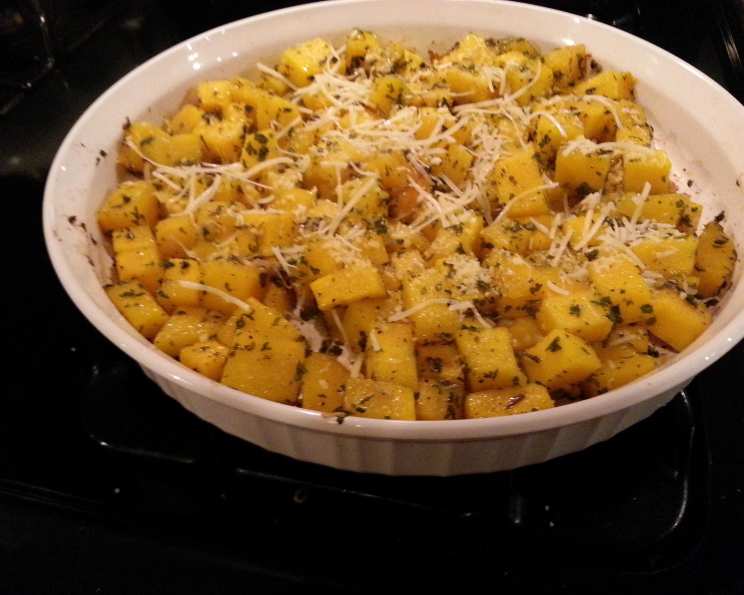
Garlicky Roasted Butternut Squash: A Symphony of Autumn Flavors
The first time I tasted butternut squash prepared this way was at a small farm-to-table restaurant nestled in the heart of Napa Valley. It was late October, the air crisp and carrying the scent of fermenting grapes. I remember the surprise of that first bite – the inherent sweetness of the squash amplified by the savory garlic, a whisper of parsley brightening the earthy notes, and the subtle salty finish of parmesan. It was simple, honest food, and it has remained a cherished memory and go-to recipe ever since.
Recipe Overview
- Prep Time: 15 minutes
- Cook Time: 50-55 minutes
- Total Time: 1 hour 5-10 minutes
- Servings: 6
- Dietary Type: Vegetarian (can be made vegan)
Ingredients
- 2 tablespoons minced fresh parsley
- 2 tablespoons olive oil
- 2 garlic cloves, minced
- 1 teaspoon salt
- ½ teaspoon pepper
- 3 ½ lbs butternut squash, peeled and cut into 1-inch cubes
- ⅓ cup grated parmesan cheese (optional, can substitute nutritional yeast for a vegan option)
Equipment Needed
- Large bowl
- Measuring spoons and cups
- Chef’s knife and cutting board
- Shallow 2-qt. baking dish
Instructions
- Begin by prepping your ingredients. Peel the butternut squash and cut it into 1-inch cubes. Uniform size is important for even cooking. A sharp chef’s knife will make this task easier. If you find the squash difficult to peel, try microwaving it for 2-3 minutes to soften the skin slightly.
- In a large bowl, combine the minced fresh parsley, olive oil, minced garlic, salt, and pepper. This aromatic mixture will infuse the squash with flavor as it roasts.
- Add the butternut squash cubes to the bowl and toss thoroughly to ensure each piece is well coated with the garlic-herb mixture. Don’t be afraid to use your hands to really massage the flavors into the squash.
- Transfer the coated squash to an ungreased shallow 2-quart baking dish. Spread the squash in a single layer to promote even roasting. Overcrowding the pan can lead to steaming instead of roasting, resulting in a less caramelized and flavorful result.
- Bake, uncovered, at 400 degrees F (200 degrees C) for 50-55 minutes, or until the squash is just tender and slightly caramelized. To test for doneness, pierce a cube with a fork. It should be easily pierced with a gentle resistance. The edges should be golden brown and slightly crispy. If you find that the squash is browning too quickly, you can loosely cover the dish with foil for the last 15 minutes of baking.
- (Optional) In the last few minutes of cooking, top the squash with grated parmesan cheese. Return the dish to the oven until the cheese is melted and lightly golden. If you are using nutritional yeast for a vegan option, sprinkle it on in the last 5 minutes to avoid burning.
- Remove from oven and let it rest for 5 minutes before serving. This allows the flavors to meld together even more.
Expert Tips & Tricks
- Spice it up: Add a pinch of red pepper flakes to the garlic-herb mixture for a touch of heat.
- Herb variations: Experiment with different herbs like thyme, rosemary, or sage for a unique flavor profile. Fresh herbs are always preferable, but dried herbs can be used in a pinch (use about 1 teaspoon dried herbs for every tablespoon fresh).
- Sweetness boost: Drizzle a tablespoon of maple syrup or honey over the squash before roasting for an extra layer of sweetness.
- Pre-roasting prep: The squash can be peeled and cubed a day in advance and stored in an airtight container in the refrigerator. You can also mix the parsley, oil, garlic, salt, and pepper ahead of time.
- Pan size matters: Using a too-small baking dish can lead to uneven cooking. Make sure the squash is spread in a single layer with some space between the pieces. If needed, use two baking dishes.
Serving & Storage Suggestions
This Garlicky Roasted Butternut Squash is delicious served as a side dish alongside roasted chicken, pork, or fish. It also makes a wonderful addition to grain bowls, salads, or even pasta dishes. For a vegetarian main course, toss it with cooked quinoa or farro and some toasted nuts and dried cranberries.
Leftovers can be stored in an airtight container in the refrigerator for up to 3-4 days. To reheat, simply microwave until warmed through or bake in a preheated oven at 350 degrees F (175 degrees C) until heated through. Reheating in the oven will help to retain the crispy edges. While technically safe to eat if left at room temperature for only an hour or two, it’s best to refrigerate leftovers promptly to prevent bacterial growth. Freezing is not recommended as the texture of the squash may become mushy upon thawing.
Nutritional Information
| Nutrient | Amount per Serving | % Daily Value |
|---|---|---|
| Calories | 185.6 kcal | N/A |
| Fat | 6.4 g | 9% |
| Saturated Fat | 1.6 g | 8% |
| Cholesterol | 4.9 mg | 1% |
| Sodium | 484.1 mg | 20% |
| Carbohydrate | 31.8 g | 10% |
| Fiber | 5.4 g | 21% |
| Sugars | 5.9 g | N/A |
| Protein | 4.9 g | 9% |
Variations & Substitutions
- Vegan Option: Omit the parmesan cheese and use nutritional yeast for a cheesy flavor.
- Spicy Kick: Add a pinch of red pepper flakes or a dash of hot sauce to the garlic-herb mixture.
- Sweet and Savory: Drizzle with balsamic glaze after roasting for a touch of acidity and sweetness.
- Maple Glazed: Replace the olive oil with melted coconut oil and add 2 tablespoons of maple syrup to the garlic-herb mixture for a sweeter, more decadent flavor.
- Other Vegetables: Mix in other root vegetables like carrots, parsnips, or sweet potatoes for a colorful and flavorful medley. Adjust cooking time as needed, based on the density of the vegetables.
FAQs (Frequently Asked Questions)
Q: Can I use pre-cut butternut squash?
A: Yes, using pre-cut squash will save you time. However, make sure the pieces are relatively uniform in size for even cooking.
Q: How do I know when the squash is done?
A: The squash is done when it’s easily pierced with a fork and the edges are slightly caramelized.
Q: Can I roast the squash at a different temperature?
A: Yes, you can roast at a lower temperature (375°F/190°C) for a longer time, or at a higher temperature (425°F/220°C) for a shorter time. Keep a close eye on it to prevent burning.
Q: Can I use dried parsley instead of fresh?
A: Yes, you can use dried parsley, but the flavor will be less vibrant. Use about 1 teaspoon of dried parsley for every 2 tablespoons of fresh.
Q: Is it necessary to peel the butternut squash?
A: Yes, it’s recommended to peel the squash as the skin can be tough and unpleasant to eat.
Final Thoughts
This Garlicky Roasted Butternut Squash is more than just a recipe; it’s a celebration of simple, seasonal flavors. I encourage you to try this dish and experience the magic of transforming humble ingredients into something truly special. Feel free to experiment with different herbs and spices to create your own unique version. And don’t hesitate to share your feedback – I’d love to hear how it turns out! This dish pairs beautifully with a crisp white wine or a comforting cup of butternut squash soup.