
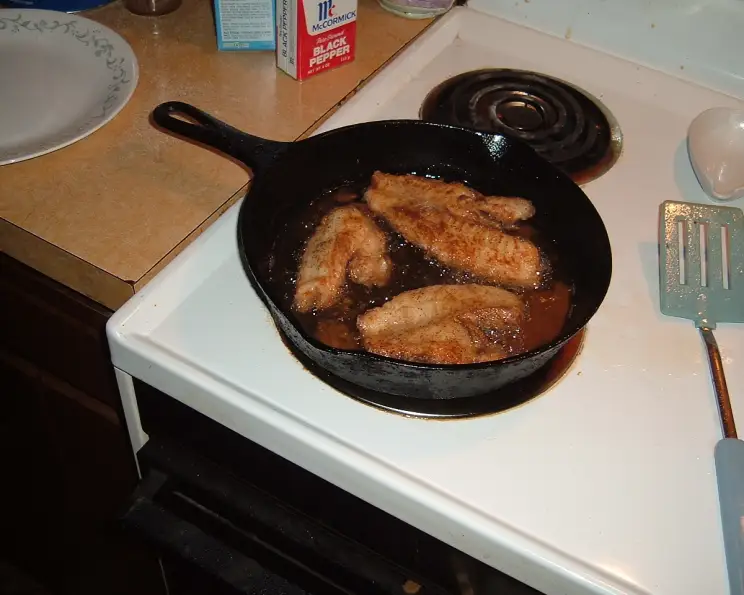
Gary’s Fried Fresh Bass: A Culinary Homage to Simple Pleasures
There’s something deeply satisfying about the memory of simple, honest food, especially when it comes from the heart. I remember visiting my grandfather’s cabin by the lake, the air thick with the smell of pine and anticipation. He’d return from fishing, his weathered hands cradling the day’s catch. My grandmother, with a twinkle in her eye, would commence the transformation, turning those glistening fish into a golden, crispy feast that filled the tiny cabin with warmth and laughter. This recipe, reminiscent of those cherished moments, brings me right back to the heart of those simpler times.
Recipe Overview
- Prep Time: 15 minutes
- Cook Time: 12-18 minutes
- Total Time: 30-35 minutes
- Servings: 4-6
- Dietary Type: Pescatarian
Ingredients
- 2 lbs bass fillets, about 8 (cleaned and de-boned)
- 2 cups whole milk
- 1-2 cups flour (extra-fine), such as Wondra
- ½ teaspoon paprika
- Salt & pepper to taste
- 3 cups Crisco shortening
Equipment Needed
- Large zip-lock bag
- Paper towels
- 10-inch iron skillet
- Tongs
Instructions
- Begin by placing the cleaned and deboned bass fillets (small-mouth bass is preferred, but large-mouth and bluegill fillets will work too) in a large zip-lock bag.
- Pour the whole milk into the bag, ensuring the fillets are completely submerged. Seal the bag tightly, removing as much air as possible.
- Refrigerate the bagged fillets in milk overnight. This step helps to tenderize the fish and remove any lingering “fishy” taste.
- The next day, remove the bass fillets from the milk and place them on several layers of paper towels. Pat them completely dry – this is crucial for achieving a crispy crust.
- Season both sides of each dried fillet generously with paprika, salt, and pepper. The amount you use will depend on your personal preference, but don’t be shy!
- Pour the flour into a shallow dish or plate. Coat each fillet thoroughly with the flour, ensuring every surface is covered. Shake off any excess flour to avoid a gummy coating.
- While you’re coating the fillets, preheat the Crisco in your iron skillet over medium-high heat. The goal is to have about ½ inch of melted and hot Crisco. It’s hot enough when a tiny flick of flour immediately sizzles and browns.
- Carefully place the flour-coated fillets into the hot Crisco, being careful not to overcrowd the pan. Overcrowding will lower the oil temperature and result in soggy fish. Work in batches if necessary.
- Fry the fillets for approximately 3 minutes on each side, or until they are golden brown and cooked through. The exact cooking time will depend on the thickness of your fillets.
- Remove the fried bass fillets from the skillet using tongs and place them on fresh paper towels to drain any excess Crisco. This will help them stay crispy.
- Serve immediately.
Expert Tips & Tricks
- Milk Matters: Don’t skip the overnight milk soak! It really does make a difference in the final flavor and texture.
- Get the Oil Hot: Ensure your Crisco is hot enough before adding the fillets. A quick test with a sprinkle of flour will tell you if it’s ready.
- Don’t Overcrowd: Fry the fillets in batches to maintain the oil temperature and achieve optimal crispness.
- Crispy Coating: Patting the fillets completely dry before dredging in flour is essential for a crispy coating.
- Spice It Up: For an extra kick, add a pinch of cayenne pepper to your flour mixture.
Serving & Storage Suggestions
Serve Gary’s Fried Fresh Bass immediately while it’s hot and crispy. It pairs perfectly with classic sides like coleslaw, hushpuppies, french fries, or a simple green salad. For a truly Southern experience, offer tartar sauce or hot sauce alongside.
Leftover fried bass can be stored in an airtight container in the refrigerator for up to 2 days. Reheat in a preheated oven at 350°F (175°C) for about 10-15 minutes, or until heated through. Reheating in the oven will help restore some of the crispness. Microwaving is not recommended, as it will make the fish soggy.
Nutritional Information
| Nutrient | Amount per Serving | % Daily Value |
|---|---|---|
| Calories | 452 kcal | 23% |
| Total Fat | 30 g | 46% |
| Saturated Fat | 10 g | 50% |
| Cholesterol | 42 mg | 14% |
| Sodium | 53 mg | 2% |
| Total Carbohydrate | 5 g | 2% |
| Dietary Fiber | 0.2 g | 1% |
| Sugars | 1.3 g | – |
| Protein | 35 g | 70% |
Note: Nutritional information is an estimate and may vary based on specific ingredients and portion sizes.
Variations & Substitutions
- Gluten-Free: Substitute the all-purpose flour with a gluten-free blend for a gluten-free version.
- Different Fish: While this recipe is specifically for bass, you can adapt it for other types of white fish like cod, haddock, or tilapia. Adjust cooking times accordingly based on the thickness of the fillets.
- Seasoning Variations: Experiment with different seasonings in addition to paprika, salt, and pepper. Try adding garlic powder, onion powder, or a dash of your favorite herbs.
- Air Fryer Option: For a healthier alternative, you can air fry the flour-coated fillets. Preheat your air fryer to 400°F (200°C) and cook for about 8-10 minutes, flipping halfway through, until golden brown and cooked through. You may need to lightly spray the fillets with cooking oil for extra crispness.
FAQs (Frequently Asked Questions)
Q: Why do you soak the bass fillets in milk overnight?
A: Soaking the bass fillets in milk helps to tenderize the fish and remove any lingering “fishy” taste, resulting in a milder and more pleasant flavor.
Q: Can I use a different type of oil instead of Crisco?
A: Yes, you can use other high-heat oils like peanut oil, vegetable oil, or canola oil as substitutes for Crisco.
Q: How do I know when the bass fillets are fully cooked?
A: The bass fillets are done when they are golden brown on both sides and the internal temperature reaches 145°F (63°C). The flesh should also be opaque and flake easily with a fork.
Q: Can I freeze the fried bass for later?
A: While freezing fried fish is not ideal (as it can affect the texture), you can freeze it if necessary. Let the fried bass cool completely, then wrap it tightly in plastic wrap and place it in a freezer-safe bag. It’s best consumed within 1-2 months.
Q: How do I prevent the flour coating from falling off during frying?
A: To prevent the flour coating from falling off, make sure to pat the bass fillets completely dry before coating them with flour. Also, ensure that the Crisco is hot enough before adding the fillets to the skillet.
Final Thoughts
This simple yet satisfying recipe for Gary’s Fried Fresh Bass is more than just a meal; it’s a connection to tradition, a celebration of fresh ingredients, and a reminder of the simple pleasures in life. I encourage you to give it a try, whether you’re using freshly caught bass or store-bought fillets. Gather your family and friends, savor each crispy, flavorful bite, and create memories that will last a lifetime. Don’t be afraid to experiment with different seasonings and sides to make it your own. And most importantly, share your culinary creations and feedback with others – because food is best enjoyed when shared.