
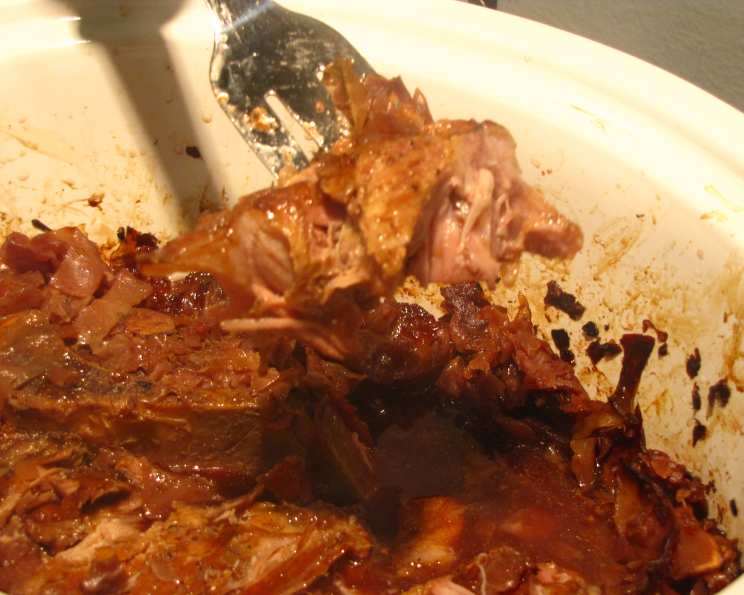
German Crock Pot Pork With Cabbage: A Taste of Heritage
The scent of simmering cabbage, sweet and tangy, always transports me back to my grandmother’s kitchen. Oma, as we called her, had a knack for taking simple ingredients and transforming them into something truly special. This dish, German Crock Pot Pork with Cabbage, is a loving tribute to her resourcefulness and the heartwarming flavors of her homeland. It’s a dish that evokes cozy evenings, family gatherings, and the comforting knowledge that a delicious meal is just hours away, simmering gently in the crock pot.
Recipe Overview
- Prep Time: 15 minutes
- Cook Time: 7-8 hours
- Total Time: 7 hours 15 minutes – 8 hours 15 minutes
- Servings: 6
- Dietary Type: Gluten-Free
Ingredients
- 4 cups shredded red cabbage
- 1 onion, chopped
- ½ cup brown sugar
- ½ cup apple cider vinegar
- ½ teaspoon salt
- ¼ teaspoon pepper
- 3 lbs boneless pork shoulder
Equipment Needed
- 4-quart slow cooker (crock pot)
- Heavy skillet
- Meat thermometer
Instructions
- Begin by preparing the base for your crock pot masterpiece. In your 4-quart slow cooker, combine the shredded red cabbage, chopped onion, brown sugar, and apple cider vinegar.
- Next, season the boneless pork shoulder. Sprinkle the entire roast generously with salt and pepper.
- Heat a heavy skillet over medium-high heat. Once hot, carefully place the seasoned pork roast in the skillet.
- Brown the pork on all sides, searing each side for approximately 1-2 minutes until a rich, golden-brown crust forms. This step is crucial for developing deep, savory flavors. Don’t overcrowd the pan; work in batches if necessary. This browning process should take about 5-6 minutes in total.
- Carefully transfer the browned pork roast from the skillet and nestle it into the slow cooker, placing it directly on top of the cabbage mixture.
- Cover the slow cooker tightly with its lid.
- Set the slow cooker to Low heat and cook for 7-8 hours.
- After 7-8 hours, check the internal temperature of the pork roast using a meat thermometer. Insert the thermometer into the thickest part of the roast, avoiding any bone. The pork is done when it registers 160 degrees F.
- Once the pork reaches 160 degrees F, remove it from the slow cooker and let it rest for at least 10 minutes before shredding or slicing. This allows the juices to redistribute, resulting in a more tender and flavorful final product.
Expert Tips & Tricks
- Browning is key: Don’t skip the searing step! Browning the pork not only adds flavor but also helps to seal in the juices. If you are short on time you can skip it, but the final product will be far more flavorful with this step.
- Don’t overcook: Overcooked pork shoulder can become dry and stringy. Use a meat thermometer to ensure perfect doneness. Once it reaches 160 degrees F, it’s ready.
- Adjust sweetness: Taste the cabbage mixture after a few hours of cooking. If you prefer a less sweet dish, reduce the amount of brown sugar. Conversely, if you like it sweeter, add a bit more.
- Enhance the flavor: For an extra layer of depth, consider adding a tablespoon of Dijon mustard or a teaspoon of caraway seeds to the cabbage mixture.
- Thicken the sauce: If you prefer a thicker sauce, remove the pork from the slow cooker after it’s cooked through. In a small bowl, whisk together 1 tablespoon of cornstarch with 2 tablespoons of cold water. Stir this slurry into the cabbage mixture in the slow cooker. Cover and cook on high for 15-20 minutes, or until the sauce has thickened to your desired consistency.
Serving & Storage Suggestions
Serve this German Crock Pot Pork with Cabbage hot, straight from the slow cooker. Shred the pork with two forks and serve over the cabbage. For a complete meal, consider serving it with mashed potatoes, spaetzle, or crusty bread to soak up the delicious sauce.
Leftovers can be stored in an airtight container in the refrigerator for up to 3-4 days. To reheat, simply warm in the microwave or on the stovetop until heated through. You can also freeze leftovers for longer storage (up to 2-3 months). Thaw completely in the refrigerator before reheating.
Nutritional Information
| Nutrient | Amount per Serving | % Daily Value |
|---|---|---|
| Calories | 670.2 kcal | N/A |
| Calories from Fat | 413 g | 62% |
| Total Fat | 45.9 g | 70% |
| Saturated Fat | 15.9 g | 79% |
| Cholesterol | 161.2 mg | 53% |
| Sodium | 367.6 mg | 15% |
| Total Carbohydrate | 23.4 g | 7% |
| Dietary Fiber | 1.3 g | 5% |
| Sugars | 20.4 g | 81% |
| Protein | 38.8 g | 77% |
Variations & Substitutions
- Sweetener: Instead of brown sugar, try using maple syrup or honey for a different flavor profile.
- Vinegar: If you don’t have apple cider vinegar, white wine vinegar or red wine vinegar can be used as substitutes.
- Vegetables: Add other vegetables to the slow cooker, such as chopped apples, potatoes, or carrots, for a heartier meal.
- Meat: While pork shoulder is traditional, you can also use pork loin or even beef chuck roast for this recipe. Adjust cooking time accordingly.
- Spice: Add a pinch of ground cloves or allspice for a warm, aromatic twist.
FAQs (Frequently Asked Questions)
Q: Can I use pre-shredded cabbage?
A: Yes, pre-shredded cabbage is a great time-saver. Just make sure to use about 4 cups.
Q: Can I cook this on high heat?
A: While you can cook it on high, low and slow is recommended for the most tender pork. If you choose to cook on high, reduce the cooking time to 3-4 hours and monitor the internal temperature closely.
Q: Do I need to add any liquid?
A: No, the cabbage and pork will release their own juices during cooking, providing sufficient liquid.
Q: Can I make this ahead of time?
A: Absolutely! This dish is perfect for making ahead. Cook it as directed, then let it cool completely before storing it in the refrigerator. Reheat before serving.
Q: My sauce is too thin. How can I thicken it?
A: Refer to the “Expert Tips & Tricks” section for instructions on how to thicken the sauce with cornstarch.
Final Thoughts
This German Crock Pot Pork with Cabbage is more than just a recipe; it’s a journey back to simpler times and comforting flavors. It’s an invitation to slow down, savor the process, and create a memorable meal for yourself and your loved ones. I encourage you to try this recipe and share your feedback. Perhaps you’ll even discover your own family tradition in this hearty and delicious dish. Pair it with a crisp German beer or a glass of Riesling for the ultimate culinary experience!