
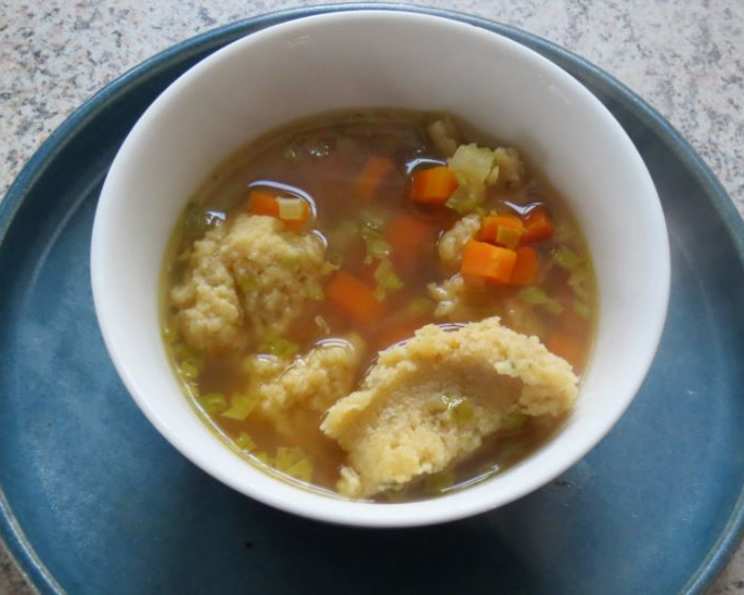
German Dumpling Soup: A Taste of Home
The aroma of simmering stock and delicate dumplings always transports me back to my grandmother’s cozy kitchen. I can almost see her now, standing over the stove, carefully dropping spoonfuls of batter into the bubbling broth. This soup, Nockerl-/Griessklosschensuppe, was a staple in our family, a comforting and nourishing dish that warmed us from the inside out on chilly days. It’s more than just a soup; it’s a bowlful of love and cherished memories. The simple, yet satisfying, flavor never fails to evoke feelings of warmth and nostalgia.
Recipe Overview
- Prep Time: 10 minutes
- Cook Time: 10 minutes
- Total Time: 20 minutes
- Servings: 4-5
- Dietary Type: Varies (can be dairy-free)
Ingredients
- 7 cups stock (chicken, vegetable, or beef)
- 1 cup farina (cream of wheat)
- 3 tablespoons farina
- ½ teaspoon grated nutmeg (fresh is recommended)
- 3 eggs
- 2 tablespoons butter (or 2 tablespoons oil for dairy-free)
- 1 teaspoon salt (or celery salt for added flavor)
- ¼+ teaspoon ground black pepper (optional)
Equipment Needed
- Large pot
- Large bowl
- Spoon
Instructions
-
In a large pot, bring the stock to a rapid boil over high heat. It’s crucial to have a vigorous boil to ensure the dumplings cook properly and don’t disintegrate.
-
While the stock is heating, prepare the dumpling batter. In a large bowl, combine the 1 cup of farina, 3 tablespoons of farina, grated nutmeg, eggs, butter (or oil), and salt (and pepper if using). Mix well until a smooth batter forms.
-
Let the batter rest for 1-2 minutes. This allows the farina to absorb the liquid, resulting in a firmer dumpling.
-
Once the stock is boiling rapidly, use a spoon to scoop up small spoonfuls of the batter.
-
Carefully scrape each spoonful of batter into the boiling stock. Work quickly but gently, ensuring that the dumplings don’t overcrowd the pot.
-
Stir occasionally to prevent the dumplings from sticking to the bottom of the pot.
-
The dumplings are done when they float to the surface of the stock. This usually takes about 5-7 minutes. Ensure they’re cooked through and not doughy in the middle.
-
Taste the soup and adjust seasonings as needed. Add more salt, pepper, or nutmeg to your preference.
-
Serve hot and enjoy!
Expert Tips & Tricks
- Stock is King: The quality of your stock significantly impacts the final flavor of the soup. Homemade stock is always best, but a good quality store-bought stock can work well too.
- Dumpling Consistency: If your dumplings disintegrate when they hit the water, a couple of things could be happening. First, make sure your stock is at a rolling boil. Second, “pack” the batter together a bit on the spoon before dropping it into the stock. You can also add another tablespoon or two of farina to the batter if it seems too moist. Allowing the batter to rest for the specified time is also key.
- Flavor Boost: Consider adding a bay leaf or some fresh herbs like parsley or chives to the stock while it simmers for an extra layer of flavor.
- Celery Love: My personal touch is to substitute celery salt for regular salt. Alternatively, simmering a stalk or two of celery in the stock adds a delightful subtle flavor.
- Nutmeg Notes: Freshly grated nutmeg has a more intense and aromatic flavor than pre-ground nutmeg. If you have it, it’s well worth using.
- Dairy-Free Option: Easily made dairy-free by using oil instead of butter. The flavor difference is minimal.
Serving & Storage Suggestions
Serve the German Dumpling Soup hot, garnished with fresh parsley or chives for a pop of color and freshness. A sprinkle of freshly ground black pepper adds a touch of warmth.
Leftover soup can be stored in an airtight container in the refrigerator for up to 3 days. To reheat, gently warm the soup on the stovetop over medium heat, stirring occasionally. You can also reheat it in the microwave, but be careful not to overcook the dumplings.
Freezing is not recommended, as the dumplings can become mushy upon thawing.
Nutritional Information
Note: Nutritional information is an estimate and can vary based on specific ingredients and portion sizes.
| Nutrient | Amount per Serving | % Daily Value |
|---|---|---|
| Calories | 299 kcal | 15% |
| Total Fat | 10g | 13% |
| Saturated Fat | 5g | 25% |
| Cholesterol | 155mg | 52% |
| Sodium | 687mg | 29% |
| Total Carbohydrate | 41g | 15% |
| Dietary Fiber | 1g | 4% |
| Sugars | 0g | 0% |
| Protein | 10g | 20% |
Variations & Substitutions
- Gluten-Free: While this recipe traditionally uses farina (cream of wheat), which contains gluten, you can experiment with gluten-free alternatives like rice flour or a gluten-free all-purpose flour blend. Note that the texture might be slightly different, and you may need to adjust the liquid accordingly.
- Vegetarian/Vegan: Use vegetable stock instead of chicken or beef stock for a vegetarian version. For a vegan version, substitute the eggs with a flax egg (1 tablespoon of ground flaxseed mixed with 3 tablespoons of water, let sit for 5 minutes to thicken) and use oil instead of butter.
- Herb Infusion: Infuse the stock with different herbs like thyme, rosemary, or marjoram for a unique flavor profile.
- Vegetable Additions: Add diced vegetables like carrots, celery, or potatoes to the soup for added nutrients and texture. Cook them in the stock until tender before adding the dumplings.
- Cheese Dumplings: Incorporate a small amount of grated Parmesan or Gruyere cheese into the dumpling batter for a richer, more flavorful dumpling.
FAQs (Frequently Asked Questions)
Q: Can I make the dumpling batter ahead of time?
A: It’s best to make the dumpling batter just before cooking, as it can become too thick if left to sit for too long. If you need to prepare it in advance, cover it tightly and store it in the refrigerator for up to 30 minutes. You may need to add a splash of milk or water to loosen it up before using.
Q: My dumplings are sticking to the bottom of the pot. What am I doing wrong?
A: Make sure you are stirring the soup occasionally to prevent the dumplings from sticking. Also, ensure that the stock is at a rolling boil before adding the dumplings.
Q: How do I know when the dumplings are cooked through?
A: The dumplings are cooked when they float to the surface of the stock and are no longer doughy in the center. You can test one by cutting it open to check for doneness.
Q: Can I use a different type of flour instead of farina?
A: While farina is the traditional ingredient, you can experiment with other types of flour like semolina or all-purpose flour. However, the texture of the dumplings may be different.
Q: The soup is too salty/bland. What can I do?
A: If the soup is too salty, add a little water or unsalted stock to dilute the flavor. If it’s too bland, add more salt, pepper, or other seasonings to taste. A squeeze of lemon juice can also brighten up the flavor.
Final Thoughts
This German Dumpling Soup is a simple yet incredibly satisfying dish that’s perfect for a comforting meal. Whether you’re looking to recreate a cherished family recipe or simply want to try something new, I encourage you to give this recipe a try. Don’t be afraid to experiment with different variations and substitutions to make it your own. And most importantly, savor each spoonful and enjoy the warmth and comfort this soup brings. Please share your feedback and experiences – I’d love to hear how it turns out! Consider pairing it with a slice of crusty bread or a light salad for a complete and balanced meal. Guten Appetit!