
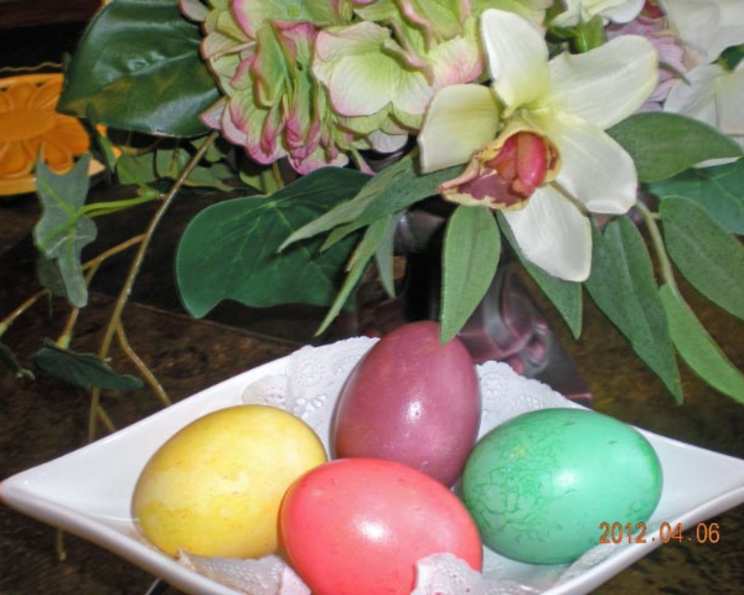
Gleaming Gems: Crafting Traditional German Easter Eggs (Ostereier)
The memory is as vibrant as the eggs themselves: sitting at my Oma’s kitchen table, the scent of vinegar sharp in the air, carefully lowering pale eggs into mugs of swirling, jewel-toned dye. Sunlight streamed through the window, illuminating the rainbow of eggs drying on newspaper – each one a miniature masterpiece promising springtime joy and a thrilling Easter egg hunt. More than just a tradition, it was a lesson in patience, creativity, and the simple magic of transforming the ordinary into something extraordinary.
Recipe Overview
- Prep Time: 10 minutes
- Cook Time: 15 minutes
- Total Time: 25 minutes
- Servings: 12
- Yield: 12 colored Easter Eggs
- Dietary Type: Vegetarian
Ingredients
- 12 hardboiled eggs, cooled completely
- Food coloring (store-bought egg dye tablets or liquid)
- Vinegar
- Bacon grease or salad oil, for rubbing
Equipment Needed
- Mugs or small bowls
- Spoon
- Saucepan for boiling water
- Newspaper or drying rack
Instructions
-
Begin by ensuring your hardboiled eggs are completely cool and dry. This step is crucial for the dye to adhere properly. If the eggs are still warm, the dye might not distribute evenly, resulting in a less vibrant color.
-
Prepare your dye baths. If using store-bought dye tablets, follow the package instructions, typically involving dissolving the tablet in a mug of boiling water. Add a splash of vinegar – about 1 tablespoon per cup of water – as this helps set the color and makes it more vibrant. If using liquid food coloring, add several drops to a cup of hot water with vinegar until you achieve your desired color intensity.
-
Carefully lower the hardboiled eggs into the dye baths using a spoon. Ensure the eggs are fully submerged for even coloring. The longer the eggs remain in the dye, the deeper the color will become. Generally, 5-10 minutes will yield a good color saturation.
-
Once the eggs have reached the desired color, carefully remove them from the dye baths with a spoon and place them on a sheet of newspaper or a drying rack to dry completely. Avoid touching the eggs while they’re still wet, as this can smudge the dye.
-
Once the colored eggs are completely cool and dry, it’s time to add the finishing touch: the shine! Take a small amount of bacon grease (rendered and cooled) or salad oil on your fingertips. Gently rub the grease or oil over the surface of each egg. Be careful not to apply too much, as you only need a thin coating to create a beautiful, glossy sheen.
-
Arrange your gleaming Easter eggs in an attractive basket or platter. You can line the basket with green Easter “grass” for a festive touch.
-
Keep the eggs cool until it’s time for the Easter Egg Hunt or to display them as part of your Easter decorations.
Expert Tips & Tricks
- Achieving Even Color: To ensure even coloring, turn the eggs occasionally while they’re submerged in the dye bath. You can use a spoon or gently swirl the mug.
- Layering Colors: For a more artistic effect, try layering colors. Dip an egg in one color, let it dry, then dip it in another. This will create a unique, multi-toned effect.
- Natural Dyes: Experiment with natural dyes! Onion skins produce a beautiful reddish-brown, beetroot juice yields a vibrant pink, and spinach can create a subtle green.
- Preventing Cracks: To minimize the risk of cracking during boiling, add a teaspoon of salt to the water and bring the water to a gentle simmer rather than a rolling boil.
- Drying Hack: Speed up the drying process by using a hairdryer on a low, cool setting. Just be careful not to overheat the eggs.
Serving & Storage Suggestions
Serve your brightly colored Ostereier as part of your Easter brunch, use them as decorations, or hide them for a traditional Easter egg hunt. Hardboiled eggs can be safely stored in the refrigerator for up to one week. Be sure to keep them in their shells to prevent them from drying out. While the oiled eggs may be left at room temperature for the duration of your Easter egg hunt, be certain to refrigerate them promptly afterward. If you prefer, you can store them in an airtight container to further preserve their freshness and color. Be cautious about consuming any eggs left unrefrigerated for more than two hours.
Nutritional Information
Please note that the following nutritional information is an estimate and can vary depending on the specific ingredients used.
| Nutrient | Amount per Serving | % Daily Value |
|---|---|---|
| Calories | 70 kcal | 3% |
| Total Fat | 5g | 6% |
| Saturated Fat | 2g | 10% |
| Cholesterol | 185mg | 62% |
| Sodium | 70mg | 3% |
| Total Carbohydrate | 1g | 0% |
| Dietary Fiber | 0g | 0% |
| Sugars | 0g | 0% |
| Protein | 6g | 12% |
Variations & Substitutions
- Natural Dyes Only: Commit to using only natural dyes for a truly traditional and eco-friendly approach.
- Decorated Eggs: Go beyond simple coloring! Use crayons to draw designs on the eggs before dyeing, or glue on small embellishments like glitter or sequins after they’re dry.
- Vegan “Grease”: For a vegan alternative to bacon grease, use a high-quality vegetable oil or even a small amount of coconut oil for the shine.
- Marbled Eggs: Gently crack the shells of the boiled eggs before dyeing for a marbled effect. The dye will seep into the cracks, creating a beautiful, intricate pattern.
- Themed Eggs: Create themed eggs based on your favorite characters, movies, or hobbies.
FAQs (Frequently Asked Questions)
Q: Can I use brown eggs instead of white eggs?
A: Yes, but the colors will appear differently on brown eggs. The dye will tint the brown shell rather than create a pure color.
Q: How do I prevent the eggs from cracking while boiling?
A: Add a teaspoon of salt and a tablespoon of vinegar to the water before boiling. Also, avoid a rapid boil and opt for a gentle simmer.
Q: Can I use gel food coloring instead of liquid?
A: Yes, but you’ll need to dissolve the gel coloring in a small amount of hot water before adding it to the dye bath to ensure even distribution.
Q: How long will the colored eggs last?
A: Hardboiled eggs, stored properly in the refrigerator, will last for up to a week.
Q: Is it safe to eat eggs that have been dyed?
A: Yes, as long as you use food-safe dyes and the eggs are properly cooked and stored. Avoid eating eggs with cracked shells that have been dyed, as bacteria could have entered.
Final Thoughts
Creating these gleaming Ostereier is more than just a craft; it’s a connection to generations past, a celebration of spring, and a reminder of the simple joys in life. Gather your loved ones, put on some music, and dive into this beautiful tradition. Whether you choose vibrant store-bought dyes or explore the magic of natural pigments, the result will be a basket full of treasures and memories that will last long after the Easter egg hunt is over. Don’t hesitate to experiment with different techniques and let your creativity shine! After all, each uniquely colored egg tells its own beautiful story.