
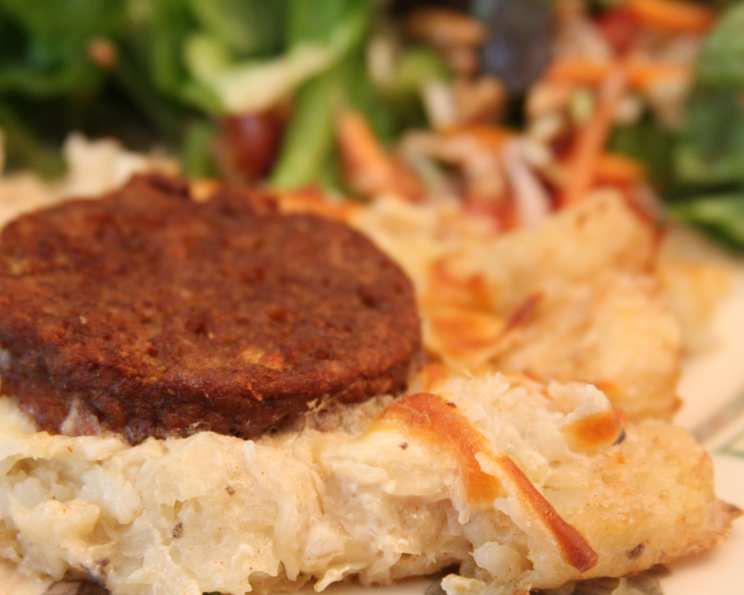
German Potato and Sausage Casserole: A Hearty Family Favorite
The aroma alone takes me back to my Oma’s kitchen. I remember standing on a little stool, carefully peeling potatoes while she hummed a German folk song. The savory scent of sausage mingled with the slightly tangy sauerkraut, creating a symphony of smells that promised a comforting and satisfying meal. It wasn’t just food; it was love baked into a casserole dish, a tradition passed down through generations.
Recipe Overview
- Prep Time: 15 minutes
- Cook Time: 45-50 minutes
- Total Time: 60-65 minutes
- Servings: 6
- Dietary Type: Varies (Can be modified for gluten-free)
Ingredients
- 1 (28 ounce) bag O’Brien frozen potatoes, with peppers and onions
- 1 (14 ounce) can sauerkraut, drained and rinsed
- 1 (10 3/4 ounce) can condensed cream of potato soup
- 1 1/3 cups half-and-half
- Paprika
- 1 lb kielbasa (or 1 lb Polish sausage), cut into 6 pieces
Equipment Needed
- 9×13 inch glass baking dish
- Cooking spray
- Medium bowl
- Mixing spoon
Instructions
-
Preheat your oven to 375°F (190°C). This is crucial for even cooking throughout the casserole.
-
Spray a 9×13 inch glass baking dish generously with cooking spray. This will prevent the casserole from sticking and make cleanup a breeze.
-
In the prepared baking dish, combine the frozen O’Brien potatoes (with peppers and onions) and the drained and rinsed sauerkraut. Ensure the ingredients are evenly distributed in the dish.
-
In a medium bowl, whisk together the condensed cream of potato soup and the half-and-half until smooth and well combined. This mixture will act as the creamy sauce for the casserole.
-
Pour the soup mixture over the potato and sauerkraut mixture in the baking dish. Stir well to ensure all the ingredients are thoroughly coated with the sauce.
-
Sprinkle the top of the casserole generously with paprika. This adds a beautiful color and a subtle smoky flavor to the dish.
-
Bake in the preheated oven for 20 minutes. This initial baking period allows the potatoes and sauerkraut to heat through and the flavors to meld together.
-
Remove the casserole from the oven. Arrange the kielbasa or Polish sausage pieces over the potato mixture, gently pressing them into the mixture. Ensure that the sausage is evenly distributed, allowing each serving to have a piece.
-
Return the casserole to the oven and bake for an additional 25 to 30 minutes, or until the sausage is cooked through and the casserole is bubbly and heated through. The internal temperature of the sausage should reach 160°F (71°C). You can use a meat thermometer to check for doneness. If the top starts to brown too quickly, you can loosely cover the dish with aluminum foil during the last 10 minutes of baking.
-
Once the casserole is done, remove it from the oven and let it rest for a few minutes before serving. This allows the flavors to settle and the casserole to cool slightly, making it easier to serve.
Expert Tips & Tricks
- Don’t skip rinsing the sauerkraut! While some love the intense tang of sauerkraut, rinsing it tames the flavor, making it more palatable for a broader audience and preventing the casserole from becoming overly sour.
- Customize your sausage: Feel free to experiment with different types of sausage. Smoked sausage, bratwurst, or even chorizo can add a unique twist to this classic dish. Just be sure to adjust the cooking time accordingly.
- For a richer flavor: Brown the sausage in a skillet before adding it to the casserole. This will add a delicious depth of flavor and a nice crispy texture.
- Make it ahead: Assemble the casserole ahead of time and store it in the refrigerator for up to 24 hours. Add the sausage just before baking to prevent it from drying out.
- Thicken the sauce: If you prefer a thicker sauce, mix a tablespoon of cornstarch with a tablespoon of cold water and stir it into the soup mixture before adding it to the casserole.
- Spice it up: Add a pinch of red pepper flakes to the soup mixture for a little kick.
Serving & Storage Suggestions
Serve the German Potato and Sausage Casserole hot, straight from the oven. It’s a complete meal in itself, but you can also serve it with a side of crusty bread or a simple green salad. For a festive touch, garnish with fresh parsley or a dollop of sour cream.
Leftovers can be stored in an airtight container in the refrigerator for up to 3 days. To reheat, simply microwave individual portions or bake the entire casserole in a preheated oven at 350°F (175°C) until heated through. You can also freeze the casserole for longer storage (up to 2 months). Thaw it overnight in the refrigerator before reheating.
Nutritional Information
| Nutrient | Amount per Serving | % Daily Value* |
|---|---|---|
| Calories | 447 kcal | N/A |
| Calories from Fat | 252 g | N/A |
| Total Fat | 28 g | 43% |
| Saturated Fat | 11.4 g | 56% |
| Cholesterol | 72.3 mg | 24% |
| Sodium | 1454.2 mg | 60% |
| Total Carbohydrate | 35.2 g | 11% |
| Dietary Fiber | 4.7 g | 18% |
| Sugars | 3.4 g | N/A |
| Protein | 14.6 g | 29% |
*Percent Daily Values are based on a 2,000 calorie diet.
Variations & Substitutions
- Gluten-Free: Ensure that the condensed cream of potato soup is gluten-free, or make your own from scratch.
- Vegetarian: Substitute the sausage with vegetarian sausage or add more vegetables like mushrooms, bell peppers, or zucchini.
- Dairy-Free: Use a dairy-free half-and-half alternative, such as soy milk or almond milk, and a dairy-free condensed cream of potato soup.
- Lower Fat: Use fat-free half-and-half and turkey kielbasa or Polish sausage.
- Different Potatoes: If you can’t find O’Brien potatoes, use regular frozen diced potatoes and add diced onions and bell peppers.
- Herbs: Add fresh or dried herbs like thyme, rosemary, or sage for extra flavor.
FAQs (Frequently Asked Questions)
Q: Can I use fresh potatoes instead of frozen?
A: Yes, you can use fresh potatoes. Peel and dice them into small pieces, then parboil them for about 5 minutes before adding them to the casserole. This will ensure that they cook through properly.
Q: Can I freeze this casserole?
A: Yes, you can freeze the assembled casserole before baking. Wrap it tightly in plastic wrap and then foil, and freeze for up to 2 months. Thaw overnight in the refrigerator before baking.
Q: The sauerkraut is too sour for my taste. What can I do?
A: Rinsing the sauerkraut well under cold water will help to remove some of the sourness. You can also soak it in water for a few minutes before draining and adding it to the casserole.
Q: Can I use a different type of soup?
A: While cream of potato soup is traditional, you can experiment with other creamy soups like cream of mushroom or cream of celery. The flavor will be different, but it can still be delicious.
Q: How do I know when the casserole is done?
A: The casserole is done when the sausage is cooked through (internal temperature of 160°F/71°C), the potatoes are tender, and the sauce is bubbly and heated through.
Final Thoughts
This German Potato and Sausage Casserole is more than just a recipe; it’s a taste of home, a warm hug on a cold day, and a reminder of cherished memories. It’s simple enough for a weeknight meal yet special enough for a Sunday supper. So gather your ingredients, preheat your oven, and get ready to create a dish that will bring comfort and joy to your table. Don’t be afraid to experiment with the variations and make it your own. I hope this becomes a staple in your family’s recipe collection! Share your feedback and let me know how it turns out!