
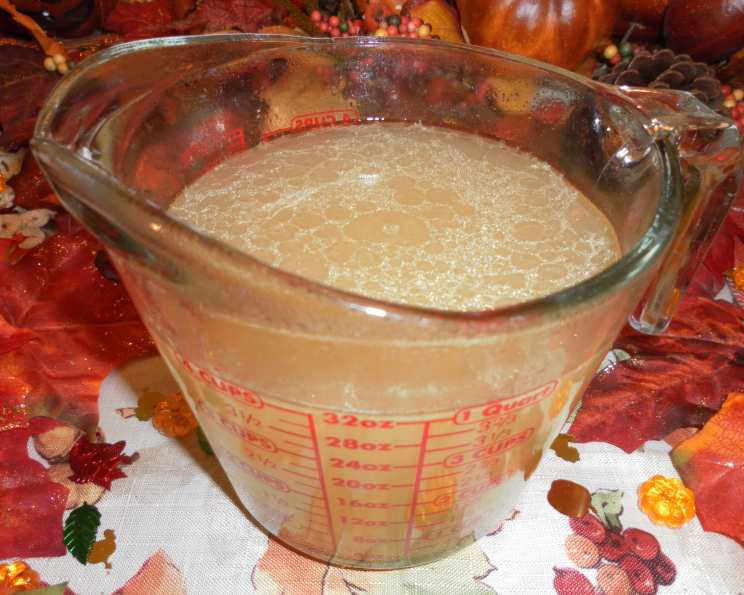
The Soulful Simplicity of Giblet Stock: A Culinary Foundation
The aroma still lingers in my memory – that deep, earthy scent that permeated my grandmother’s kitchen every Thanksgiving. It wasn’t the turkey roasting that truly captivated me, but the simmering pot on the back burner, bubbling away with turkey giblets, vegetables, and spices. From that humble pot emerged a golden elixir, the foundation of her legendary gravy and the secret ingredient that elevated her stuffing to an entirely different plane of deliciousness. Now, years later, I carry on that tradition, crafting my own giblet stock, a taste of home and a testament to the power of simple, honest cooking.
Recipe Overview
- Prep Time: 15 minutes
- Cook Time: 1 hour 30 minutes
- Total Time: 1 hour 45 minutes
- Servings: About 3 cups
- Yield: 3 cups
- Dietary Type: Not applicable; adaptable based on ingredients
Ingredients
- Choice of:
- 1 turkey giblets or 1 chicken giblets, neck and liver
- 1 turkey wing (optional, but recommended)
- 1 ham bone (optional)
- 1 beef shank (optional)
- 6 cups water
- 1 stalk celery, sliced
- 1 carrot, sliced
- 1 onion, quartered (with skin on for a richer color)
- 1 bay leaf
- 2 fresh sage leaves
- 2 garlic cloves, peeled
- 1 teaspoon whole black peppercorns
Equipment Needed
- Large saucepan or stockpot
- Fine-mesh sieve or cheesecloth-lined colander
- Cutting board
- Knife
Instructions
- In a large saucepan or stockpot, combine the wing, neck, and giblets (excluding the liver at this stage – we’ll add that later), 6 cups water, celery, carrot, onion, sage, garlic, bay leaf, and peppercorns. If you’re including a ham bone or beef shank, add those now as well. These add depth of flavor, but the stock is delicious without them.
- Bring the mixture to a boil over high heat. Once boiling, immediately reduce the heat to a gentle simmer. It’s crucial to maintain a simmer – a full boil will cloud the stock and extract unwanted bitterness from the bones and vegetables.
- Continue to cook at a bare simmer, skimming the froth that rises to the surface occasionally. This “froth” is composed of impurities that will negatively impact the clarity and flavor of your stock. Skimming diligently results in a cleaner, more refined final product. Simmer for 1 hour.
- After simmering for an hour, add the liver to the pot. The liver cooks much faster than the other ingredients and can become bitter if overcooked. Adding it later ensures it imparts its flavor without becoming unpalatable.
- Continue to cook at a bare simmer for an additional 30 minutes. The total simmering time should be approximately 1 hour and 30 minutes.
- Strain the stock through a fine-mesh sieve or a cheesecloth-lined colander into a large bowl or another pot. This removes all the solids, leaving you with a clear, flavorful liquid. Be sure to press gently on the solids to extract as much liquid as possible.
- You should have about 3 cups of stock. If the stock has reduced to less than 3 cups, simply add water to reach the desired volume. Remember, you can always reduce a stock to concentrate its flavor, but you can’t un-reduce it!
- Reserve the turkey wing, liver, neck, and remaining giblets. These can be used to enrich your gravy or added to your soup for extra flavor and texture.
- Once the reserved ingredients are cool enough to handle, chop the giblets finely and shred the meat from the wing. These are now ready to be incorporated into your gravy or soup.
Expert Tips & Tricks
- Roast the giblets and wing bones before simmering: Roasting adds a depth of flavor and color that cannot be achieved otherwise. Simply toss the giblets and wing with a little oil and roast in a 400°F (200°C) oven until browned, about 20-30 minutes.
- Don’t over-salt: Remember that the stock will reduce as it simmers, concentrating the salt. It’s always better to under-salt and adjust the seasoning later in your final dish.
- Use a bouquet garni: Tie together the sage, bay leaf, and peppercorns in a small piece of cheesecloth to create a bouquet garni. This makes it easier to remove them after simmering.
- Chill the stock quickly: To prevent bacterial growth, chill the stock rapidly. An ice bath works well: place the bowl of stock in a larger bowl filled with ice water, stirring occasionally until cooled.
- Freeze in portions: Freeze the stock in ice cube trays for small portions, or in larger containers for use in soups or stews.
Serving & Storage Suggestions
Giblet stock is incredibly versatile. Use it as a base for soups, stews, sauces, and, of course, gravy. It’s best served as part of the gravy or soup immediately after making it, utilizing the meat and giblets that were simmered to make the stock.
- Room Temperature: Do not leave at room temperature for more than 2 hours.
- Refrigeration: Store in an airtight container in the refrigerator for up to 3-4 days.
- Freezing: Freeze in an airtight container for up to 2-3 months.
- Reheating: Reheat gently on the stovetop over medium heat.
Nutritional Information
Note: Nutritional information is an estimate and can vary based on specific ingredients and portion sizes.
| Nutrient | Amount per Serving | % Daily Value |
|---|---|---|
| Calories | 75 kcal | 4% |
| Total Fat | 3g | 5% |
| Saturated Fat | 1g | 5% |
| Cholesterol | 30mg | 10% |
| Sodium | 50mg | 2% |
| Total Carbohydrate | 2g | 1% |
| Dietary Fiber | 0g | 0% |
| Sugars | 1g | |
| Protein | 8g | 16% |
Variations & Substitutions
- Vegetarian Stock: Omit the giblets and wing, and use vegetable scraps (onion peels, carrot tops, celery ends) to create a vegetable stock. You can also add dried mushrooms for umami.
- Chicken vs. Turkey: This recipe works equally well with chicken or turkey giblets.
- Herb Variations: Experiment with different herbs such as thyme, rosemary, or marjoram.
- Spice Variations: Add a pinch of red pepper flakes for a subtle kick.
FAQs (Frequently Asked Questions)
Q: Can I use frozen giblets?
A: Yes, you can use frozen giblets. Just be sure to thaw them completely before using them in the recipe.
Q: Do I have to use the liver?
A: No, you don’t have to use the liver. However, it adds a unique depth of flavor to the stock. If you don’t like liver, you can omit it.
Q: Can I make this stock in a pressure cooker or Instant Pot?
A: Yes, you can. Reduce the cooking time to about 30 minutes at high pressure, followed by a natural pressure release.
Q: Why is my stock cloudy?
A: Cloudy stock is usually caused by boiling too vigorously. Ensure you only simmer the stock gently.
Q: Can I add salt to the stock?
A: It’s best to add salt sparingly or not at all, as the stock will reduce and concentrate the saltiness. You can always adjust the seasoning later in your final dish.
Final Thoughts
So, there you have it – a simple yet profound recipe for giblet stock, the unsung hero of holiday cooking. I urge you to give this recipe a try, not just for the incredible flavor it imparts, but for the connection it creates to traditions passed down through generations. Share your creations, experiment with variations, and most importantly, enjoy the process of creating something truly special from humble ingredients. Pair your flavorful giblet stock-enhanced gravy with a perfectly roasted turkey and creamy mashed potatoes for a truly unforgettable holiday meal. Happy cooking!