
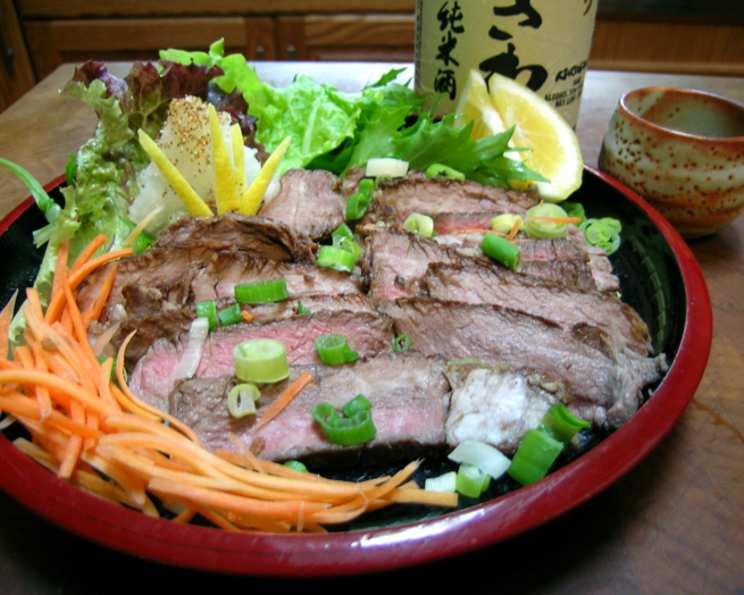
Ginger Beef Tataki With Lemon-Soy Dipping Sauce
The scent of ginger always transports me back to my grandmother’s kitchen. She had a knack for infusing the simplest dishes with vibrant Asian flavors. I remember being mesmerized by the way she’d julienne ginger into the thinnest slivers, her movements precise and practiced. This Ginger Beef Tataki, with its bright lemon-soy dipping sauce, captures that same essence of fresh, bold flavors, a perfect blend of Japanese technique and comforting family memories. This dish is an homage to her, a little piece of my past served on a plate.
Recipe Overview
- Prep Time: 30 minutes
- Cook Time: 35 minutes
- Total Time: 4 hours 5 minutes (includes chilling time)
- Servings: 6
- Yield: 6 servings
- Dietary Type: Dairy-Free
Ingredients
- 2 tablespoons vegetable oil
- 1 (2 lb) beef tenderloin, trimmed, about 2 lbs
- 6 tablespoons soy sauce
- 1/4 cup mirin
- 2 green onions, very thinly sliced
- 2 tablespoons golden brown sugar
- 2 tablespoons fresh lemon juice
- 2 tablespoons minced peeled fresh ginger
- 2 large garlic cloves, flattened
- 6 tablespoons finely grated peeled daikon radishes
- 6 tablespoons finely grated peeled fresh ginger
- 4 green onions, very finely chopped
- 2 lemons, cut into wedges
- Salt and pepper to taste
- Optional: Shiso leaves for garnish
Equipment Needed
- Large skillet
- Roasting pan
- Meat thermometer
- Large resealable plastic bag
- Sharp knife
- Cutting board
- Bowls for serving
Instructions
-
Preheat your oven to 400°F (200°C). This initial high heat helps to quickly sear the outside of the beef, locking in the juices.
-
Rub 1 tablespoon of the vegetable oil all over the beef tenderloin. Season generously with salt and pepper. Don’t be shy with the seasoning, as it’s crucial for flavor!
-
Heat the remaining 1 tablespoon of vegetable oil in a heavy, large skillet over medium-high heat. The skillet should be hot enough to create a good sear without burning the oil.
-
Carefully add the beef tenderloin to the hot skillet and cook until browned on all sides, turning often. This should take about 5 minutes. The browning process, also known as the Maillard reaction, is essential for developing rich, complex flavors.
-
Transfer the seared beef tenderloin to a roasting pan.
-
Roast the beef in the preheated oven until a meat thermometer inserted into the center registers 130°F (54°C) for medium-rare. This may take around 35 minutes, but it’s crucial to check the temperature frequently. Remember, carryover cooking will continue to raise the temperature slightly after you remove it from the oven, so aim for the lower end of the range. If you prefer your beef more rare, pull it out sooner at around 120°F (49°C).
-
Let the roasted beef cool completely. This is important for easier slicing later on.
-
While the beef is cooling, prepare the marinade. In a large resealable plastic bag, combine the soy sauce, mirin, 2 thinly sliced green onions, golden brown sugar, fresh lemon juice, minced peeled fresh ginger, and flattened garlic cloves. Mix well to ensure the sugar is dissolved.
-
Add the cooled beef to the marinade, seal the bag tightly, and refrigerate. Marinate the beef for at least 4 hours, and up to 1 day, turning it occasionally to ensure it marinates evenly. This step is critical for infusing the beef with the savory and tangy flavors of the marinade.
-
Remove the beef from the marinade and discard the marinade.
-
Using a very sharp knife, carefully cut the beef into thin, 1/4-inch-thick slices. Precision is key here for a beautiful presentation.
-
Cover the sliced beef and let it stand at room temperature for 30 minutes before serving. This allows the flavors to fully develop and the beef to reach its optimal temperature.
-
To serve, arrange the sliced beef attractively on individual plates. Spoon small mounds of finely grated peeled daikon radishes, finely grated peeled fresh ginger, and very finely chopped green onions onto each plate.
-
Garnish with lemon wedges and, if desired, shiso leaves. Serve immediately with individual bowls of your favorite Lemon-Soy Dipping Sauce.
Expert Tips & Tricks
- For an even sear, make sure the beef is dry before placing it in the skillet. Pat it dry with paper towels.
- Don’t overcrowd the pan when searing. If necessary, sear the beef in two batches to ensure proper browning.
- Use a digital thermometer for the most accurate temperature reading. Insert it into the thickest part of the tenderloin, avoiding bone or fat.
- If you don’t have mirin, you can substitute it with a dry sherry or sweet marsala wine.
- To intensify the ginger flavor, lightly bruise the minced ginger with the back of a knife before adding it to the marinade.
- Make ahead: The beef can be roasted, marinated, and sliced a day in advance. Store the slices in an airtight container in the refrigerator. Bring to room temperature before serving.
- For a spicier kick, add a pinch of red pepper flakes to the marinade.
Serving & Storage Suggestions
Serve the Ginger Beef Tataki immediately after slicing and arranging on plates. The combination of warm beef, cool toppings, and tangy dipping sauce is best enjoyed fresh.
Leftovers can be stored in an airtight container in the refrigerator for up to 2 days. However, keep in mind that the quality of the beef may diminish slightly over time. It is not recommended to freeze this dish, as freezing can alter the texture of the beef.
To reheat, gently warm the beef slices in a skillet over low heat or in the microwave for a short period. Be careful not to overcook the beef, as it can become tough.
Nutritional Information
| Nutrient | Amount per Serving | % Daily Value |
|---|---|---|
| Calories | 450 kcal | 23% |
| Total Fat | 25g | 38% |
| Saturated Fat | 10g | 50% |
| Cholesterol | 110mg | 37% |
| Sodium | 950mg | 40% |
| Total Carbohydrate | 10g | 3% |
| Dietary Fiber | 2g | 7% |
| Sugars | 5g | – |
| Protein | 35g | 70% |
Note: Nutritional information is an estimate and may vary based on specific ingredients and preparation methods.
Variations & Substitutions
- Gluten-Free: Use tamari instead of soy sauce to make the dish gluten-free.
- Spicy: Add a finely minced chili pepper or a dash of chili oil to the marinade for a spicy kick.
- Sesame: Toast sesame seeds and sprinkle them over the tataki for added flavor and texture. You can also add a tablespoon of sesame oil to the marinade.
- Citrus: Experiment with different citrus juices in the marinade, such as orange or grapefruit.
- Vegetarian: Substitute the beef tenderloin with portobello mushrooms. Marinate and sear the mushrooms instead of roasting.
- Herbaceous: Include fresh cilantro or mint leaves in the garnish for a refreshing twist.
FAQs (Frequently Asked Questions)
Q: Can I cook the beef to medium instead of medium-rare?
A: Yes, you can. Increase the roasting time until the internal temperature reaches 140°F (60°C) for medium. However, keep in mind that the beef will be less tender.
Q: Can I marinate the beef for longer than 24 hours?
A: It’s not recommended. Marinating for too long can cause the beef to become mushy.
Q: What can I serve with Ginger Beef Tataki?
A: Ginger Beef Tataki pairs well with steamed rice, a fresh salad, or miso soup.
Q: Can I use a different cut of beef?
A: While beef tenderloin is the most tender option, you can use a sirloin steak as a substitute. Be sure to adjust the cooking time accordingly.
Q: How do I ensure the beef is sliced thinly enough?
A: Using a very sharp knife and chilling the beef thoroughly before slicing will make it easier to achieve thin, even slices. A meat slicer can also be used for precision.
Final Thoughts
Ginger Beef Tataki is more than just a recipe; it’s an experience. The combination of flavors and textures, from the tender beef to the zesty dipping sauce, creates a symphony on your palate. I encourage you to try this recipe and make it your own. Don’t be afraid to experiment with different variations and substitutions to create a dish that perfectly suits your taste. Share your creations with friends and family and let them experience the magic of this delightful dish. And who knows, maybe it will bring back some of their cherished memories.