
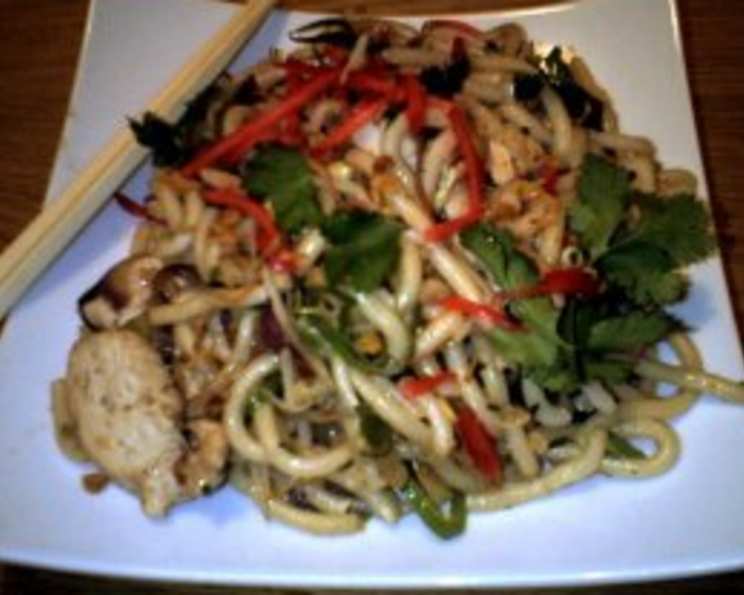
Ginger Chicken Teppan: A Wagamama Favorite Recreated
The first time I tasted Ginger Chicken Teppan, it was a revelation. I was a young, aspiring chef, overwhelmed by the sheer variety of Asian cuisines. That first bite – the vibrant ginger, the perfectly cooked noodles, the tender chicken – it all coalesced into a flavor bomb that instantly captivated me. It was a turning point, sparking my fascination with recreating restaurant-quality meals at home, and inspiring countless flavorful dishes. And it all started with this simple yet extraordinary teppan.
Recipe Overview
- Prep Time: 15 minutes
- Cook Time: 8 minutes
- Total Time: 23 minutes
- Servings: 2
- Dietary Type: Adaptable (see Variations)
Ingredients
- 10 ½ ounces skinless chicken breasts or skinless chicken thighs, cut into strips
- 7 ounces udon noodles
- ½ red onion, peeled and sliced
- 4 spring onions, cut into 1-inch lengths
- 1 tablespoon gingerroot, peeled and grated
- 1 red chile, deseeded and finely sliced
- 1 garlic clove, finely sliced
- 2 eggs, beaten
- 2 tablespoons vegetable oil
- 2 tablespoons coriander, roughly chopped (use the leaves, not the seeds!)
- 5 mange-touts peas, finely sliced
- 1 cup bean sprouts
- Tsuyu sauce (see note below)
For Garnish:
- 2 teaspoons pickled ginger
- 2 teaspoons fried dried shallots
Ingredient Note: Tsuyu sauce is a Japanese noodle soup base readily available at Asian supermarkets. If you can’t find it, there are many recipes for homemade versions online.
Equipment Needed
- Large Bowl
- Wok or Large Frying Pan
- Pot for boiling noodles
- Colander
Instructions
- First, prepare the udon noodles. Bring a pot of water to a rolling boil. Add the udon noodles and cook for 2-3 minutes, or until they are just tender. Drain the noodles in a colander and immediately refresh them under a cold tap to stop the cooking process. Strain well to remove any excess water.
- While the noodles are cooking, prepare the Teppan mix. In a large bowl, combine the sliced red onion, spring onion lengths, grated gingerroot, sliced red chile, sliced garlic clove, beaten eggs, roughly chopped coriander leaves, finely sliced mange-touts peas, and bean sprouts.
- Add a generous amount of Tsuyu sauce to the bowl. The exact amount will depend on the brand of Tsuyu sauce and your personal preference, but start with about ½ cup and add more to taste. Mix all the ingredients together, ensuring that everything is well coated in the Tsuyu sauce.
- Heat a wok or large frying pan over a medium-high flame until it is almost smoking. This is crucial for achieving that authentic wok-hei, or “breath of the wok,” which imparts a unique smoky flavor to the dish.
- Add the vegetable oil to the hot wok. Swirl the oil around to coat the bottom and sides of the wok.
- Add the chicken strips to the hot oil. Stir-fry the chicken for 3-4 minutes, or until it is cooked through and lightly browned. Season the chicken with salt and pepper to taste.
- Pour the contents of the bowl (the noodle and vegetable mixture) into the wok with the cooked chicken.
- Stir-fry everything together for another 3-4 minutes, or until the noodles are heated through and the vegetables are slightly softened. Make sure to continuously stir and toss the ingredients to prevent sticking and ensure even cooking.
- Divide the Ginger Chicken Teppan between two plates.
- Garnish each plate with pickled ginger and fried dried shallots.
- Finish with a few sprigs of fresh coriander leaves for a pop of color and freshness. Serve immediately.
Expert Tips & Tricks
- Achieving Wok Hei: Getting your wok screaming hot is key to that authentic wok-hei flavor. If using an electric stove, choose a powerful burner and preheat the wok for several minutes.
- Chicken Preparation: Cut the chicken into uniform strips for even cooking. Marinating the chicken in a little soy sauce and ginger before stir-frying enhances its flavor.
- Noodle Choice: While udon noodles are traditional, you can experiment with other types of Asian noodles like soba or ramen. Just adjust the cooking time accordingly.
- Vegetable Variations: Feel free to add other vegetables like bell peppers, carrots, or broccoli florets.
- Sauce Adjustment: Taste the Tsuyu sauce before adding it to the dish and adjust the amount to your liking. You can also add a dash of soy sauce or rice vinegar to customize the flavor.
- Prep Ahead: You can chop the vegetables and prepare the sauce mixture ahead of time. Store them separately in the refrigerator and combine them just before cooking.
- If your wok is sticking: Ensure your wok is properly seasoned before using and that it is very hot before you add the oil. Try using a non-stick wok if sticking is a persistent problem.
Serving & Storage Suggestions
Serve Ginger Chicken Teppan immediately while it’s hot and the noodles are still tender. The dish is best enjoyed fresh.
Leftovers can be stored in an airtight container in the refrigerator for up to 2 days. Reheat the leftovers in a wok or frying pan over medium heat, adding a splash of water or Tsuyu sauce to prevent drying out. Be careful not to overcook the noodles, as they can become mushy. I don’t recommend freezing leftovers, as the texture of the noodles and vegetables may change upon thawing.
Nutritional Information
Note: Nutritional information is an estimate and may vary based on specific ingredients and portion sizes.
| Nutrient | Amount per Serving | % Daily Value (approx.) |
|---|---|---|
| Calories | 773 kcal | 39% |
| Total Fat | 22 g | 28% |
| Saturated Fat | 4 g | 20% |
| Cholesterol | 302 mg | 101% |
| Sodium | 2019 mg | 84% |
| Total Carbohydrate | 86 g | 31% |
| Dietary Fiber | 7 g | 25% |
| Sugars | 6 g | N/A |
| Protein | 57 g | 114% |
Variations & Substitutions
- Gluten-Free: Use gluten-free udon noodles (often made from rice flour) and gluten-free Tsuyu sauce (look for tamari-based options).
- Vegetarian/Vegan: Substitute the chicken with tofu or tempeh. Ensure your Tsuyu sauce is vegan-friendly.
- Spicy: Add more red chile or a dash of chili oil for extra heat.
- Lower Sodium: Use low-sodium Tsuyu sauce or make your own with reduced sodium soy sauce.
- Seasonal Vegetables: Adapt the recipe with seasonal vegetables like asparagus in spring or butternut squash in the fall.
- Protein Power: Add shrimp or thinly sliced beef alongside the chicken for a protein boost.
FAQs (Frequently Asked Questions)
Q: Can I make this ahead of time?
A: It’s best served fresh, but you can prep the ingredients (chop vegetables, marinate chicken) in advance. Cook just before serving for best results.
Q: Can I use dried udon noodles?
A: Yes, but cook them according to package directions before adding them to the recipe. Dried noodles often require a longer cooking time.
Q: Where can I find Tsuyu sauce?
A: Most Asian supermarkets carry Tsuyu sauce. Look in the noodle or soup aisle. If you can’t find it locally, it’s readily available online.
Q: Can I use chicken thighs instead of chicken breasts?
A: Absolutely! Chicken thighs are a great substitute and add richness to the dish.
Q: How do I prevent the noodles from sticking together?
A: Rinsing the cooked noodles under cold water helps remove excess starch and prevents them from clumping. Also, don’t overcrowd the wok while stir-frying.
Final Thoughts
Ginger Chicken Teppan is more than just a quick and easy meal; it’s a gateway to the vibrant world of Asian cuisine. With its harmonious blend of flavors and textures, this dish is sure to become a family favorite. Don’t be afraid to experiment with variations and substitutions to create your own signature Teppan. So grab your wok, gather your ingredients, and embark on a culinary adventure. I hope you enjoy it as much as my family and I do!