
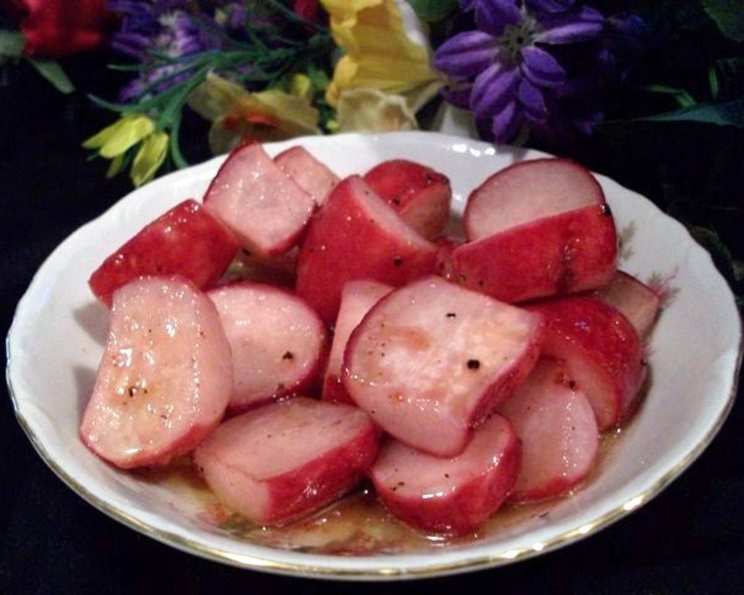
Glazed Radishes: A Surprising Culinary Delight
I’ll admit, as a child, radishes were relegated to the sad, watery salads of potlucks, their peppery bite something to be endured rather than enjoyed. It wasn’t until a spring trip to the French countryside, when I tasted radishes simply glazed in butter and sugar, that I understood their true potential. The sweetness mellowed the sharpness, transforming them into tender, almost ethereal bites of flavor. Now, glazed radishes are a springtime staple in my kitchen, a reminder that even the most humble ingredients can be elevated to something truly extraordinary.
Recipe Overview
- Prep Time: 5 minutes
- Cook Time: 10-15 minutes
- Total Time: 15-20 minutes
- Servings: 4
- Dietary Type: Vegetarian, Gluten-Free
Ingredients
- 45 radishes, ends trimmed (approximate)
- 2 tablespoons butter
- 2 tablespoons sugar
- 1 tablespoon white vinegar
- 1 teaspoon coarse salt
- 1/4 teaspoon ground pepper
- 1 1/2 cups water
Equipment Needed
- 12-inch skillet
Instructions
- Begin by prepping your radishes. Cut any large radishes in half to ensure even cooking. Leave smaller radishes whole. This will help them cook at a similar rate.
- In a 12-inch skillet, combine the prepared radishes, 2 tablespoons butter, 2 tablespoons sugar, 1 tablespoon white vinegar, 1 teaspoon coarse salt, 1/4 teaspoon ground pepper, and 1 1/2 cups water.
- Bring the mixture to a boil over high heat. Once boiling, reduce the heat slightly to maintain a rapid simmer.
- Cook, stirring occasionally, until the liquid has reduced significantly and the radishes are tender and beautifully glazed. This process should take approximately 10 to 15 minutes. Keep a close eye on the pan to prevent the sugar from burning. You want a lovely, glossy glaze.
- Once the radishes are tender and the liquid has transformed into a shimmering glaze, they are ready to serve.
Expert Tips & Tricks
- Radish Selection: Choose fresh, firm radishes. Smaller radishes tend to be milder, while larger ones can have a more pronounced peppery flavor.
- Sugar Adjustment: The amount of sugar can be adjusted to your liking. If you prefer a less sweet glaze, start with 1 tablespoon and add more to taste. You can also substitute with honey or maple syrup for a slightly different flavor profile.
- Butter Alternatives: While butter provides a rich flavor, you can use olive oil or another plant-based oil for a vegan option. The flavor will be different, but still delicious.
- Don’t overcrowd the pan: Overcrowding will cause the radishes to steam instead of glaze properly. Use a large enough skillet or cook in batches.
- Salt Selection: Coarse salt provides a better texture and flavor. If you only have fine salt, use slightly less.
- Vinegar Note: The vinegar adds a touch of acidity that balances the sweetness of the sugar. You can experiment with different types of vinegar, such as apple cider vinegar or balsamic vinegar, for a unique twist.
- Perfecting the Glaze: The glaze should be thick enough to coat the radishes but not so thick that it becomes sticky or burnt. If the glaze is reducing too quickly, add a little more water. If it’s not reducing enough, increase the heat slightly.
Serving & Storage Suggestions
Serve these glazed radishes immediately while they are warm and the glaze is still glossy. They make a wonderful side dish to roasted meats, fish, or vegetarian entrees. Consider pairing them with a squeeze of fresh lemon juice or a sprinkle of fresh herbs like parsley or chives for added flavor and visual appeal.
Leftover glazed radishes can be stored in an airtight container in the refrigerator for up to 3 days. To reheat, gently warm them in a skillet over low heat or in the microwave. Keep in mind that the glaze may become slightly thinner upon reheating. Reheating in a skillet will yield a better texture overall.
These radishes are best enjoyed fresh. Freezing is not recommended, as it will alter the texture of the radishes and the glaze.
Nutritional Information
| Nutrient | Amount per Serving | % Daily Value |
|---|---|---|
| Calories | 84.5 kcal | N/A |
| Calories from Fat | 52 kcal | N/A |
| Total Fat | 5.8 g | 8% |
| Saturated Fat | 3.7 g | 18% |
| Cholesterol | 15.3 mg | 5% |
| Sodium | 642.2 mg | 26% |
| Total Carbohydrate | 8.1 g | 2% |
| Dietary Fiber | 0.8 g | 3% |
| Sugars | 7.4 g | N/A |
| Protein | 0.4 g | 0% |
Note: Nutritional information is an estimate and may vary based on specific ingredients and cooking methods.
Variations & Substitutions
- Spicy Glazed Radishes: Add a pinch of red pepper flakes or a dash of hot sauce to the skillet for a spicy kick.
- Herb-Infused Glaze: Infuse the butter with fresh herbs like thyme or rosemary for an aromatic twist. Simply melt the butter in the skillet and add the herbs before adding the other ingredients.
- Maple Glazed Radishes: Substitute maple syrup for the sugar for a deeper, more complex sweetness.
- Citrus Glaze: Add a tablespoon of orange or lemon juice to the glaze for a bright, citrusy flavor.
- Vegan Option: Use olive oil or vegan butter in place of dairy butter. Ensure your sugar is vegan-friendly, as some refined sugars are processed using bone char.
- Roasted Glazed Radishes: Roast the radishes in the oven for a more caramelized flavor. Toss the radishes with the butter, sugar, vinegar, salt, and pepper. Roast at 400°F (200°C) for 20-25 minutes, or until tender and slightly browned. Add a splash of water halfway through if needed to prevent burning.
FAQs (Frequently Asked Questions)
Q: Can I use different types of radishes?
A: Absolutely! While this recipe is designed for common red radishes, you can experiment with other varieties like daikon or watermelon radishes. Keep in mind that different varieties may have slightly different cooking times.
Q: Can I make this recipe ahead of time?
A: While glazed radishes are best served fresh, you can prep the radishes by trimming and halving them ahead of time. Store them in the refrigerator until ready to cook.
Q: The glaze is too thin. How do I thicken it?
A: Continue cooking the radishes over medium-high heat, stirring frequently, until the liquid reduces and thickens into a glaze. You can also add a small amount of cornstarch slurry (1 teaspoon cornstarch mixed with 1 tablespoon water) to the skillet to help thicken the glaze.
Q: Can I use a different type of sweetener?
A: Yes, you can substitute the sugar with honey, maple syrup, or agave nectar. The flavor of the glaze will vary depending on the sweetener you choose.
Q: The radishes are still bitter. What can I do?
A: Soaking the radishes in cold water for about 30 minutes before cooking can help reduce their bitterness. You can also add a bit more sugar or vinegar to the glaze to balance the bitterness.
Final Thoughts
Glazed radishes are a testament to the transformative power of simple cooking. Don’t let the humble radish fool you – this dish is a flavor revelation. I encourage you to try this recipe and experience the surprising delight of glazed radishes for yourself. Experiment with different variations, share your feedback, and consider pairing them with a crisp white wine or a refreshing cucumber salad for a complete culinary experience. Happy cooking!