
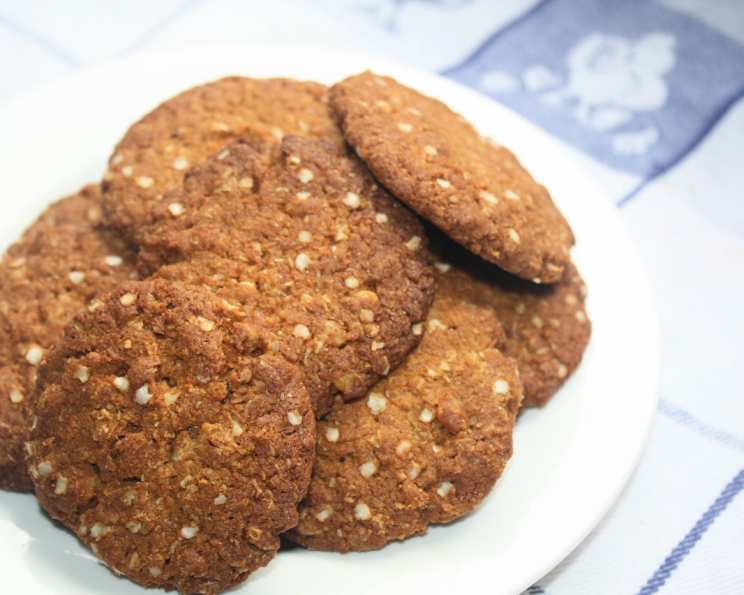
Gluten-Free Anzac Biscuits: A Modern Twist on a Classic
The scent of warm golden syrup and toasted coconut instantly transports me back to my childhood, baking with my grandmother. While her traditional Anzac biscuits were legendary, they weren’t an option for those avoiding gluten. So, after many attempts to recreate that nostalgic flavor, I’ve finally landed on a gluten-free version that captures the spirit of the original, while being entirely suitable for modern dietary needs. I can now enjoy a biscuit that is a true tribute to the Anzac tradition and share that memory with everyone.
Recipe Overview
- Prep Time: 20 minutes
- Cook Time: 15-20 minutes
- Total Time: 35-40 minutes
- Yields: Approximately 45 biscuits
- Serves: 45
- Dietary Type: Gluten-Free
Ingredients
- ¾ cup desiccated coconut
- 1 cup rolled quinoa flakes
- ¾ cup gluten-free blended flour (such as Orgran brand)
- 1 cup gluten-free rice bubbles (such as Freedom Foods Rice Puffs)
- ½ cup sorghum flour (or soy flour)
- ¾ cup sugar
- ⅛ cup brown sugar
- 200g butter
- 1 ½ tablespoons golden syrup
- 2 teaspoons bicarbonate of soda
- 4 tablespoons boiling water
Equipment Needed
- Large mixing bowl
- Small saucepan
- Measuring cups and spoons
- Cookie trays
- Baking paper
- Wooden spoon
- Wire rack
Instructions
- Begin by preheating your oven to 170°C (340°F) if using a fan-forced oven, or 185°C (365°F) for a conventional oven. Line your cookie trays with baking paper. There’s no need to grease the baking paper itself.
- In a large mixing bowl, combine all the dry ingredients: desiccated coconut, rolled quinoa flakes, gluten-free blended flour, gluten-free rice bubbles, sorghum flour, sugar, and brown sugar. Set this mixture aside.
- In a small saucepan over low heat, melt the butter and golden syrup together. Stir occasionally to ensure they combine smoothly. Do not let the mixture boil.
- While the butter and golden syrup are melting, prepare the bicarbonate of soda mixture. In a separate cup, combine the boiling water and bicarbonate of soda. Stir well; the mixture will fizz and foam.
- Carefully add the bicarbonate of soda mixture to the melted butter and golden syrup. The mixture will foam up significantly. This is normal and essential for the biscuit’s texture.
- Pour the wet ingredients (the butter mixture) into the large mixing bowl with the dry ingredients. Using a wooden spoon, thoroughly mix until all ingredients are well combined and a slightly sticky dough forms.
- Take a small amount of the dough – about the size of a walnut – and roll it into a ball between your palms. Gently flatten the ball slightly, creating a disc shape.
- Place the flattened biscuits onto the prepared cookie trays, leaving a little space between each one to allow for spreading during baking.
- Bake in the preheated oven for approximately 15 to 20 minutes. Keep a close eye on them, as baking times can vary depending on your oven. The biscuits are ready when they are a dark golden brown color.
- Once baked, remove the cookie trays from the oven and let the biscuits cool on the trays for about 5 minutes. This allows them to firm up slightly before transferring them.
- After the initial cooling period, carefully move the biscuits onto a wire rack to cool completely. As they cool, they will continue to firm up and develop their characteristic Anzac biscuit texture.
- Once completely cooled, store the gluten-free Anzac biscuits in an airtight container at room temperature. This will help maintain their crispness.
Expert Tips & Tricks
- Quinoa Flakes: Rolled quinoa flakes provide a similar texture to traditional oats in Anzac biscuits. Be sure to use flakes and not whole quinoa seeds.
- Gluten-Free Flour Blend: The choice of gluten-free flour blend is crucial. I recommend using a commercially available blend that is designed for baking, as these often contain a mix of flours and starches that mimic the properties of wheat flour.
- Rice Bubbles (Rice Puffs): Adding rice bubbles gives the biscuits a lighter texture and helps to prevent them from becoming too dense. Don’t skip this ingredient!
- Sorghum Flour (or Soy Flour): Sorghum flour adds a subtle sweetness and nutty flavor to the biscuits. Soy flour is an acceptable substitute, but it might impart a slightly different flavor.
- Doneness: The biscuits will appear soft when they first come out of the oven but will firm up as they cool. The key indicator of doneness is the dark golden brown color. If they’re not quite dark enough, they may be too soft and chewy.
- Bicarbonate of Soda Activation: The chemical reaction between the bicarbonate of soda and boiling water is what gives the biscuits their characteristic chewy texture and helps them spread. Make sure to use boiling water for the best results.
- Even Baking: To ensure even baking, rotate the cookie trays halfway through the baking time. This is particularly important if your oven has hot spots.
- Preventing Over-Spreading: If your biscuits are spreading too much during baking, try chilling the dough in the refrigerator for about 30 minutes before rolling and baking.
Serving & Storage Suggestions
These gluten-free Anzac biscuits are perfect served with a cup of tea or coffee. Their golden, crispy texture and sweet, slightly chewy interior make them an ideal treat any time of day.
To store, place the cooled biscuits in an airtight container at room temperature. They will stay fresh for up to a week. If you live in a humid climate, you may want to add a piece of parchment paper between layers of biscuits to prevent them from sticking together.
Freezing is not generally recommended, as it can affect the texture of the biscuits. However, if you must freeze them, wrap them individually in plastic wrap and then place them in a freezer-safe container. Thaw at room temperature before serving. They may lose some of their crispness after thawing.
Nutritional Information
| Nutrient | Amount per Serving | % Daily Value |
|---|---|---|
| Calories | 84 kcal | 4% |
| Total Fat | 4.3g | 6% |
| Saturated Fat | 2.7g | 13% |
| Cholesterol | 9.5mg | 3% |
| Sodium | 95.8mg | 4% |
| Total Carbohydrate | 10.8g | 4% |
| Dietary Fiber | 0.6g | 2% |
| Sugars | 4.7g | 5% |
| Protein | 1g | 2% |
Note: Nutritional information is an estimate and can vary based on specific ingredients used.
Variations & Substitutions
- Vegan Anzac Biscuits: Substitute the butter with a vegan butter alternative. Ensure that the golden syrup is also vegan-friendly.
- Nut-Free Anzac Biscuits: Replace the sorghum flour (or soy flour) with additional gluten-free flour blend. Double-check all other ingredients to ensure they are processed in a nut-free facility.
- Different Flours: While this recipe is optimized for a gluten-free blend and sorghum flour, you can experiment with other gluten-free flours such as tapioca flour, rice flour, or almond flour. However, you may need to adjust the ratios to achieve the desired texture.
- Spice it up: Add a pinch of cinnamon or nutmeg to the dry ingredients for a warm, comforting flavor.
- Citrus Zest: A teaspoon of lemon or orange zest can add a bright, fresh note to the biscuits.
FAQs (Frequently Asked Questions)
Q: Can I use regular oats instead of rolled quinoa flakes?
A: While traditional Anzac biscuits use oats, they are not considered gluten-free in Australia due to cross-contamination. If you are not strictly avoiding gluten, you can use regular rolled oats.
Q: Why is bicarbonate of soda used in this recipe?
A: Bicarbonate of soda reacts with the boiling water and golden syrup, creating carbon dioxide bubbles that give the biscuits their characteristic chewy texture and help them spread during baking.
Q: My biscuits are too hard. What did I do wrong?
A: Overbaking is the most common cause of hard Anzac biscuits. Reduce the baking time slightly or lower the oven temperature.
Q: My biscuits are too soft and chewy, even after cooling. Why?
A: This can be due to underbaking or using too much liquid. Make sure the biscuits are a dark golden brown color before removing them from the oven. You can also try adding a bit more gluten-free flour to the dough.
Q: Can I make the dough ahead of time?
A: Yes, you can prepare the dough ahead of time and store it in the refrigerator for up to 24 hours. However, the dough may become slightly drier, so you may need to add a tablespoon or two of water to the dough before baking.
Final Thoughts
Baking these gluten-free Anzac biscuits is more than just following a recipe; it’s about connecting with a cherished tradition and sharing it with those who might otherwise miss out. The combination of textures and flavors creates a truly delightful treat that everyone can enjoy. I encourage you to try this recipe, experiment with variations, and create your own memories around this classic Australian biscuit. And, of course, I would love to hear your feedback and experiences!