
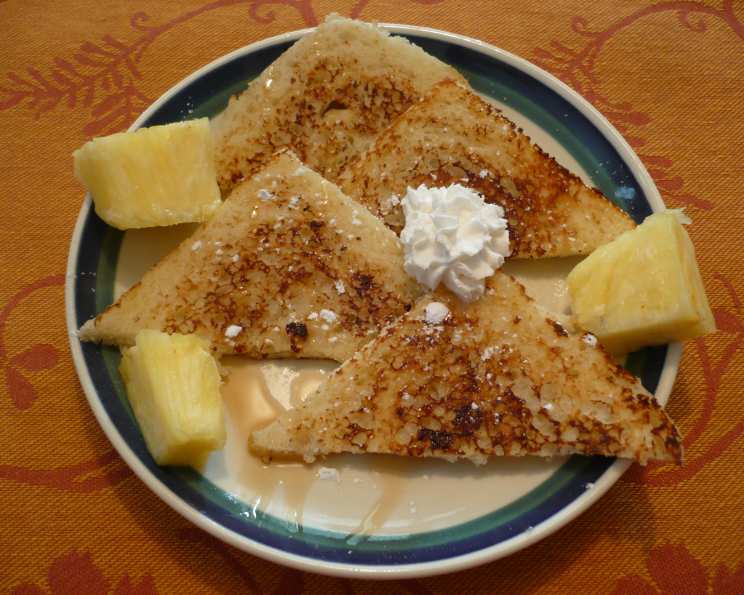
Gluten-Free French Toast: A Delicious Start to Your Day
The aroma of French toast, warm and subtly sweet, always transports me back to my grandmother’s kitchen. She wasn’t a fancy chef, but she had a knack for making simple breakfasts feel like a celebration. Even though I’ve had to adapt my cooking since discovering my gluten intolerance, the joy of a perfect slice of French toast remains undiminished. It’s a classic that deserves to be enjoyed by everyone, regardless of dietary restrictions, and this gluten-free version is just as comforting and delicious as the original.
Recipe Overview
- Prep Time: 5 minutes
- Cook Time: 5 minutes
- Total Time: 10 minutes
- Yields: 4 slices
- Serves: 2
- Dietary Type: Gluten-Free
Ingredients
- ⅛ cup egg white
- 3 tablespoons milk
- 1-2 teaspoons cinnamon sugar
- 1 drop vanilla
- 4 slices gluten-free bread, crusts removed
- Maple syrup, to serve
- Whipped cream, to serve (optional)
- Powdered sugar, to serve (optional)
- Fresh fruit, to serve (optional)
Ingredient Notes:
- For the milk, you can use any type you prefer: dairy, almond, soy, or oat milk all work well.
- If you don’t have cinnamon sugar pre-mixed, simply combine ground cinnamon and granulated sugar to your liking.
- Choose a gluten-free bread that you enjoy. Some are denser than others, which will affect the final texture.
- For a richer flavor, use a high-quality vanilla extract.
Equipment Needed
- Shallow dish or bowl
- Whisk or fork
- Non-stick frying pan or griddle
- Spatula
Instructions
-
In a shallow dish, whisk together the egg whites, milk, cinnamon sugar, and vanilla until well combined and slightly frothy. This mixture will form the custard that coats the bread.
-
Carefully dip each slice of gluten-free bread into the egg white mixture, ensuring both sides are thoroughly coated. Don’t soak the bread for too long, as gluten-free bread can become soggy more easily than traditional bread. A quick dip on each side is sufficient.
-
Heat a non-stick frying pan or griddle over medium heat. If you’re not using a non-stick pan, lightly grease it with butter or cooking spray to prevent sticking.
-
Place the soaked bread slices onto the hot pan. Cook for about 2-3 minutes per side, or until golden brown and cooked through. Be careful not to burn the bread, especially if your pan is very hot. Adjust the heat as needed to achieve a nice, even browning.
-
Once the French toast is cooked, remove it from the pan and place it on a plate. Cut each slice diagonally for a more elegant presentation.
-
Garnish with your desired toppings. Drizzle generously with maple syrup, add a dollop of whipped cream, dust with powdered sugar, and arrange some fresh fruit alongside.
-
Serve immediately and enjoy!
Expert Tips & Tricks
-
Bread Selection: The type of gluten-free bread you use will greatly impact the final result. Experiment with different brands and varieties to find your favorite. Some gluten-free breads are denser and require a longer soaking time, while others are lighter and more delicate.
-
Custard Consistency: The custard mixture should be thin enough to coat the bread evenly, but not so thin that it makes the bread soggy. Adjust the amount of milk to achieve the desired consistency.
-
Preventing Soggy French Toast: Gluten-free bread tends to absorb liquids more readily than regular bread. To prevent soggy French toast, avoid soaking the bread for too long. A quick dip on each side is usually sufficient.
-
Even Cooking: Make sure your pan is evenly heated before adding the bread. This will ensure that the French toast cooks evenly and browns properly.
-
Keeping Warm: If you’re making a large batch of French toast, keep the cooked slices warm in a preheated oven (200°F or 93°C) until ready to serve.
-
Flavor Boost: For extra flavor, add a pinch of nutmeg or cardamom to the egg white mixture. You can also use flavored extracts, such as almond or lemon, in place of vanilla.
Serving & Storage Suggestions
Serve your gluten-free French toast immediately while it’s warm and crispy. Garnish with your favorite toppings, such as maple syrup, whipped cream, powdered sugar, fresh fruit, or a sprinkle of nuts. It pairs perfectly with a side of bacon or sausage for a complete breakfast.
Leftover French toast can be stored in an airtight container in the refrigerator for up to 2 days. To reheat, you can microwave it for a short time, but it will be slightly softer. For a crispier result, reheat it in a toaster oven or frying pan.
Freezing is not recommended, as the texture will change significantly upon thawing. It’s best enjoyed fresh.
Nutritional Information
(Estimated per serving, without toppings)
| Nutrient | Amount per Serving | % Daily Value |
|---|---|---|
| Calories | 180 kcal | 9% |
| Total Fat | 3g | 4% |
| Saturated Fat | 1g | 5% |
| Cholesterol | 5mg | 2% |
| Sodium | 250mg | 11% |
| Total Carbohydrate | 30g | 11% |
| Dietary Fiber | 2g | 7% |
| Sugars | 5g | – |
| Protein | 8g | 16% |
Variations & Substitutions
- Dairy-Free: Substitute the milk with almond milk, soy milk, or oat milk.
- Egg-Free: While this recipe relies heavily on egg whites, you can experiment with flax eggs as a binder, though the texture will be different. Use 1 tablespoon of ground flaxseed mixed with 3 tablespoons of water per egg white. Let it sit for 5 minutes to thicken before adding it to the mixture.
- Spiced French Toast: Add a pinch of nutmeg, cardamom, or ginger to the egg white mixture for a warm and comforting flavor.
- Citrus Zest: Add a teaspoon of orange or lemon zest to the egg white mixture for a bright and refreshing twist.
- Berry Compote: Serve the French toast with a homemade berry compote for a burst of fruity flavor.
- Savory French Toast: Omit the cinnamon sugar and vanilla, and add a pinch of salt, pepper, and garlic powder to the egg white mixture. Serve with a fried egg and some crispy bacon.
FAQs (Frequently Asked Questions)
Q: Can I use regular bread instead of gluten-free bread?
A: Yes, you can. However, this recipe is specifically designed for gluten-free bread. If you use regular bread, it will no longer be gluten-free.
Q: Why is my gluten-free French toast soggy?
A: Gluten-free bread tends to absorb liquids more quickly than regular bread. Avoid soaking the bread for too long. A quick dip on each side is usually sufficient.
Q: Can I add more sugar to the egg white mixture?
A: Yes, you can adjust the amount of cinnamon sugar to your liking. If you prefer a sweeter French toast, add more sugar to the mixture.
Q: How do I know when the French toast is cooked through?
A: The French toast is cooked through when it’s golden brown on both sides and the egg white mixture is set. You can also test it with a fork to make sure it’s not soggy in the middle.
Q: Can I use a different type of milk?
A: Yes, you can use any type of milk you prefer, such as almond milk, soy milk, or oat milk.
Final Thoughts
Gluten-free French toast doesn’t have to be a compromise. With the right bread and a little care, you can create a breakfast that’s just as satisfying as the classic version. This recipe is a simple and delicious way to start your day, and I encourage you to give it a try. Feel free to experiment with different toppings and flavors to create your own signature French toast. Share your creations and feedback – I’d love to hear how it turns out! Pair it with a steaming cup of coffee or a refreshing glass of orange juice for the perfect weekend brunch. Bon appétit!