
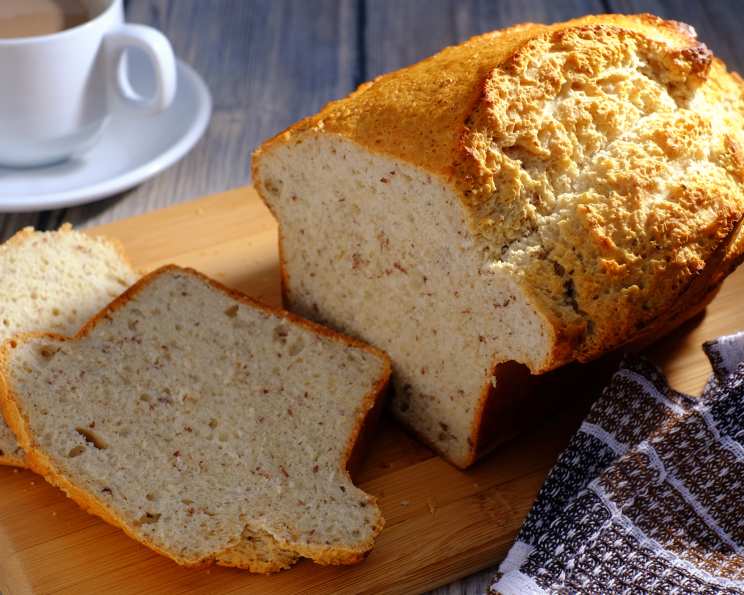
Gluten-Free Rustic Bread: A Hearty Loaf for Every Table
The scent of baking bread, particularly a rustic, hearty loaf, always takes me back to my grandmother’s kitchen. She had a way of transforming simple ingredients into something truly magical. I remember the warmth radiating from the oven, the comforting aroma filling the air, and the eager anticipation as we waited for the bread to cool just enough to slice. While my grandmother’s recipe book was a treasured collection, it was completely wheat-based! This gluten-free version honors her spirit of simple, delicious baking, making it accessible to everyone, regardless of dietary restrictions. It’s a loaf that fills the home with warmth and invites sharing, just like hers did.
Recipe Overview
- Prep Time: 15 minutes
- Cook Time: 35 minutes
- Total Time: 50 minutes
- Yields: 1 loaf
- Dietary Type: Gluten-Free
Ingredients
- 150 g sorghum flour
- 240 g potato starch
- 60 g tapioca starch
- 1 1/2 teaspoons salt
- 13 g coconut sugar crystals
- 12 g flax seed meal
- 15 g active dry yeast
- 15 ml olive oil
- 3 egg whites
- 1 teaspoon cider vinegar
- 250 ml warm water
Equipment Needed
- Mixing Bowl
- Non-stick Loaf Pan
- Whisk
- Measuring Cups and Spoons
Instructions
- In a large mixing bowl, whisk together the sorghum flour, potato starch, tapioca starch, flaxseed meal, salt, coconut sugar crystals, and active dry yeast. Ensure all dry ingredients are well combined to avoid clumps.
- Add the egg whites and olive oil to the dry ingredients. Stir well to begin incorporating the wet and dry components.
- Pour in the warm water and cider vinegar. Continue to stir until a smooth batter forms. The consistency will be thicker than a typical wheat-based bread dough but should be pourable.
- Carefully pour the batter into a non-stick loaf pan. Distribute it evenly.
- Bake for 35 minutes at 175°C/350°F, starting from a cold oven. This gradual heating helps the bread rise more evenly and prevents the crust from browning too quickly. It is essential to start baking from a cold oven, as this gives the loaf its lovely rustic texture.
Expert Tips & Tricks
- Temperature Check: Due to variations in ovens, check the bread for doneness a few minutes before the specified baking time. A toothpick inserted into the center should come out clean, or with just a few moist crumbs clinging to it.
- Flour Blending: The combination of sorghum, potato starch, and tapioca starch creates a texture that mimics wheat bread. Don’t substitute these without understanding how it will affect the final product.
- Yeast Activation: Ensure your active dry yeast is fresh. If you’re unsure, proof it by mixing it with a tablespoon of warm water and a teaspoon of sugar. If it foams after 5-10 minutes, it’s good to go.
- Pan Prep: Even with a non-stick loaf pan, lightly grease it with olive oil or cooking spray for extra insurance against sticking.
- Texture Enhancement: For a slightly nuttier flavor and added texture, consider adding a tablespoon of sunflower seeds or pumpkin seeds to the batter.
- Resting Time: Before slicing, allow the bread to cool in the pan for at least 10 minutes, then transfer it to a wire rack to cool completely. This prevents the bread from becoming gummy.
- Oven Placement: Ensure the loaf pan is placed in the center rack of your oven to ensure even baking and browning.
Serving & Storage Suggestions
This gluten-free rustic bread is incredibly versatile. Serve it warm with a pat of butter or a drizzle of olive oil. It’s perfect for sandwiches, toast, or as a side to soups and salads. Leftovers can be stored at room temperature in an airtight container for up to 2 days. For longer storage, wrap the loaf tightly in plastic wrap and freeze for up to 2 months. To reheat, thaw overnight in the refrigerator and then warm in a low oven (about 300°F/150°C) for 10-15 minutes, or until heated through. You can also toast individual slices directly from frozen.
Nutritional Information
| Nutrient | Amount per Serving* | % Daily Value |
|---|---|---|
| Calories | 1660.9 kcal | N/A |
| Calories from Fat | 224 g | 14% |
| Total Fat | 24.9 g | 38% |
| Saturated Fat | 3.3 g | 16% |
| Cholesterol | 0 mg | 0% |
| Sodium | 3809.6 mg | 158% |
| Total Carbohydrate | 322.3 g | 107% |
| Dietary Fiber | 31.1 g | 124% |
| Sugars | 12.1 g | 48% |
| Protein | 47 g | 94% |
*Please note that the “Amount per Serving” may refer to the entire loaf. Divide the values by the number of slices to calculate the approximate nutritional information per slice. The “% Daily Value” is based on a 2,000-calorie diet, so your values may change depending on your calorie needs.
Variations & Substitutions
- Herbed Bread: Add 1-2 tablespoons of your favorite dried herbs, such as rosemary, thyme, or oregano, to the dry ingredients for an aromatic twist.
- Sweet Bread: Increase the coconut sugar crystals to 25-30g and add a teaspoon of vanilla extract for a sweeter loaf, perfect for breakfast toast.
- Dairy-Free: This recipe is naturally dairy-free. Ensure your olive oil is not processed in a facility that also processes dairy products.
- Seed Power: Incorporate 2-3 tablespoons of mixed seeds (such as poppy, sesame, and chia) for added texture and nutritional value.
FAQs (Frequently Asked Questions)
Q: Can I use a different type of gluten-free flour?
A: While you can experiment, this recipe is specifically formulated for the blend of sorghum, potato starch, and tapioca starch. Substituting other flours may significantly alter the texture and rise of the bread.
Q: Why do I need to start baking from a cold oven?
A: Starting from a cold oven allows the bread to rise more slowly and evenly, resulting in a better texture and a more rustic appearance.
Q: Can I use honey or maple syrup instead of coconut sugar crystals?
A: Yes, you can substitute honey or maple syrup, but you may need to adjust the amount of liquid in the recipe. Start with a smaller amount (about 10g) and add more if needed to achieve the desired batter consistency.
Q: How do I prevent the bread from sticking to the loaf pan?
A: Ensure your loaf pan is truly non-stick and generously greased with olive oil or cooking spray. Lining the bottom of the pan with parchment paper is also a helpful tip.
Q: My bread came out dense and gummy. What went wrong?
A: Several factors could contribute to this, including using old yeast, not measuring ingredients accurately, or not baking the bread long enough. Make sure your yeast is fresh, measure carefully, and check for doneness with a toothpick.
Final Thoughts
This gluten-free rustic bread is more than just a recipe; it’s an invitation to slow down, savor simple pleasures, and share the warmth of homemade goodness with loved ones. Don’t be intimidated by gluten-free baking – with a little care and attention to detail, you can create a loaf that’s both delicious and nourishing. I encourage you to try this recipe, make it your own with variations, and most importantly, enjoy the process of creating something special. And of course, I’d love to hear about your experiences and any delicious pairings you discover! Bon appétit!