
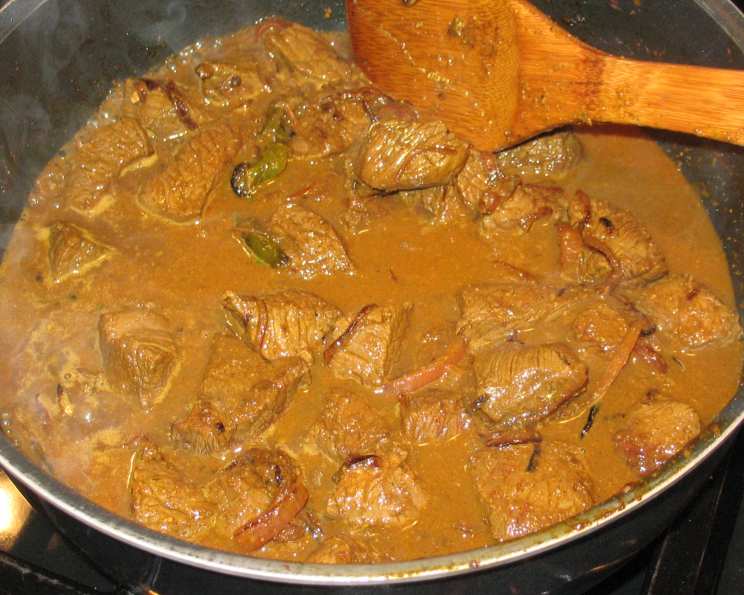
Goan Beef Curry With Vinegar: Beef Vindaloo by Aarti
The first time I tasted Vindaloo, I was a wide-eyed culinary student exploring the hidden gems of Goa. The fiery, tangy, and deeply aromatic stew, served in a humble shack overlooking the Arabian Sea, completely redefined my understanding of curry. It wasn’t just heat; it was a symphony of flavors – the warmth of the spices, the sharp tang of vinegar, and the unctuous richness of the beef all working in perfect harmony. I’ve been chasing that taste ever since, and Aarti Sequeira’s version gets remarkably close, capturing the soul of Goan cuisine in every bite.
Recipe Overview
- Prep Time: 20 minutes
- Cook Time: 1 hour 10 minutes
- Total Time: 1 hour 30 minutes
- Servings: 4-6
- Dietary Type: Potentially Gluten-Free (check ingredient labels)
Ingredients
WET MASALA Mixture:
- 1 teaspoon cumin seed (substitute: 1/2 teaspoon ground cumin)
- 2 cinnamon sticks, 2 1-inch pieces (substitute: 1/2 teaspoon ground cinnamon)
- 6 whole cloves (substitute: 1 teaspoon ground cloves)
- 4 whole black peppercorns (substitute: 1/4 teaspoon ground black pepper)
- 1 teaspoon ground turmeric
- 2 teaspoons paprika
- 1/2 teaspoon cayenne (to taste)
- 1 tablespoon ginger-garlic paste (or use 6 cloves of garlic and a 1-inch piece of fresh ginger, peeled)
- 1/2 cup apple cider vinegar
BEEF:
- 3 tablespoons canola oil
- 1 medium red onion, sliced very thinly
- 1 serrano pepper, sliced in half with stem intact (substitute: jalapeno, but it will be less hot)
- 2 lbs boneless beef top sirloin steaks, trimmed of all excess fat, cut into 1-inch cubes
- 1 teaspoon kosher salt, to taste
- 1/2 teaspoon fresh ground black pepper, to taste
Equipment Needed
- Small skillet
- Spice grinder
- Small food processor or blender
- Large pot (preferably nonstick)
Instructions
- Toast the spices: In a small skillet over medium-high heat, toast the cumin seeds, cinnamon sticks, cloves, and peppercorns until fragrant, about 1 minute. Be careful not to burn them, as this will make them taste bitter. Note: If you are using ground spices, skip this step and just measure them out into a small dish.
- Grind the spices: Pour the toasted spices into a spice grinder and process until powdered.
- Make the wet masala: In a small food processor or blender, combine the ground spice mix, ginger-garlic paste, and apple cider vinegar. Process until smooth. Set aside.
- Sauté the onions and pepper: Place a large (preferably nonstick) pot over high heat and add the canola oil. When the oil is shimmering, add the thinly sliced red onion and the halved serrano pepper. Stir frequently, and sauté the onions until golden brown, about 12 minutes. Be vigilant and don’t let them burn. If they start to burn, turn the heat down to medium-high.
- Add the wet masala: Add the wet masala to the pot, taking care as it will sizzle. Stir quite vigorously and turn down the heat if it’s bubbling too furiously. Do not wash the food processor bowl yet. Keep stirring, with short pauses, until most of the liquid has evaporated and the masala comes together as one mass, about 2 minutes. You may see little droplets of oil on the perimeter of the masala; that’s a good sign!
- Brown the beef: Quickly add the cubed beef to the pot and stir, coating the meat in the masala. Stir and cook for about 5 minutes until the meat browns.
- Add water and simmer: Remember that dirty food processor bowl? Fill it with 1 cup of hot water (from the tap is fine), swirl it around so it picks up any leftover masala, and pour that into the pot.
- Season and cook: Add the kosher salt and fresh ground black pepper to taste. Stir, bring the curry to a boil, and then turn it down to a simmer. Cover the pot and cook for at least 30-60 minutes. Then, cook with the lid ajar for another 10 minutes to thicken the gravy slightly. This step may take longer until the meat is tender.
- Check for doneness: Check the meat at the end of the cooking time; it should be tender and not chewy at all. If not, continue to simmer, covered, until it reaches the desired tenderness. Adjust the salt if you like.
- Serve: Serve the Beef Vindaloo over rice, or with chapatis (whole wheat griddle bread) or naan. A cooling raita is highly recommended to balance the spice.
Ginger Garlic Paste (Optional):
- Combine Ingredients: Combine 1/2 cup cloves garlic (whole), 1/2 cup fresh ginger (peeled, 1/2-inch slices), and 1/4 cup canola oil.
- Process: Throw the garlic, ginger, and canola oil in a mini-food processor and let it go until it forms a semi-smooth paste. There will still be tiny little pieces in there, but overall, it should resemble a paste.
- Store: Save what you don’t use in a small glass jar. It should last in the fridge for 2 to 3 weeks.
- Alternate: ALTERNATELY, in place of the ginger garlic paste use: 6 cloves garlic, peeled and roughly chopped and 1-inch thumb fresh ginger, peeled and roughly chopped.
Expert Tips & Tricks
- Tender Beef is Key: The key to a great Vindaloo is tender beef. Top sirloin is recommended, but other cuts like chuck roast can also be used, though they may require longer cooking times to become tender. Don’t be afraid to extend the simmering time if needed.
- Spice Level Adjustment: Vindaloo is traditionally spicy. Adjust the amount of cayenne pepper to your personal preference. Start with less and add more at the end if needed.
- Browning the Onions: Don’t rush the process of browning the onions. This step is crucial for developing the rich, complex flavor of the curry.
- Vinegar Choice: Apple cider vinegar is called for, but white vinegar can be used in a pinch. However, apple cider vinegar adds a slightly sweeter and more complex flavor.
Serving & Storage Suggestions
Serve the Beef Vindaloo hot, garnished with fresh cilantro, if desired. It pairs wonderfully with steamed rice, naan, or chapatis. A cooling raita (yogurt-based condiment) is highly recommended to balance the heat.
Leftovers can be stored in an airtight container in the refrigerator for up to 3-4 days. For longer storage, freeze in freezer-safe containers for up to 2 months. Thaw overnight in the refrigerator before reheating.
To reheat, gently warm the Vindaloo in a saucepan over medium-low heat, stirring occasionally, until heated through. You may need to add a splash of water if the sauce has thickened too much. Alternatively, reheat in the microwave in 1-minute intervals, stirring in between, until heated through.
Nutritional Information
| Nutrient | Amount per Serving | % Daily Value |
|---|---|---|
| Calories | ~350 kcal | ~18% |
| Total Fat | ~15g | ~23% |
| Saturated Fat | ~5g | ~25% |
| Cholesterol | ~100mg | ~33% |
| Sodium | ~500mg | ~22% |
| Total Carbs | ~10g | ~4% |
| Dietary Fiber | ~2g | ~8% |
| Sugar | ~3g | N/A |
| Protein | ~30g | ~60% |
| Note: Nutritional information is an estimate and will vary based on specific ingredients and portion sizes. |
Variations & Substitutions
- Vegan Vindaloo: Substitute the beef with firm tofu or vegetables like potatoes, cauliflower, and eggplant.
- Pork Vindaloo: Traditionally, Vindaloo is made with pork. Substitute the beef with pork shoulder cut into 1-inch cubes.
- Chicken Vindaloo: Use boneless, skinless chicken thighs cut into 1-inch pieces. Reduce the cooking time accordingly, as chicken cooks faster than beef.
- Spicier Vindaloo: Add more cayenne pepper or a chopped Scotch bonnet pepper (use with extreme caution!) to the wet masala.
- Milder Vindaloo: Reduce the amount of cayenne pepper or remove the seeds and membranes from the serrano pepper.
FAQs (Frequently Asked Questions)
Q: What does Vindaloo mean?
A: The name “Vindaloo” is derived from the Portuguese dish “carne de vinha d’alhos,” which translates to “meat in garlic marinade,” reflecting the dish’s historical roots in Portuguese-influenced Goan cuisine.
Q: Can I use a different type of vinegar?
A: While apple cider vinegar is recommended for its flavor, white vinegar can be used as a substitute, although it will result in a tangier and less complex flavor profile.
Q: How do I prevent the curry from burning while simmering?
A: Use a heavy-bottomed pot to distribute heat evenly, and stir the curry occasionally, especially during the initial simmering period, to prevent sticking and burning.
Q: Can I make this ahead of time?
A: Yes, Vindaloo tastes even better the next day as the flavors meld together. Store it in the refrigerator and reheat before serving.
Q: Is Vindaloo very spicy?
A: Traditional Vindaloo can be quite spicy, but you can adjust the amount of cayenne pepper and serrano peppers to control the heat level according to your preference.
Final Thoughts
Beef Vindaloo, with its bold flavors and rich history, is more than just a curry; it’s an experience. Don’t be intimidated by the ingredient list or the cooking time; the result is well worth the effort. This recipe, adapted from Aarti Sequeira’s version, offers a fantastic introduction to Goan cuisine. So, gather your ingredients, embrace the aromas, and prepare to embark on a culinary journey that will tantalize your taste buds. And please, don’t hesitate to share your creations and feedback – I’m always eager to hear about your culinary adventures! Pair this with a refreshing Indian beer like a Kingfisher for a truly authentic experience.