
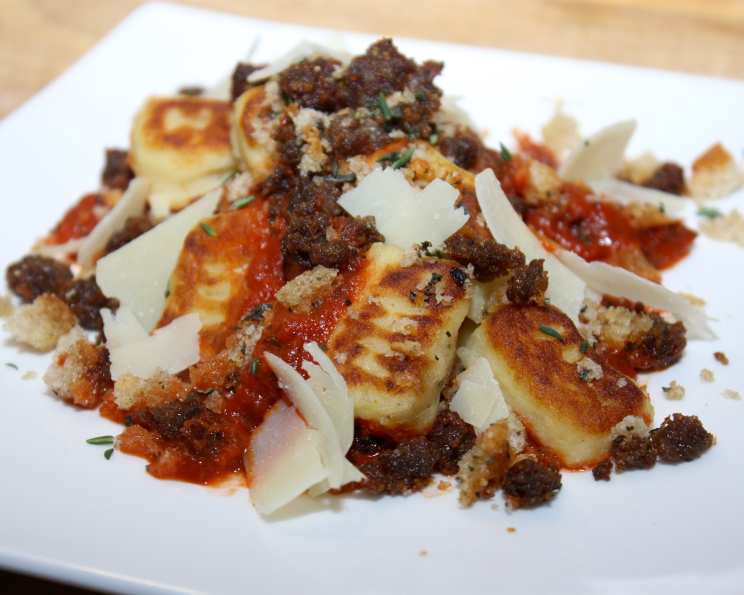
Goat Cheese Gnocchi with Crispy Sausage Ragù
I remember the first time I attempted to make gnocchi from scratch. It was a cool autumn evening, the kitchen filled with the comforting aroma of simmering potatoes and the slightly nervous energy of a novice cook. I’d envisioned delicate, pillowy dumplings, but what emerged was… less so. Still, even those dense, imperfect dumplings, bathed in a simple tomato sauce, held a magic that hooked me. That experience taught me patience, humility, and the beautiful truth that even kitchen mishaps can lead to delicious discoveries. Today, I share a recipe that builds upon that initial spark, elevating classic gnocchi with the tangy richness of goat cheese and a deeply flavorful sausage ragù.
Recipe Overview
- Prep Time: 45 minutes
- Cook Time: 30 minutes
- Total Time: 1 hour 15 minutes
- Servings: 4
- Yield: 3 lbs
- Dietary Type: Not Gluten-Free
Ingredients
- 2 1⁄2 lbs russet potatoes (about 4 large)
- 1 1⁄4 cups all-purpose flour, plus more for dusting
- 2 teaspoons kosher salt
- 1 egg, beaten to blend
- 1⁄4 cup goat cheese, room temperature
- 1⁄2 lb Italian sausage
- 1 (14 ounce) jar Ragú® Pasta Sauce (tomato basil)
- 1 cup breadcrumbs (or 1/2 loaf french bread, toasted and crumbled)
- 1 tablespoon garlic, minced
- 1 teaspoon dried basil
- 1 teaspoon oregano
- 3 tablespoons olive oil
- 3 tablespoons butter
- 1⁄2 cup Parmesan cheese, grated
- 2 sprigs fresh thyme
Equipment Needed
- Large pot
- Potato ricer (or food mill)
- Large bowl
- Wooden spoon
- Sauté pan
- Baking sheet
- Saucepan
Instructions
-
Preheat your oven to 300 degrees Fahrenheit. This lower temperature is key for gently crisping the breadcrumbs without burning them.
-
Place the russet potatoes in a large pot. Cover with cold water and bring to a boil over medium-high heat. Cook until the potatoes are tender when pierced with the tip of a knife, about 30-40 minutes. Be careful not to overcook the potatoes, as they will absorb too much water, resulting in gummy gnocchi.
-
Drain the potatoes thoroughly and allow them to cool slightly until you can handle them comfortably.
-
Once the potatoes are cool enough to handle, peel them and pass them through a potato ricer into a large bowl. Using a ricer ensures a light and fluffy texture. If you don’t have a ricer, a food mill will work, but avoid mashing them with a masher, as this can lead to a denser result. Let the riced potatoes cool completely. This is a critical step; warm potatoes will cause the flour to develop too much gluten, resulting in tough gnocchi.
-
While the potatoes are cooling, prepare the garlic and herb breadcrumbs. In a medium bowl, combine the breadcrumbs, minced garlic, dried basil, dried oregano, olive oil, butter, kosher salt, and pepper. Mix well to ensure the breadcrumbs are evenly coated.
-
Spread the seasoned breadcrumbs in a single layer on a baking sheet. Place the baking sheet in the preheated oven and bake for 10-12 minutes, or until the breadcrumbs are golden brown and crispy. Keep a close eye on them to prevent burning.
-
While the breadcrumbs are baking, prepare the Italian sausage. Remove the sausage from its casing (if applicable). In a large sauté pan, heat a tablespoon of olive oil over medium heat. Crumble the Italian sausage into the hot pan. Cook, stirring occasionally, until the sausage is browned and crispy, about 8-10 minutes. Remove the sausage from the pan and set aside. Drain off any excess grease.
-
Now, it’s time to make the gnocchi dough. Once the riced potatoes have cooled completely, sprinkle 1 1/4 cups of all-purpose flour and 2 teaspoons of kosher salt over them.
-
Using your hands, make a well in the center of the potato-flour mixture. Pour the beaten egg into the well and stir with a wooden spoon until just combined.
-
Mix in the 1/4 cup of room-temperature goat cheese. The goat cheese adds a delightful tang and creaminess to the gnocchi. Be sure the goat cheese is at room temperature to ensure it incorporates smoothly into the dough.
-
Turn the dough onto a lightly floured surface and gently knead, dusting with more flour as needed, until a smooth, non-elastic dough forms. Be careful not to overwork the dough, as this will develop too much gluten and result in tough gnocchi. Aim for about 2 minutes of kneading.
-
Divide the dough into 8 equal pieces. Roll each piece into a 24-inch-long rope about 1/2 inch thick.
-
Cut each rope into 1/2-inch pieces, creating individual gnocchi. Dust the gnocchi with flour to prevent them from sticking together.
-
Arrange the gnocchi in a single layer on a lightly floured rimmed baking sheet.
-
Bring a large pot of salted water to a rolling boil. Cook the gnocchi in batches, adding them to the boiling water until they float to the surface, about a minute or two. They should be cooked just until they float, a minute before they are fully cooked, as they will be seared later. You can also make the gnocchi ahead of time and freeze them on the baking sheet. Once frozen, transfer them to a freezer bag.
-
Remove the cooked gnocchi from the boiling water with a slotted spoon and immediately transfer them to a hot pan with butter or olive oil. This searing step is crucial for creating a crispy exterior and adding depth of flavor.
-
Sear the gnocchi in batches, being careful not to overcrowd the pan. Cook until golden brown and slightly crispy on all sides.
-
While the gnocchi are being seared, heat up the jar of Ragú® Tomato Basil Pasta Sauce in a separate saucepan over medium heat.
-
To assemble the dish, spoon a generous amount of heated Ragú® Tomato Basil Pasta Sauce onto each plate. Arrange the seared gnocchi on top of the sauce.
-
Garnish the gnocchi with the crispy Italian sausage, grated Parmesan cheese, garlic and herb breadcrumbs, and fresh thyme leaves. Serve immediately.
Expert Tips & Tricks
- Potato Choice Matters: Using russet potatoes is crucial for achieving the right gnocchi texture. Russets are starchy, which helps create a light and airy dumpling.
- Don’t Overwork the Dough: Overworking the gnocchi dough is the biggest pitfall. Handle it gently and use just enough flour to prevent sticking.
- Freeze for Later: Gnocchi can be made in advance and frozen. Freeze them raw on a baking sheet before transferring them to a freezer bag. Cook them directly from frozen, adding a minute or two to the cooking time.
- Spice It Up: For a spicier ragù, add a pinch of red pepper flakes to the sausage while cooking.
Serving & Storage Suggestions
Serve the Goat Cheese Gnocchi with Crispy Sausage Ragù immediately for the best texture. Garnish generously with Parmesan cheese and fresh thyme. Leftovers can be stored in an airtight container in the refrigerator for up to 3 days. Reheat gently in a saucepan over medium-low heat, adding a splash of water or broth if needed to prevent sticking. Freezing the assembled dish is not recommended, as the gnocchi may become mushy upon thawing.
Nutritional Information
| Nutrient | Amount per Serving | % Daily Value |
|---|---|---|
| Calories | 903.9 kcal | N/A |
| Calories from Fat | 370 g | 41% |
| Total Fat | 41.1 g | 63% |
| Saturated Fat | 15.4 g | 76% |
| Cholesterol | 112.8 mg | 37% |
| Sodium | 2348.8 mg | 97% |
| Total Carbohydrate | 102.7 g | 34% |
| Dietary Fiber | 8.7 g | 34% |
| Sugars | 4.7 g | 18% |
| Protein | 30.9 g | 61% |
Variations & Substitutions
- Gluten-Free Gnocchi: Substitute the all-purpose flour with a gluten-free all-purpose blend. You may need to adjust the amount of flour to achieve the right dough consistency.
- Vegetarian Option: Omit the Italian sausage and add sautéed mushrooms or other vegetables to the ragù.
- Different Cheese: Experiment with different types of cheese in the gnocchi, such as ricotta or Parmesan.
- Seasonal Sauce: Replace the tomato-basil sauce with a homemade pumpkin or butternut squash sauce for a fall-inspired twist.
FAQs (Frequently Asked Questions)
Q: Can I use a different type of potato?
A: Russet potatoes are ideal because of their high starch content, which leads to a lighter gnocchi. Using other potatoes may result in a denser texture.
Q: How do I know if I’ve overcooked the potatoes?
A: Overcooked potatoes will absorb too much water, making the dough sticky and difficult to work with. If this happens, try adding a bit more flour, but be careful not to overwork the dough.
Q: Can I make the gnocchi ahead of time?
A: Yes, gnocchi can be made ahead of time and frozen. Freeze them raw on a baking sheet before transferring them to a freezer bag.
Q: What if my gnocchi dough is too sticky?
A: If the dough is too sticky, gradually add more flour, a tablespoon at a time, until it reaches a smooth, non-sticky consistency.
Q: Can I bake the gnocchi instead of searing them?
A: While searing is recommended for the best texture, you can bake the gnocchi at 400°F (200°C) for about 15-20 minutes, or until golden brown. Toss them with olive oil before baking.
Final Thoughts
I hope this Goat Cheese Gnocchi with Crispy Sausage Ragù inspires you to get creative in the kitchen and embrace the joy of homemade pasta. Don’t be intimidated by the process; even if your first attempt isn’t perfect, you’ll learn something new and create a delicious meal along the way. I encourage you to try this recipe, put your own spin on it, and share your feedback. This dish pairs beautifully with a crisp, dry white wine or a light-bodied red. Happy cooking!