
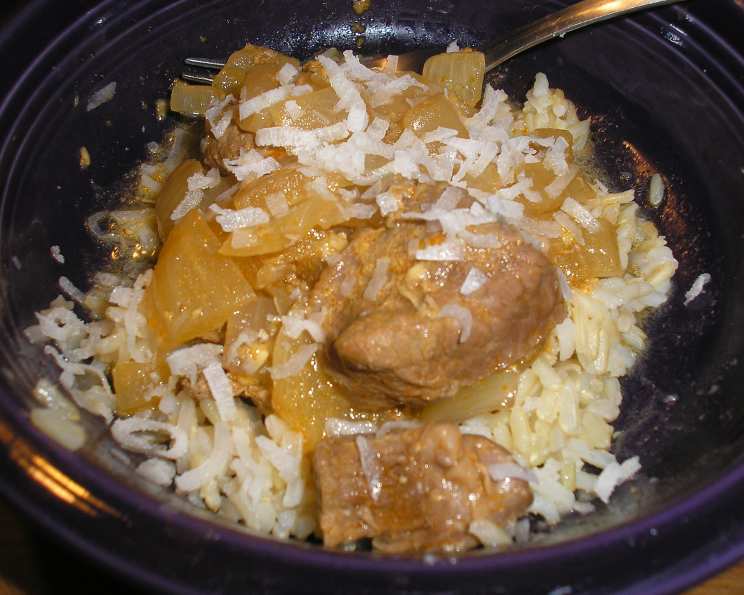
Aromatic Goat Curry: A Taste of the Barossa Valley
The first time I truly understood the magic of slow-cooked curries was on a crisp autumn evening in South Australia’s Barossa Valley. I was fortunate enough to stumble into a tiny, unassuming place called Cafe C in Springton. The air, thick with the scent of wood smoke and simmering spices, wrapped around me like a warm embrace. It was there, amidst the rolling vineyards, that I tasted a goat curry so deeply comforting, so richly layered with flavor, that it etched itself into my culinary memory. While the cooking times may have been a bit of a guessing game that first night, the essence of that dish, the perfect harmony of spice and tender goat, is what I’ve tried to capture in this recipe.
Recipe Overview
- Prep Time: 20 minutes
- Cook Time: 3 hours
- Total Time: 3 hours 20 minutes
- Servings: 6-8
- Yield: Large pot of curry
- Dietary Type: Dairy-Free (can be adapted to be Gluten-Free)
Ingredients
- 2 kg goat meat, diced
- 8 tablespoons red curry paste
- 4 onions, sliced
- 8 red chilies, chopped (optional)
- 60 g fresh ginger, grated
- 4 garlic cloves, chopped
- 1600 g coconut milk
- 8 tablespoons desiccated coconut, toasted
- 20 kaffir lime leaves
- 4 limes, juice of, only
- 1 1/4 liters water (rain or spring water is best)
- Salt and pepper, to taste
- Peanut oil, to taste (for saute)
Equipment Needed
- Large heavy-bottomed pot or Dutch oven
- Large skillet or pan for toasting coconut
- Cutting board
- Knife
- Grater
Instructions
-
Begin by preparing your aromatics. In a large, heavy-bottomed pot or Dutch oven, heat a generous amount of peanut oil over medium heat. Once the oil is shimmering, add the sliced onions, chopped red chilies (if using), grated fresh ginger, and chopped garlic cloves. Saute these ingredients until the onions become transparent and fragrant, about 8-10 minutes. Be careful not to burn the garlic, as it will turn bitter.
-
Now, introduce the red curry paste to the aromatic base. Add the curry paste to the pot and fry gently for about 3 minutes, stirring constantly. This step is crucial for blooming the spices in the paste and releasing their full flavor potential. The mixture should become intensely fragrant and slightly darker in color.
-
Add the diced goat meat to the pot. Stir the goat meat thoroughly to ensure it is completely coated with the fragrant curry paste mixture. Sear the meat for a few minutes on all sides until it browns slightly. This will help to develop a rich, deep flavor in the final dish.
-
Pour in the liquids. Add the water (preferably rain or spring water for its purity) and coconut milk to the pot. Stir well to combine all the ingredients.
-
Add the kaffir lime leaves and lime juice. Bring the mixture to a simmer over medium-high heat, then reduce the heat to low. Cover the pot tightly with a lid and simmer gently until the goat meat is incredibly tender. This process will take approximately 3 hours, but it’s best to check the meat periodically and adjust the cooking time as needed. You want the goat meat to be fall-apart tender.
-
Prepare the toasted desiccated coconut. While the curry is simmering, toast the desiccated coconut. Spread the desiccated coconut in a single layer in a large skillet over medium heat. Toast, stirring frequently, until the coconut is golden brown and fragrant, about 5-7 minutes. Watch carefully, as coconut can burn quickly.
-
Incorporate the toasted desiccated coconut during the last 5 minutes of cooking. Once the goat meat is tender, stir in the toasted desiccated coconut and continue to cook for an additional 5 minutes. This will add a subtle sweetness, nutty flavor, and delightful texture to the curry.
-
Season to taste. Season the goat curry with salt and pepper to taste. Start with a small amount of each and adjust as needed, keeping in mind that the curry paste already contains salt.
Expert Tips & Tricks
- Achieving Maximum Tenderness: The key to a truly exceptional goat curry is patient, slow cooking. Don’t rush the simmering process. The longer the goat meat simmers, the more tender and flavorful it will become.
- Spice Level Adjustment: The amount of red chilies used can be adjusted to your preference. For a milder curry, omit the chilies altogether or use a milder variety. For a spicier curry, use more chilies or add a pinch of chili flakes.
- Make-Ahead Magic: This goat curry is even better the next day, as the flavors have time to meld and deepen. Make it a day ahead of time and store it in the refrigerator. Reheat gently before serving.
- Ingredient Substitution: If you can’t find fresh kaffir lime leaves, you can substitute them with the zest of one lime. However, the kaffir lime leaves impart a unique citrusy aroma that is worth seeking out.
- Meat Quality Matters: The quality of the goat meat will significantly impact the final result. Look for goat meat that is well-marbled and has a good color.
Serving & Storage Suggestions
Serve the goat curry hot, garnished with fresh cilantro or a dollop of plain yogurt (if not adhering to a dairy-free diet). It pairs beautifully with steamed rice, naan bread, or roti. For a complete meal, serve alongside a simple green salad or a side of raita.
Leftover goat curry can be stored in an airtight container in the refrigerator for up to 3 days. It can also be frozen for up to 2 months. Thaw the curry overnight in the refrigerator before reheating. To reheat, gently simmer the curry on the stovetop over low heat, stirring occasionally, until heated through. You may need to add a splash of water or coconut milk if the curry has thickened too much.
Nutritional Information
| Nutrient | Amount per Serving | % Daily Value |
|---|---|---|
| Calories | 968 kcal | N/A |
| Total Fat | 66.7 g | 102% |
| Saturated Fat | 54.7 g | 273% |
| Cholesterol | 190 mg | 63% |
| Sodium | 339.2 mg | 14% |
| Total Carbohydrate | 22.9 g | 7% |
| Dietary Fiber | 2.3 g | 9% |
| Sugars | 6.3 g | 25% |
| Protein | 75.5 g | 151% |
Note: Nutritional information is an estimate and may vary depending on specific ingredients and portion sizes.
Variations & Substitutions
- Gluten-Free: Ensure the red curry paste is gluten-free. Serve with rice or gluten-free naan bread.
- Vegan Option: While this recipe calls for goat meat, you could replace it with jackfruit or firm tofu for a plant-based option.
- Vegetable Boost: Add vegetables like potatoes, carrots, or peas to the curry for extra flavor and nutrients. Add them during the last hour of simmering.
- Regional Variations: Explore different types of curry paste for unique flavor profiles. Green curry paste, Massaman curry paste, or Panang curry paste would all be delicious alternatives.
- Creamier Curry: Add a splash of heavy cream or more coconut milk at the end of cooking for a richer, creamier texture.
FAQs (Frequently Asked Questions)
Q: Can I use a different cut of meat?
A: While goat meat is traditional, you could experiment with other cuts of lamb or beef, but be sure to adjust the cooking time accordingly.
Q: How do I know when the goat meat is cooked through?
A: The goat meat is done when it is fork-tender and easily pulls apart.
Q: Can I make this in a slow cooker?
A: Yes, you can adapt this recipe for a slow cooker. Sauté the onions, chilies, ginger, garlic, and curry paste as directed, then transfer to the slow cooker with the remaining ingredients. Cook on low for 6-8 hours, or until the goat meat is tender.
Q: What if my curry is too watery?
A: Simmer the curry uncovered for a longer period to allow some of the liquid to evaporate. You can also thicken it with a cornstarch slurry (1 tablespoon cornstarch mixed with 2 tablespoons cold water).
Q: Can I use powdered spices instead of curry paste?
A: While curry paste provides a more complex and authentic flavor, you can substitute it with a blend of powdered spices like coriander, cumin, turmeric, and chili powder. Adjust the amounts to your liking.
Final Thoughts
This Aromatic Goat Curry is a testament to the power of simple ingredients and slow cooking. It’s a dish that invites you to savor the moment, to appreciate the layers of flavor that unfold with each bite. So, gather your ingredients, embrace the aromas, and embark on a culinary journey to the Barossa Valley, right in your own kitchen. Don’t be afraid to experiment, to adapt the recipe to your own preferences, and most importantly, to share the joy of good food with those you love. Let me know how it turns out!