
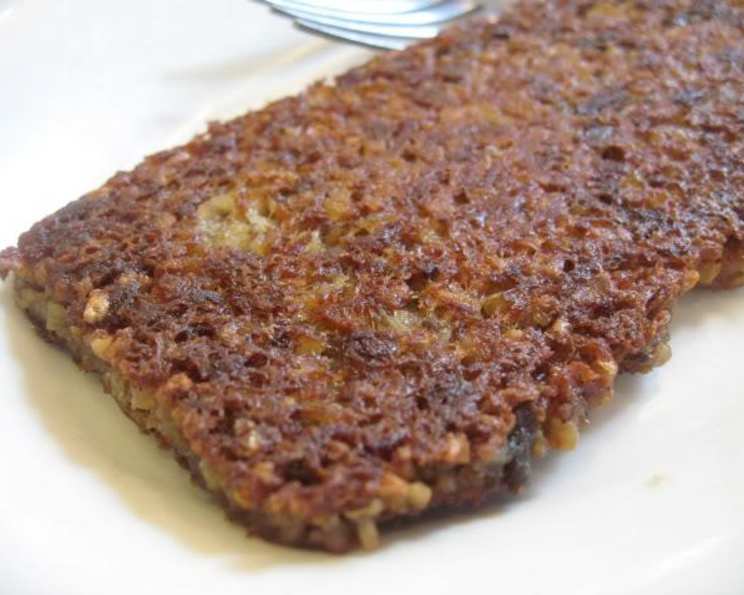
Cincinnati’s Culinary Soul: Homemade Goetta Recipe
My first encounter with goetta wasn’t love at first bite, I must admit. As a wide-eyed culinary student visiting Cincinnati, a local diner plopped a plate of crispy, grayish-brown patties in front of me, proclaiming it a “Queen City classic.” Intrigued and slightly apprehensive, I took a tentative nibble. What followed was a delightful surprise: a savory blend of hearty oats, seasoned meat, and aromatic spices that warmed me from the inside out. Since then, I’ve made it my mission to perfect my own goetta recipe, honoring tradition while adding my own touch.
Recipe Overview
- Prep Time: 15 minutes
- Cook Time: 3 hours
- Total Time: 3 hours 15 minutes
- Servings: 10
- Yield: 1 recipe
- Dietary Type: Not Gluten-Free
Ingredients
- 1 lb ground beef
- 1 lb ground pork or 1 lb sausage
- 8 cups water
- 2 1/2 cups pinhead oats or 2 1/2 cups steel cut oats
- 1 large onion, chopped
- 1-4 bay leaf
- 3 teaspoons salt
- 1 pinch pepper
Equipment Needed
- Large pot with lid
- Spoon or spatula for stirring
- Pan(s) for cooling and refrigerating (loaf pans or baking dishes work well)
- Knife
- Frying pan or griddle
Instructions
- In a large pot, bring 8 cups of water to a rolling boil over high heat. This initial rapid boil helps to properly hydrate the oats.
- Once boiling, gradually add 2 1/2 cups of pinhead oats (or steel cut oats), 3 teaspoons of salt, and a pinch of pepper. Stir well to prevent clumping.
- Reduce the heat to a simmer. Cover the pot tightly with a lid. This creates a steamy environment that allows the oats to cook evenly and become tender.
- Allow the mixture to simmer for 2 hours. Stir occasionally to prevent sticking to the bottom of the pot. The mixture will thicken considerably as the oats absorb the water.
- After 2 hours, add 1 lb of ground beef, 1 lb of ground pork (or sausage), 1 chopped large onion, and 1-4 bay leaves. The amount of bay leaf is up to your personal preference. One bay leaf will add a subtle hint of aromatic flavor, while 4 will provide a more pronounced savory note.
- Stir well to combine all the ingredients thoroughly. Ensure the meat is broken up into smaller pieces for even cooking.
- Cover the pot again and continue to cook on a simmer for 1 hour more. Stir occasionally to prevent sticking and ensure the meat is cooking through. This final hour of cooking melds the flavors together and allows the meat to fully cook.
- After a total of 3 hours cooking time, remove the pot from the heat. Discard the bay leaves.
- Pour the mixture into pan(s). The amount of pans you use will depend on the thickness you like your goetta. Using a loaf pan will make a thick goetta, while a baking dish will make a thinner goetta.
- Allow the goetta to cool completely at room temperature. This allows it to start solidifying.
- Once cooled, refrigerate the goetta for several hours, or preferably overnight. This is crucial for firming up the goetta, making it easier to slice and fry later.
- To serve, turn the solidified goetta out of the pan(s).
- Slice the goetta into desired thickness. About 1/4 to 1/2 inch slices are ideal for frying.
- Fry the goetta slices in a bit of butter or oil over medium heat until browned and crispy on both sides. Make sure not to overcrowd the pan, as this can steam the goetta instead of frying it.
Expert Tips & Tricks
- For a richer flavor, consider browning the ground beef and pork (or sausage) in a separate pan before adding it to the oat mixture. This adds depth and complexity to the final dish.
- If you prefer a smoother texture, you can use an immersion blender to partially blend the goetta before pouring it into the pan(s) to cool. Be careful not to over-blend, as you still want some texture.
- Experiment with different types of sausage. Italian sausage or chorizo can add a spicy kick to your goetta.
- If your goetta is too soft after refrigeration, you can add a bit of oat flour or cornmeal to help bind it together.
- Make a large batch of goetta and freeze it in pre-portioned slices for easy weekday breakfasts. Thaw overnight in the refrigerator before frying.
Serving & Storage Suggestions
Serve your crispy goetta hot off the griddle. It’s delicious on its own or as part of a hearty breakfast with eggs, toast, and a side of fruit. You can also use it as a filling for breakfast sandwiches or as a topping for pizzas and salads.
Leftover cooked goetta can be stored in an airtight container in the refrigerator for up to 3-4 days. To reheat, simply fry it in a pan until warmed through and crispy.
Uncooked goetta can be frozen for up to 2-3 months. Wrap it tightly in plastic wrap and then in foil to prevent freezer burn. Thaw overnight in the refrigerator before slicing and frying.
Nutritional Information
| Nutrient | Amount per Serving | % Daily Value |
|---|---|---|
| Calories | 390.4 kcal | N/A |
| Calories from Fat | 170 g | 44% |
| Total Fat | 18.9 g | 29% |
| Saturated Fat | 6.6 g | 33% |
| Cholesterol | 73.5 mg | 24% |
| Sodium | 765.8 mg | 31% |
| Total Carbohydrate | 27.4 g | 9% |
| Dietary Fiber | 4.3 g | 17% |
| Sugars | 0.6 g | 2% |
| Protein | 26.8 g | 53% |
Variations & Substitutions
- Gluten-Free Goetta: Substitute the pinhead oats or steel cut oats with certified gluten-free oats. Be sure to check the label to ensure they are processed in a gluten-free facility.
- Spicy Goetta: Add a pinch of red pepper flakes or a dash of your favorite hot sauce to the mixture for a spicy kick.
- Vegetarian Goetta: Replace the ground beef and pork with a plant-based ground meat substitute. Consider adding some chopped mushrooms or walnuts for added texture and flavor.
- Herby Goetta: Add fresh herbs like sage, thyme, or rosemary to the mixture for a more aromatic flavor.
FAQs (Frequently Asked Questions)
Q: What are pinhead oats (or steel cut oats)?
A: Pinhead oats, also known as steel-cut oats, are whole oat groats that have been chopped into smaller pieces. They have a chewier texture and nuttier flavor than rolled oats.
Q: Can I use rolled oats instead of pinhead oats or steel cut oats?
A: While you can use rolled oats in a pinch, the texture of the goetta will be different. Rolled oats break down more easily during cooking, resulting in a smoother, less textured goetta.
Q: How do I know when the goetta is cooked through?
A: The goetta is cooked through when the meat is no longer pink and the mixture has thickened considerably. The internal temperature of the meat should reach 160°F (71°C).
Q: Why is my goetta crumbly and not holding together?
A: This could be due to several factors: not enough cooking time, not enough binder (such as oats), or not enough refrigeration time. Ensure you cook the mixture for the full 3 hours, use the correct amount of oats, and refrigerate it thoroughly before slicing and frying.
Q: Can I bake the goetta instead of frying it?
A: Yes, you can bake the goetta. After refrigerating, slice it and bake at 375°F (190°C) for about 20-25 minutes, or until heated through and browned on the edges.
Final Thoughts
Goetta is more than just a breakfast food; it’s a symbol of Cincinnati’s rich culinary heritage. This humble dish, born from resourceful German immigrants, has stood the test of time, offering a comforting and flavorful experience that connects generations. Don’t be intimidated by the cook time – the process is largely hands-off, and the reward is well worth the effort. So gather your ingredients, embrace the tradition, and create your own delicious batch of homemade goetta! I encourage you to leave a comment and share your experiences or creative variations. Perhaps you’ll discover the perfect pairing with a local craft beer or a tangy apple chutney. Happy cooking!