
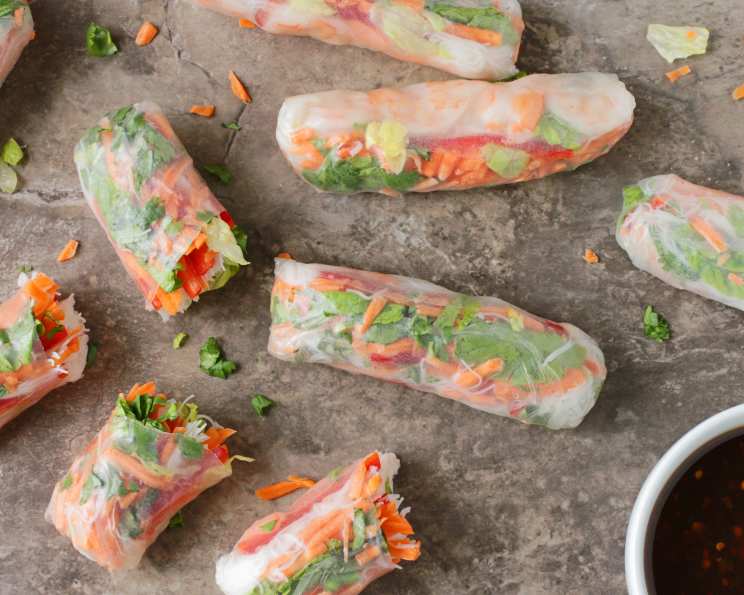
Goi Cuon: The Art of the Vietnamese Spring Roll
The first time I tasted Goi Cuon, I was a wide-eyed culinary student exploring a bustling market in Hanoi. The air hummed with the sounds of bartering and the fragrant steam from street food stalls. A kind-faced vendor, sensing my hesitation, pressed a delicate roll into my hand. The cool, translucent wrapper, the burst of fresh herbs, and the subtle sweetness of the dipping sauce – it was an explosion of flavors and textures unlike anything I’d experienced. That simple spring roll sparked a lifelong love affair with Vietnamese cuisine and taught me the beauty of fresh, vibrant ingredients.
Recipe Overview
- Prep Time: 30 minutes
- Cook Time: 10 minutes
- Total Time: 40 minutes
- Servings: 12
- Dietary Type: Gluten-Free, Dairy-Free (can be modified for other dietary needs)
Ingredients
- 6 ounces rice vermicelli (cellophane noodles)
- 24 medium shrimp, shelled and deveined
- 12 rice paper sheets (8-inch diameter)
- ½ head savoy cabbage (julienned or shredded) or ½ head bibb lettuce, thinly sliced (julienned or shredded)
- 1 cup carrot (julienned or shredded)
- ½ cup red bell pepper (julienned or shredded)
- 24 fresh mint leaves
- 1 tablespoon cilantro, chopped (optional)
Shrimp Marinade:
- ½ teaspoon fish sauce or ½ teaspoon soy sauce
- ½ teaspoon freshly grated lemongrass or ½ teaspoon lemon zest
- Fresh ground black pepper, to taste (optional)
- ¼ teaspoon sugar
Equipment Needed
- Large pot
- Large skillet or wok
- Shallow dish larger than rice paper sheets
- Cutting board
- Sharp knife
- Paper towels
- Platter
Instructions
-
Begin by marinating the shrimp. In a small bowl, combine the shelled and deveined shrimp with ½ teaspoon of either fish sauce or soy sauce, ½ teaspoon of freshly grated lemongrass or lemon zest, a pinch of fresh ground black pepper (if desired), and ¼ teaspoon of sugar. Gently toss to coat the shrimp evenly. Let this mixture sit for about 10 minutes to allow the flavors to meld.
-
While the shrimp is marinating, prepare the rice vermicelli noodles. Bring a pot of water to a boil. Add the rice vermicelli noodles and cook for approximately 4 minutes, or until they are tender. Be careful not to overcook them, as they can become mushy.
-
Once cooked, immediately drain the noodles and rinse them thoroughly with cold water to stop the cooking process. This also helps to remove excess starch and prevent them from sticking together. Drain the noodles thoroughly, removing as much excess water as possible. Set the noodles aside.
-
Now it’s time to cook the shrimp. Remove the shrimp from the marinade and discard the marinade. Heat a lightly oiled wok or a large skillet over high heat. Add the marinated shrimp and cook for about 2 minutes, or until they turn pink and are cooked through. Alternatively, you can grill the shrimp if you prefer. Grilling will give them a slightly smoky flavor.
-
Once the shrimp is cooked, allow them to cool slightly so that you can handle them comfortably. Then, slice each shrimp in half lengthwise, creating two identical halves. This is done to ensure even distribution of the shrimp within each spring roll and for aesthetic appeal. The shrimp halves should resemble two “C” shapes.
-
Next, prepare your workstation for rolling the spring rolls. Fill a shallow dish that is larger than the rice paper sheets with cool or room temperature water. This water will be used to soften the rice paper.
-
Working one sheet at a time, quickly dip a rice paper sheet into the cool water. The key is to be fast; you don’t want the sheet to become overly saturated and too sticky. It should only take a few seconds.
-
Remove the rice paper sheet from the water and allow any excess water to drip off. Then, carefully place the dampened sheet on a clean, dry work surface. Gently blot the top of the rice paper sheet with a paper towel to remove any remaining excess water. This helps to prevent the roll from becoming too soggy.
-
Now, it’s time to assemble the spring roll. The wrapper will still feel a little stiff at first, but it will soften perfectly by the time you finish adding all the ingredients. This pliability is important for easy rolling.
-
Arrange four halves of the shrimp (representing two whole shrimp) in a line near the bottom third of the round rice paper sheet.
-
Top the shrimp with some of the julienned or shredded cabbage or lettuce, followed by a portion of the cooked rice vermicelli noodles, julienned or shredded carrots, and julienned or shredded red bell pepper. If desired, add a sprinkle of chopped cilantro.
-
Finish by placing two fresh mint leaves on top of the other ingredients. It’s crucial to keep the ingredients compact and neatly piled on top of the shrimp for ease of rolling.
-
Starting with the side of the rice paper closest to you, begin to tightly roll up the spring roll. After rolling halfway, gently pull back on the roll to tighten the ingredients inside, adjusting and settling them. This helps to create a firm and neatly packed roll.
-
Continue rolling until the wrapper adheres to itself, sealing the spring roll. If you find that the wrapper is not sealing well, you can lightly moisten the top edge with a damp finger to help it stick.
-
Once the spring roll is neatly tucked and rolled, you may have some excess rice paper extending beyond the filling. Use a sharp knife to carefully trim off any excess paper for a cleaner presentation.
-
Place the finished spring roll on a platter and cover it with a damp paper towel or plastic wrap, then a clean kitchen towel. This will prevent the spring rolls from drying out and sticking together.
-
Clean your work surface thoroughly to ensure it is dry and free of any leftover ingredients from the previous roll. This is essential to prevent the next rice paper sheet from sticking prematurely.
-
Repeat the dipping, filling, and rolling process with a new rice paper sheet for each spring roll. Remember to work one at a time, as the sheets are sticky and will adhere to each other instantly if you are not careful.
Expert Tips & Tricks
- Don’t be discouraged if your first few rolls aren’t perfect. Rolling spring rolls takes practice, and your technique will improve with each one you make.
- Different brands of rice paper vary in thickness. If you find that the brand you are using is a little stiff to work with, try blotting more or less water off the sheet until you find the right level of pliability.
- You can also let the dipped rice paper sheet sit for a few seconds before adding the ingredients to allow it to soften further. Using slightly warmer (but never hot) water for dipping can also help to soften the sheets more quickly. Remember to always let the water drip off and wipe your work surface dry each time, as a dry surface allows the rice paper to stick and creates a little tension for easier wrapping.
Serving & Storage Suggestions
Serve the Goi Cuon immediately for the best flavor and texture. Arrange them attractively on a platter, accompanied by your favorite dipping sauce, such as peanut sauce or nuoc cham. These are best within a couple of hours of making them.
To store leftovers, tightly wrap each spring roll individually in plastic wrap to prevent them from drying out and sticking together. Store them in the refrigerator for up to 24 hours. Keep in mind that the rice paper may become slightly sticky and chewier over time. These are really best eaten immediately, though.
Nutritional Information
| Nutrient | Amount per Serving | % Daily Value |
|---|---|---|
| Calories | 58.5 kcal | N/A |
| Total Fat | 0.1 g | 0% |
| Saturated Fat | 0 g | 0% |
| Cholesterol | 0 mg | 0% |
| Sodium | 53 mg | 2% |
| Total Carbohydrate | 13.3 g | 4% |
| Dietary Fiber | 0.7 g | 2% |
| Sugars | 0.9 g | 3% |
| Protein | 0.7 g | 1% |
Variations & Substitutions
- For a vegetarian option, substitute the shrimp with firm tofu that has been marinated and pan-fried or grilled.
- Add other fresh herbs, such as Thai basil or cilantro, to customize the flavor profile.
- For a spicier kick, include thinly sliced fresh chili peppers in the filling.
- You can also experiment with different vegetables, such as bean sprouts, cucumber, or avocado.
- If you’re sensitive to gluten, ensure your dipping sauce is gluten-free by using tamari instead of soy sauce.
FAQs (Frequently Asked Questions)
Q: Can I make these ahead of time?
A: While best enjoyed fresh, you can assemble them a few hours in advance. Wrap each roll individually in plastic wrap and store in the refrigerator to prevent drying.
Q: What kind of dipping sauce goes well with Goi Cuon?
A: Peanut sauce, nuoc cham (Vietnamese dipping sauce), or a simple mixture of soy sauce, rice vinegar, and chili garlic sauce are all excellent choices.
Q: Why is my rice paper tearing?
A: Oversoaking the rice paper makes it delicate. Dip it quickly in water and ensure your work surface is smooth and dry.
Q: How do I prevent the spring rolls from sticking together?
A: Wrap each roll individually in plastic wrap or place them on a platter lined with parchment paper, ensuring they don’t touch.
Q: Can I freeze Goi Cuon?
A: Freezing is not recommended, as the rice paper will become gummy and the fresh vegetables will lose their texture.
Final Thoughts
Making Goi Cuon is more than just following a recipe; it’s an act of creating something beautiful and delicious. The process is meditative, the flavors are vibrant, and the result is a perfect representation of fresh, healthy eating. Don’t be afraid to experiment with different fillings and dipping sauces to find your own personal touch. Gather your friends, put on some music, and make an afternoon of rolling these delightful spring rolls. Share your creations and let the flavors of Vietnam transport you to a world of culinary bliss!