
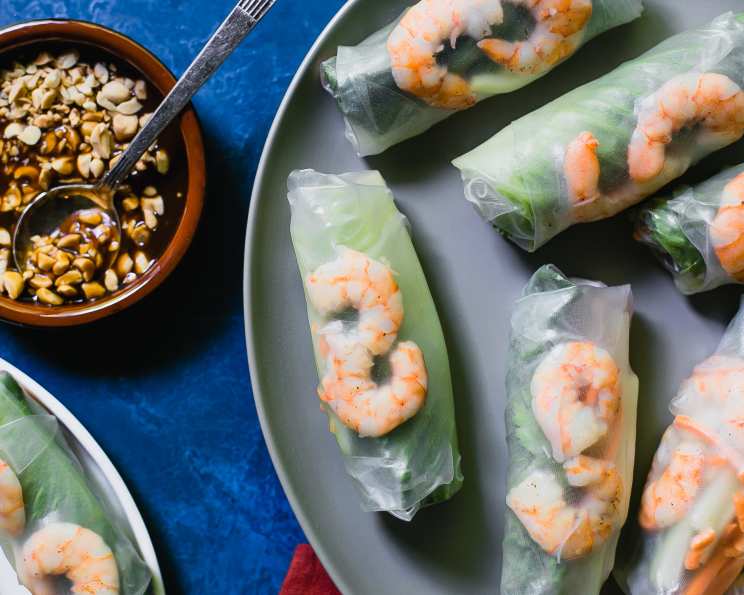
Goi Cuon: A Symphony of Fresh Flavors in Vietnamese Spring Rolls
The memory is as clear as the glass noodles nestled inside these delicate rolls: sunlight streaming through the window of my tiny Saigon apartment, the scent of mint and cilantro hanging in the air, and the rhythmic dipping of rice paper into warm water. My neighbor, Mrs. Nguyen, a woman whose hands held generations of culinary wisdom, patiently guided me through the art of Goi Cuon. It wasn’t just about rolling; it was about balance, about the interplay of textures and tastes, about creating a handheld celebration of Vietnamese flavors. These aren’t just spring rolls; they’re edible sunshine.
Recipe Overview
- Prep Time: 30 minutes
- Cook Time: 0 minutes
- Total Time: 30 minutes
- Servings: 24 rolls
- Yield: 24 rolls
- Dietary Type: Gluten-Free, Dairy-Free (depending on sauce)
Ingredients
- 1 package clear edible rice paper sheets
- ½ lb cooked chicken, shredded
- ½ lb cooked small shrimp, peeled, deveined, and halved
- 1 bunch fresh cilantro leaves
- 1 bunch fresh mint leaves
- 1 head leafy lettuce, washed and separated into leaves
- 1 cucumber, peeled and cut into very thin strips
- 1 cup fresh bean sprouts, optional
- 1 package vermicelli rice noodles, prepared according to package directions
- Hoisin sauce, to taste
- Chopped peanuts, for garnish
- Nuoc Nam, Vietnamese spicy fish sauce (available at Asian markets)
Equipment Needed
- Large bowl or shallow dish for soaking rice paper
- Cutting board
- Sharp knife
- Serving platter
Instructions
-
Ensure all your ingredients are prepped before you begin rolling. The chicken and shrimp should be cooked and cooled. The vermicelli rice noodles should be cooked according to package directions and at room temperature.
-
Wash and thoroughly dry all the vegetables and herbs. Arrange them on a platter or in separate bowls for easy access.
-
Prepare your work surface. You’ll need a clean, flat surface, like a cutting board. Have a large bowl or shallow dish filled with warm water nearby.
-
Now, for the delicate part: dipping the rice paper. Take one rice paper sheet and quickly dip it into the warm water. The key is speed; just a second or two on each side. Over-soaking will make the paper too sticky and prone to tearing.
-
Lay the softened rice paper flat on your prepared work surface. It will continue to soften as you work.
-
On the lower third of the rice paper, arrange your fillings. Start with a small handful of vermicelli noodles.
-
Add a few strips of cooked chicken and shrimp. Don’t overcrowd the roll; a little of each ingredient goes a long way.
-
Next, add cilantro and mint leaves, a piece of lettuce, some cucumber strips, and a few bean sprouts (if using).
-
Carefully begin to roll the spring roll. Start by folding the edge of the rice paper over the fillings, tucking in the sides as you would with an eggroll.
-
Continue rolling tightly but gently, avoiding tearing the delicate rice paper. The roll should be firm but not bursting.
-
Place the finished spring roll on a serving platter and cover with a damp paper towel to prevent them from drying out.
-
Repeat steps 4-11 until all the ingredients are used.
-
To serve, combine a few spoonfuls of hoisin sauce with some chopped peanuts for a simple dipping sauce. Alternatively, serve with prepared Nuoc Nam, the spicy Vietnamese fish sauce dip.
-
Serve immediately. These spring rolls are best enjoyed fresh.
Expert Tips & Tricks
- Don’t oversoak the rice paper: A quick dip is all it needs. If it gets too sticky, it will be difficult to work with and prone to tearing.
- Use a damp towel: Keep a damp paper towel or clean kitchen towel nearby to wipe your work surface and prevent the rice paper from sticking.
- Roll tightly but gently: Aim for a firm roll, but avoid overstuffing, which can cause the rice paper to tear.
- Prep everything in advance: Having all your ingredients prepped and ready to go will make the rolling process much smoother.
- Add color: Consider adding julienned carrots or red bell peppers for a pop of color and extra nutrients.
Serving & Storage Suggestions
Serve these delightful Goi Cuon immediately for the best taste and texture. They are best enjoyed fresh. If you absolutely must store them, wrap each spring roll individually in damp paper towels and then place them in an airtight container in the refrigerator. However, be warned that the rice paper may harden slightly and the fillings may become a bit soggy. They are best consumed within a few hours of rolling if stored. I do not recommend freezing spring rolls, as this will drastically alter the texture of the rice paper.
Nutritional Information
| Nutrient | Amount per Serving | % Daily Value |
|---|---|---|
| Calories | 32.5 kcal | N/A |
| Calories from Fat | N/A | N/A |
| Total Fat | 1.6 g | 2% |
| Saturated Fat | 0.4 g | 2% |
| Cholesterol | 19 mg | 6% |
| Sodium | 65 mg | 2% |
| Total Carbohydrate | 1.2 g | 0% |
| Dietary Fiber | 0.3 g | 1% |
| Sugars | 0.5 g | 2% |
| Protein | 3.5 g | 6% |
Note: Nutritional information is an estimate and can vary based on specific ingredients and portion sizes.
Variations & Substitutions
- Vegetarian/Vegan: Omit the chicken and shrimp and add more tofu, mushrooms, or other vegetables. Use a vegetarian hoisin sauce and a vegan dipping sauce instead of Nuoc Nam.
- Protein Powerhouse: Add grilled pork or beef for a heartier roll.
- Seafood Lover: Use grilled fish or scallops in place of the shrimp.
- Spice it up: Add a thin slice of chili pepper or a dash of sriracha to the filling for an extra kick.
- Peanut Allergy: Substitute sunflower seed butter or tahini for the peanuts in the dipping sauce.
FAQs (Frequently Asked Questions)
Q: Can I make these spring rolls ahead of time?
A: While it’s best to enjoy them fresh, you can assemble the fillings ahead of time and store them separately in the refrigerator. Roll the spring rolls just before serving.
Q: What if my rice paper tears?
A: Don’t worry! It happens. Just discard the torn rice paper and try again with a new sheet. The key is to be gentle and avoid overfilling.
Q: Where can I find rice paper wrappers?
A: Rice paper wrappers are available at most Asian grocery stores and some well-stocked supermarkets. Look for them in the international aisle.
Q: Can I use different vegetables?
A: Absolutely! Feel free to experiment with your favorite vegetables, such as shredded carrots, bell peppers, or avocado.
Q: What’s the best way to dip the rice paper?
A: Use a wide, shallow dish filled with warm water. Dip the rice paper quickly, just for a second or two, until it’s pliable but not soggy.
Final Thoughts
I hope this recipe inspires you to create your own vibrant Goi Cuon at home. These spring rolls are a testament to the beauty of fresh, simple ingredients and the joy of sharing good food with loved ones. Don’t be afraid to experiment with different fillings and dipping sauces to find your perfect combination. And most importantly, enjoy the process! Let the aroma of herbs and the feel of the rice paper transport you to the bustling streets of Vietnam, if only for a moment. Chúc ngon miệng! (Bon appétit!)