
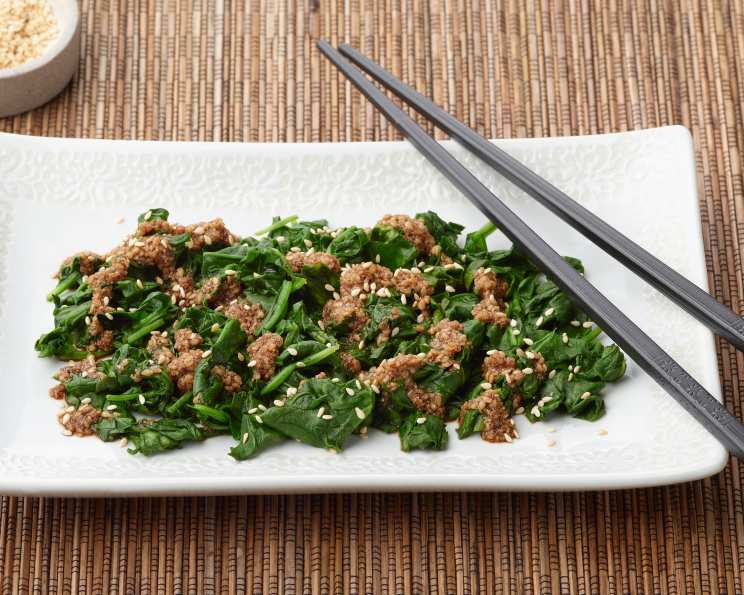
Gomae: A Taste of Japan in Every Bite
I remember the first time I had Gomae. It was at a tiny, unassuming Japanese restaurant tucked away in a quiet corner of the city. The vibrant green spinach, glistening with a savory, nutty dressing, was unlike anything I’d ever tasted. The delicate balance of sweet, salty, and umami flavors danced on my tongue, leaving me utterly captivated. It was more than just a side dish; it was an experience, a glimpse into the heart of Japanese culinary artistry. I’ve strived to recreate that memory ever since.
Recipe Overview
- Prep Time: 5 minutes
- Cook Time: 1 minute
- Total Time: 6 minutes
- Servings: 2
- Dietary Type: Vegetarian, Gluten-Free (if using tamari instead of soy sauce), Dairy-Free
Ingredients
Dressing
- 2 tablespoons sesame seeds, toasted
- 2 tablespoons water
- 1 1/2 tablespoons soy sauce
- 1/2 teaspoon sugar
Spinach
- 1 pinch salt
- Pot water, boiling
- 1 (120 g) packet spinach, washed
Equipment Needed
- Frying pan or skillet for toasting seeds
- Plate
- Mortar and pestle (optional: food processor)
- Bowl
- Pot
- Colander
- Serving bowls
Instructions
- Begin by toasting the sesame seeds. Place them in a dry frying pan or skillet over medium heat. Toast until they are lightly browned and fragrant, usually about 2-3 minutes. Keep a close eye on them, as they can burn quickly. You’ll know they’re ready when you can smell that distinctive sesame aroma.
- Reserve a small amount of the toasted sesame seeds for garnish.
- Place the remaining toasted sesame seeds on a plate and crush them. You can do this manually using a mortar and pestle for a more rustic texture, or pulse them briefly in a food processor if you prefer a finer consistency. The goal is to release the oils and enhance the nutty flavor. Transfer the crushed seeds to a bowl.
- Add the water, soy sauce, and sugar to the bowl with the crushed sesame seeds. If you’re using a food processor, you can add these ingredients directly to the processor. Mix well until the sugar is dissolved. Set the dressing aside while you prepare the spinach.
- Bring a pot of water to a rolling boil. Add a pinch of salt to the boiling water. This helps to season the spinach and retain its vibrant green color.
- Once the water is boiling vigorously, add the washed spinach. Cook the spinach for exactly one minute – no more, no less. Overcooking will result in mushy, discolored spinach.
- Immediately pour the spinach and boiling water into a colander to drain. Then, run cold tap water over the spinach to stop the cooking process. This is crucial for preserving its bright green color and crisp texture.
- Squeeze the spinach with your hands to remove as much excess moisture as possible. This step is essential to prevent the dressing from becoming diluted and the salad from being soggy. You should be left with a relatively small, compact handful of spinach.
- Optionally, cut the spinach into strips for easier eating. This is a matter of personal preference. Some people prefer the look and texture of the whole leaves.
- Place the prepared spinach onto serving bowls.
- Drizzle the sesame seed dressing generously over the spinach.
- Garnish with the reserved toasted sesame seeds.
- Serve immediately and enjoy your homemade Gomae!
Expert Tips & Tricks
- Toasting the Sesame Seeds: Don’t skip the toasting! It dramatically enhances the flavor. Toast them until fragrant and lightly golden, but watch carefully to prevent burning.
- Blanching the Spinach: The one-minute blanching is key. Set a timer to ensure you don’t overcook the spinach. Shocking it in cold water immediately afterwards is equally important.
- Removing Moisture: Squeeze the spinach really well! Excess water will dilute the dressing.
- Make-Ahead Tip: The dressing can be made ahead of time and stored in an airtight container in the refrigerator for up to a week. However, it’s best to dress the spinach just before serving to prevent it from becoming soggy.
- Flavor Boost: Add a tiny drop of sesame oil to the dressing for an extra layer of sesame flavor.
Serving & Storage Suggestions
Gomae is best served immediately as a refreshing side dish. Its nutty and savory flavors complement a variety of Japanese dishes, such as sushi, tempura, or grilled fish. It can also be served as part of a larger bento box or as a light lunch on its own.
Leftovers can be stored in an airtight container in the refrigerator for up to 24 hours. However, the spinach will lose some of its crispness and the dressing may become diluted over time. It’s not recommended to freeze Gomae.
Nutritional Information
| Nutrient | Amount per Serving | % Daily Value |
|---|---|---|
| Calories | 77.5 kcal | N/A |
| Calories from Fat | 42 g | 55% |
| Total Fat | 4.7 g | 7% |
| Saturated Fat | 0.7 g | 3% |
| Cholesterol | 0 mg | 0% |
| Sodium | 880.5 mg | 36% |
| Total Carbohydrate | 6.1 g | 2% |
| Dietary Fiber | 2.5 g | 9% |
| Sugars | 1.6 g | 6% |
| Protein | 4.7 g | 9% |
Note: Nutritional information is an estimate and may vary based on specific ingredients and preparation methods.
Variations & Substitutions
- Gluten-Free Gomae: Use tamari instead of soy sauce to make this dish gluten-free. Tamari is a Japanese soy sauce made without wheat.
- Sweetener Options: You can substitute the sugar with honey, maple syrup, or agave nectar. Adjust the amount to your taste.
- Nut Butter Variation: For a richer flavor, try adding a teaspoon of tahini (sesame seed paste) or peanut butter to the dressing.
- Vegetable Variations: While spinach is the traditional choice, you can experiment with other leafy greens such as kale, bok choy, or even asparagus. Adjust the blanching time accordingly.
- Spice it Up: Add a pinch of red pepper flakes or a dash of chili oil to the dressing for a touch of heat.
- Citrus Zest: Incorporate a small amount of yuzu or lemon zest to the dressing for brightness.
FAQs (Frequently Asked Questions)
Q: Can I use pre-toasted sesame seeds?
A: Yes, but toasting them yourself will result in a more intense flavor. If using pre-toasted seeds, still give them a quick toast in a dry pan to revive their aroma.
Q: Can I make this recipe ahead of time?
A: It’s best to prepare the spinach and dressing separately and combine them just before serving to prevent the spinach from becoming soggy. The dressing can be made a day or two in advance and stored in the refrigerator.
Q: What can I use if I don’t have a mortar and pestle?
A: You can use a food processor to crush the sesame seeds, or simply place them in a plastic bag and crush them with a rolling pin.
Q: Is there a substitute for soy sauce?
A: Tamari is a good gluten-free alternative. You can also use coconut aminos for a slightly sweeter flavor.
Q: How can I prevent the spinach from becoming overcooked?
A: Adhere strictly to the one-minute blanching time and immediately shock the spinach in cold water to stop the cooking process.
Final Thoughts
Gomae is more than just a spinach salad; it’s a celebration of simplicity and flavor. I encourage you to try this recipe and experience the magic of Japanese cuisine in your own kitchen. Experiment with different variations and find your perfect balance of sweet, savory, and nutty flavors. Share your creations and feedback, and perhaps even pair your Gomae with a perfectly chilled glass of sake for the ultimate culinary experience. Enjoy!