
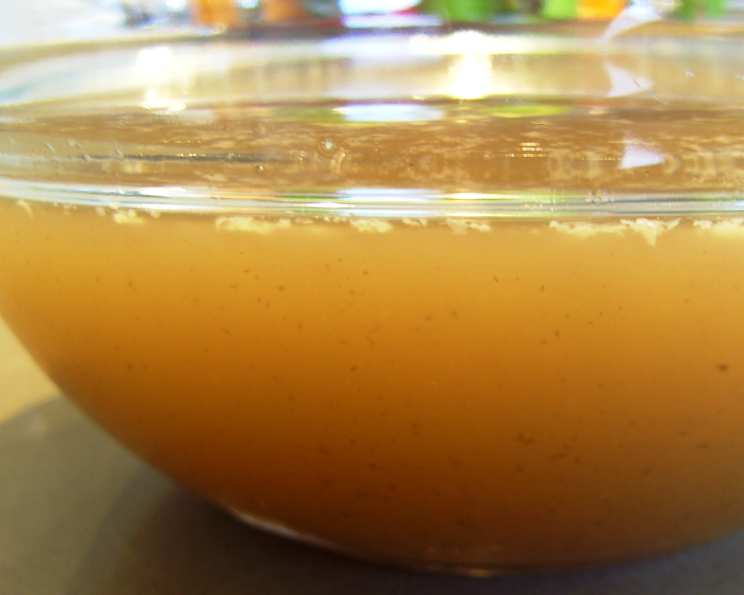
Good Eats Chicken Stock: A Culinary Foundation
The aroma of simmering chicken stock always takes me back to my grandmother’s kitchen. I can almost see her now, a sturdy figure bent over a massive stockpot, carefully skimming the surface with a well-worn spoon. The air, thick with the savory scent of chicken, vegetables, and herbs, promised warmth and comfort in every spoonful. Her stock was the magic ingredient in countless family meals, the unsung hero that elevated even the simplest soup to something truly special. Alton Brown’s recipe, while perhaps more streamlined than Grandma’s time-honored method, delivers that same depth of flavor and comforting essence.
Recipe Overview
- Prep Time: 15 minutes
- Cook Time: 6-8 hours
- Total Time: 6 hours 15 minutes – 8 hours 15 minutes
- Yield: 5 quarts
- Dietary Type: Dairy-Free, Gluten-Free
Ingredients
- 4 lbs chicken carcasses, including necks and backs
- 1 large onion, quartered
- 4 carrots, peeled and cut in half
- 4 celery ribs, cut in half
- 1 leek, white part only, cut in half lengthwise
- 10 sprigs fresh thyme
- 10 sprigs fresh parsley, with stems
- 2 bay leaves
- 8 peppercorns
- 2 garlic cloves, peeled
- 2 gallons cold water
Equipment Needed
- 12-quart stockpot
- Steamer basket (that fits inside stockpot)
- Large stockpot or heatproof container (for straining)
- Fine mesh strainer
- Large cooler or sink
- Lidded container
Instructions
-
Place the chicken carcasses, onion, carrots, celery ribs, leek, thyme, parsley, bay leaves, peppercorns, and garlic cloves in a 12-quart stockpot.
-
Position an opened steamer basket directly on top of the ingredients in the pot. This will help keep everything submerged later.
-
Pour 2 gallons of cold water over the ingredients and the steamer basket. Starting with cold water helps to extract more flavor from the bones and vegetables.
-
Turn the heat to high and bring the mixture to a simmer. Watch closely until you begin to see bubbles gently break through the surface of the liquid. Do not allow it to come to a rolling boil, as this can cloud the stock.
-
Reduce the heat to medium-low so that the stock maintains a low, gentle simmer. The key is patience here; a slow simmer is crucial for developing a rich, clear stock.
-
For the first hour of cooking, skim the scum that rises to the surface of the stock every 10 to 15 minutes using a spoon or a fine-mesh strainer. This “scum” consists of impurities and proteins released from the bones, and removing it will result in a cleaner-tasting stock. After the first hour, skim the stock twice each hour for the next 2 hours.
-
As the stock simmers, add hot water as needed to ensure that the bones and vegetables remain fully submerged. This is essential for maximum flavor extraction.
-
Simmer the stock uncovered for a total of 6 to 8 hours. The longer it simmers, the more concentrated the flavor will become.
-
Once the simmering is complete, strain the stock through a fine-mesh strainer into another large stockpot or heatproof container. Discard the solids (bones and vegetables). Don’t be tempted to squeeze the solids, as this can also release unwanted impurities back into the stock.
-
Immediately cool the strained stock to below 40 degrees Fahrenheit. The safest way to do this is to place the stockpot in a large cooler filled with ice or in a sink full of ice water. Stir frequently to expedite the cooling process. Cooling the stock quickly is essential for preventing bacterial growth.
-
Once the stock has cooled sufficiently, place it in the refrigerator overnight. This allows the fat to solidify on the surface, making it easy to remove.
-
The next day, remove the solidified fat from the surface of the liquid with a spoon or spatula. While this fat can be used for other cooking purposes, it’s best to remove it from the stock to prevent it from becoming greasy.
-
Store the defatted stock in a container with a lid in the refrigerator for 2 to 3 days or in the freezer for up to 3 months.
-
Prior to use, bring the stock to a boil for 2 minutes to ensure any potential bacteria are eliminated.
-
Use your homemade chicken stock as a base for soups, sauces, stews, and countless other culinary creations.
Expert Tips & Tricks
- Don’t boil: As mentioned before, a rolling boil will result in a cloudy, less flavorful stock. Keep it at a gentle simmer.
- Roast the bones: For an even richer, deeper flavor, roast the chicken carcasses and vegetables (especially the onion and carrots) in a 400°F (200°C) oven for about 30-45 minutes before adding them to the stockpot. This caramelizes the sugars and adds a wonderful depth of flavor.
- Herb Sachet: Tie the thyme and parsley sprigs together with kitchen twine to create an herb sachet. This makes it easier to remove them from the stock after simmering.
- Salt later: Avoid salting the stock during the simmering process. It’s better to add salt to the final dish you’re preparing, as the stock will reduce and concentrate the saltiness.
- Ice bath is key: Quickly cooling the stock is crucial for safety and flavor. Don’t skip the ice bath step.
- Freeze in portions: Freeze the stock in ice cube trays or small containers for easy portioning. This is particularly useful for adding a small amount of stock to sauces or gravies.
Serving & Storage Suggestions
Serve your homemade chicken stock as a base for soups like chicken noodle, vegetable, or cream of mushroom. Use it to deglaze pans for flavorful sauces and gravies. It can also be used to add moisture and flavor to risotto or to cook grains like rice or quinoa.
Properly stored, chicken stock will last for 2 to 3 days in the refrigerator in a sealed container. For longer storage, freeze it for up to 3 months. Thaw frozen stock in the refrigerator overnight before using. Never leave chicken stock at room temperature for more than 2 hours.
Nutritional Information
(Estimated, per cup, based on generic values):
| Nutrient | Amount per Serving | % Daily Value |
|---|---|---|
| Calories | 25 kcal | 1% |
| Total Fat | 0.5g | 1% |
| Saturated Fat | 0.1g | 1% |
| Cholesterol | 0mg | 0% |
| Sodium | 50mg | 2% |
| Total Carbohydrate | 1g | 0% |
| Dietary Fiber | 0g | 0% |
| Sugars | 0g | 0% |
| Protein | 1g | 2% |
Variations & Substitutions
- Vegetable Stock: Omit the chicken carcasses for a delicious vegetable stock. Increase the quantity of vegetables, and consider adding mushroom stems for extra umami flavor.
- Beef Stock: Substitute beef bones for chicken carcasses to create a rich beef stock. Follow the same cooking process.
- Spiced Stock: Add different spices to the stock for a unique flavor profile. Star anise, ginger, cloves, or chili peppers can add depth and complexity.
- Wine Addition: Add a cup of dry white wine during the last hour of simmering for added flavor.
FAQs (Frequently Asked Questions)
Q: Can I use chicken scraps instead of whole carcasses?
A: Yes, you can use chicken scraps like backs, necks, and wing tips. These are often more affordable and work just as well for making stock.
Q: Why is it important to start with cold water?
A: Starting with cold water allows the proteins and flavors from the bones and vegetables to slowly dissolve into the water, resulting in a richer, more flavorful stock.
Q: Can I use dried herbs instead of fresh herbs?
A: While fresh herbs are preferable, you can use dried herbs in a pinch. Use about 1 teaspoon of dried herbs for every tablespoon of fresh herbs called for in the recipe.
Q: My stock is cloudy. What did I do wrong?
A: Over-boiling the stock or not skimming the scum properly can result in a cloudy stock. Be sure to maintain a gentle simmer and skim frequently.
Q: How can I reduce the sodium content of the stock?
A: Avoid adding salt during the cooking process. This allows you to control the sodium level in the final dish. You can also use low-sodium ingredients.
Final Thoughts
Making your own chicken stock is a rewarding culinary endeavor that elevates countless dishes. While it requires patience and a bit of time, the depth of flavor you achieve is unparalleled. So, gather your ingredients, embrace the simmering process, and savor the incredible taste of homemade goodness. Don’t hesitate to experiment with different herbs and vegetables to create your own signature stock. Share your creations and feedback, and enjoy the culinary journey!