
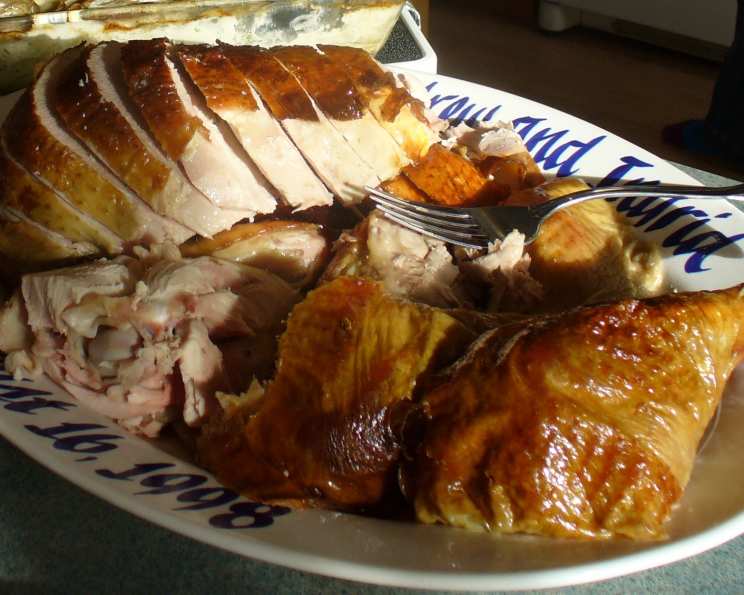
Good Eats Roast Turkey: A Thanksgiving Masterpiece
My grandmother’s Thanksgiving table was legendary, but not always for the right reasons. While her cranberry sauce was always a tart delight, the turkey? Well, let’s just say it was a coin toss whether you’d need gravy to choke it down. The first time I made this Good Eats roast turkey, the revelation was palpable. The deeply savory aroma filled my kitchen, and the first bite of incredibly moist breast meat banished all memories of Thanksgivings past. It was a turning point – I finally understood what everyone raved about.
Recipe Overview
- Prep Time: 15 hours 20 minutes
- Cook Time: 2 hours 30 minutes
- Total Time: 17 hours 50 minutes
- Servings: 16
- Yield: 1 roast turkey
- Dietary Type: Varies (see notes)
Ingredients
For the Brine:
- 1 (16 lb) frozen young turkey, thawed
- 1 cup kosher salt
- ½ cup light brown sugar
- 1 gallon vegetable stock
- 1 tablespoon black peppercorns
- ½ tablespoon allspice berry
- ½ tablespoon candied ginger
- 1 gallon ice water
For the Aromatics:
- 1 red apple, sliced
- ½ onion, sliced
- 1 cinnamon stick
- 1 cup water
- 4 sprigs rosemary
- 6 leaves sage
- Canola oil
Equipment Needed
- Large stockpot
- 5-gallon bucket (food-safe)
- Roasting pan with rack
- Microwave-safe dish
- Probe thermometer
- Aluminum foil
Instructions
-
Prepare the Brine: In a large stockpot, combine the kosher salt, light brown sugar, vegetable stock, black peppercorns, allspice berry, and candied ginger. Bring the mixture to a boil over medium-high heat.
-
Dissolve and Chill: Stir the brine until all the salt and sugar are completely dissolved. Remove the pot from the heat and let the brine cool to room temperature. Once cooled, transfer the brine to the refrigerator and chill thoroughly. This step is crucial, as adding a warm brine to your turkey could raise its temperature to unsafe levels for later cooking.
-
Brine the Turkey: Early on the day you plan to roast the turkey (or the night before), combine the thoroughly chilled brine and the ice water in a clean, food-safe 5-gallon bucket. This might seem like a lot of liquid, but it is vital for proper brining.
-
Submerge and Refrigerate: Place the thawed turkey breast side down in the brine. Ensure the turkey is fully submerged. If necessary, weigh it down with a plate or a sealed bag of ice. Cover the bucket and refrigerate (or place in a cool area like a basement) for 6 hours.
-
Turn the Turkey: Halfway through the brining time (after 3 hours), carefully turn the turkey over, ensuring it remains submerged in the brine. This ensures even distribution of flavor and moisture throughout the bird.
-
Preheat the Oven: A few minutes before you are ready to roast the turkey, preheat your oven to a blazing 500°F (260°C). This initial high heat helps to crisp the skin.
-
Prepare the Aromatics: While the oven is preheating, combine the sliced apple, sliced onion, cinnamon stick, and 1 cup of water in a microwave-safe dish. Microwave on high for 5 minutes. This helps to release the aromatics’ flavors and infuse the turkey from the inside out.
-
Rinse and Dry: Remove the turkey from the brine and rinse it thoroughly inside and out with cold water. Discard the brine. Do not reuse the brine, as it has come into contact with raw poultry.
-
Prepare for Roasting: Place the turkey on a roasting rack inside a wide, low roasting pan. Pat the turkey dry inside and out with paper towels. Thoroughly drying the skin is essential for achieving crispy skin.
-
Stuff with Aromatics: Add the microwaved apple, onion, and cinnamon stick to the cavity of the turkey, along with the fresh rosemary and sage.
-
Tuck and Oil: Tuck the wing tips behind the back of the turkey to prevent them from burning. Coat the entire turkey liberally with canola oil (or another neutral oil) to promote even browning and crispy skin.
-
Roast at High Heat: Place the roasting pan on the lowest level of the preheated oven and roast at 500°F (260°C) for 30 minutes. This initial blast of heat is crucial for achieving that coveted golden-brown, crispy skin.
-
Reduce Heat and Cover: After 30 minutes, remove the turkey from the oven and cover the breast with a double layer of aluminum foil. This prevents the breast meat from drying out during the remainder of the cooking process.
-
Insert Thermometer: Insert a probe thermometer into the thickest part of the breast, being careful not to touch the bone. Return the turkey to the oven and reduce the temperature to 350°F (175°C).
-
Monitor Temperature: Set the thermometer alarm (if available) to 161°F (72°C). A 14-16 pound bird should require a total of 2 to 2 ½ hours of roasting time. However, always rely on the thermometer reading rather than cooking time, as ovens vary.
-
Rest and Carve: Once the turkey reaches 161°F, remove it from the oven and let it rest, loosely covered with foil, for 15 minutes before carving. This allows the juices to redistribute throughout the meat, resulting in a more tender and flavorful bird.
Expert Tips & Tricks
- Brining is Key: Don’t skip the brining step! It’s the secret to a moist and flavorful turkey. If you’re short on time, even a 4-hour brine will make a noticeable difference.
- Crispy Skin Secrets: Make sure the turkey skin is completely dry before roasting. You can even leave the turkey uncovered in the refrigerator overnight to further dry out the skin.
- Thermometer Placement: Ensure the probe thermometer is inserted into the thickest part of the breast, but not touching any bones. Bone contact will give you an inaccurate reading.
- Don’t Overcook: Overcooked turkey is dry turkey. Rely on your thermometer and don’t be afraid to pull the turkey from the oven when it reaches 161°F (72°C). The internal temperature will continue to rise during the resting period.
- Use a Roasting Rack: A roasting rack allows air to circulate around the turkey, promoting even cooking and crispy skin all over.
Serving & Storage Suggestions
Serve the Good Eats Roast Turkey immediately after carving. Arrange the carved meat on a platter and garnish with fresh herbs, such as rosemary and sage. The pan drippings can be used to make a delicious gravy.
Storage:
- Room Temperature: Do not leave cooked turkey at room temperature for more than 2 hours.
- Refrigerator: Store leftover turkey in an airtight container in the refrigerator for up to 3-4 days.
- Freezer: For longer storage, freeze leftover turkey in an airtight container for up to 2-3 months.
Reheating:
Reheat leftover turkey in the oven at 325°F (160°C) or in the microwave until heated through. Add a splash of broth or gravy to keep the meat moist.
Nutritional Information
| Nutrient | Amount per Serving | % Daily Value |
|---|---|---|
| Calories | 733.7 kcal | N/A |
| Calories from Fat | 327 g | 45% |
| Total Fat | 36.4 g | 56% |
| Saturated Fat | 10.3 g | 51% |
| Cholesterol | 308.7 mg | 102% |
| Sodium | 295.8 mg | 12% |
| Total Carbohydrate | 1.9 g | 0% |
| Dietary Fiber | 0.3 g | 1% |
| Sugars | 1.3 g | 5% |
| Protein | 92.8 g | 185% |
Variations & Substitutions
- Stock Substitution: If you don’t have vegetable stock, you can use chicken stock or turkey stock instead.
- Herb Variations: Feel free to experiment with different herbs, such as thyme, oregano, or marjoram.
- Citrus Addition: Add a quartered lemon or orange to the turkey cavity along with the other aromatics for a citrusy flavor.
- Spicy Kick: Add a pinch of red pepper flakes to the brine for a subtle spicy kick.
- Dietary Adaptation: The brine is naturally gluten-free. For other dietary needs, be sure to select appropriate vegetable stock and oil.
FAQs (Frequently Asked Questions)
Q: Can I brine the turkey for longer than 6 hours?
A: While 6 hours is ideal, you can brine the turkey for up to 8 hours. Brining for longer than that can result in overly salty meat.
Q: Can I use a frozen turkey?
A: Yes, but make sure the turkey is completely thawed before brining. Thawing a turkey in the refrigerator can take several days, so plan accordingly.
Q: What if I don’t have a roasting rack?
A: If you don’t have a roasting rack, you can use a bed of chopped vegetables, such as carrots, celery, and onions, to elevate the turkey in the roasting pan.
Q: How do I make gravy with the pan drippings?
A: After removing the turkey from the roasting pan, skim off any excess fat from the pan drippings. Then, whisk in a few tablespoons of flour and cook for a few minutes to create a roux. Gradually add chicken broth or turkey broth, whisking constantly, until the gravy reaches your desired consistency. Season with salt and pepper to taste.
Q: Can I stuff the turkey with stuffing instead of aromatics?
A: While you can stuff the turkey with stuffing, it’s generally not recommended. Stuffing the turkey can increase the cooking time and may result in uneven cooking. The stuffing may not reach a safe temperature while the turkey overcooks.
Final Thoughts
This Good Eats Roast Turkey recipe has become a Thanksgiving tradition in my family, and I hope it becomes one in yours too. It’s a labor of love, but the results are well worth the effort. The moist, flavorful meat and crispy skin will impress your guests and leave them wanting more. Don’t be afraid to experiment with different herbs and aromatics to create your own signature turkey. Happy Thanksgiving!