
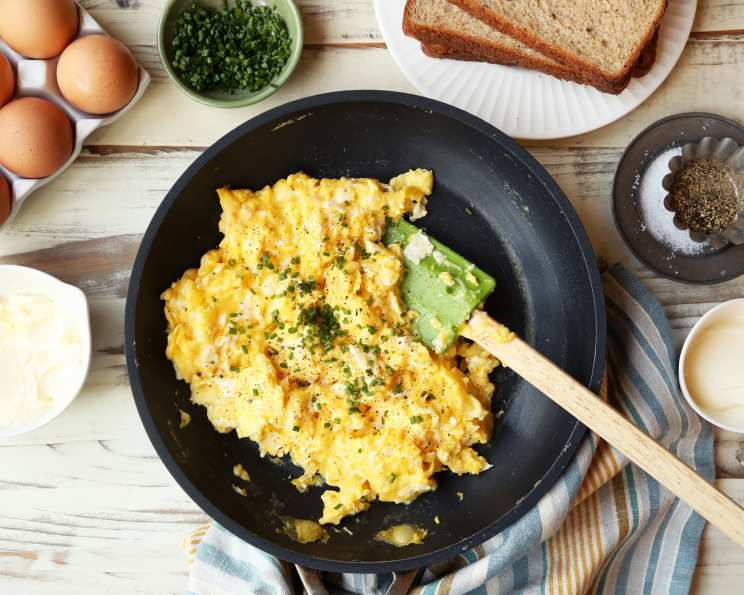
Mastering the Art of Scrambled Eggs: A Journey with Gordon Ramsay
My first encounter with truly exceptional scrambled eggs wasn’t at a fancy brunch spot, but rather a slightly chaotic Sunday morning in my own kitchen. I’d always considered scrambled eggs a quick and easy breakfast staple, but decidedly ordinary. Then I stumbled upon Gordon Ramsay’s technique. The result was transformative – a custardy, luxurious texture that redefined my understanding of what scrambled eggs could be. It was a revelation that elevated a humble dish to something truly special, and it’s a technique I’ve relied on ever since.
Recipe Overview
- Prep Time: 2 minutes
- Cook Time: 7 minutes
- Total Time: 9 minutes
- Servings: 2-3
- Yield: About 1-1.5 cups
- Dietary Type: Gluten-Free
Ingredients
- 6 eggs
- 25g/ 1 oz. butter, cold and cubed
- 1 tablespoon crème fraîche
- Freshly ground black pepper, to taste
- Chopped chives, for garnish
Equipment Needed
- Non-stick saucepan
- Spatula or spoon
Instructions
-
Begin by cracking the eggs directly into a cold, non-stick saucepan. This is crucial for controlling the cooking process.
-
Add the cold, cubed butter to the saucepan with the eggs. The cold butter melts slowly and evenly, contributing to the creamy texture.
-
Place the saucepan over medium heat. Continuously stir the eggs and butter mixture using a spatula or spoon. Ensure you scrape the bottom and sides of the pan to prevent sticking and promote even cooking.
-
Continue stirring until the eggs begin to cook and form soft curds. This should take a few minutes.
-
Remove the saucepan from the heat. The eggs will continue to cook from the residual heat. Continue stirring for about 20 seconds. This step is important to prevent overcooking.
-
Return the saucepan to the heat. Continue stirring the eggs until they start to clump together, but are still soft and slightly wet. This usually happens very quickly, so pay close attention.
-
Remove the saucepan from the heat once again. Stir in the crème fraîche. The crème fraîche adds richness and further enhances the creamy texture.
-
Return the saucepan briefly to low heat, stirring constantly to incorporate the crème fraîche evenly.
-
Remove from the heat when the eggs are clumpy, but still soft and slightly runny. Remember, they will continue to cook from the residual heat, so it’s better to slightly undercook them at this stage.
-
Season generously with freshly ground black pepper.
-
Garnish with a sprinkling of chopped chives for a touch of freshness and visual appeal.
Expert Tips & Tricks
-
Cold Start is Key: Starting with cold eggs and cold butter allows for a more gradual and controlled cooking process. This prevents the eggs from scrambling too quickly and becoming dry or rubbery.
-
Low and Slow: Avoid high heat. Cooking the eggs over medium heat initially, then removing from the heat periodically, ensures a gentle and even cooking process.
-
Constant Stirring: Consistent stirring is essential for creating the desired creamy texture. Don’t let the eggs sit undisturbed in the pan.
-
Timing is Everything: The key to perfect scrambled eggs is to remove them from the heat just before they reach your desired consistency. They will continue to cook from the residual heat.
-
Don’t Overcook: Overcooked scrambled eggs are dry and rubbery. Aim for a soft, slightly wet consistency.
-
Season at the End: Adding salt earlier in the cooking process can draw out moisture from the eggs, resulting in a less creamy texture. Pepper adds a nice flavour and should be added at the end.
-
Experiment with Flavors: While this recipe is delicious as is, feel free to experiment with other flavor additions, such as smoked salmon, truffle oil, or grated cheese. Add these at the same time as the crème fraîche.
Serving & Storage Suggestions
Serve the scrambled eggs immediately while they are still warm and creamy. They are delicious on their own, or served on toast, croissants, or with smoked salmon.
Leftover scrambled eggs can be stored in an airtight container in the refrigerator for up to 24 hours. However, the texture will change slightly, and they may become a bit watery. To reheat, gently warm them in a saucepan over low heat, stirring constantly, or microwave them in short bursts. Reheated scrambled eggs will not have the same creamy texture as freshly made ones.
It is not recommended to freeze scrambled eggs, as the texture will become very watery and unappetizing upon thawing.
Nutritional Information
| Nutrient | Amount per Serving | % Daily Value |
|---|---|---|
| Calories | 240.4 kcal | 12% |
| Calories from Fat | 153 g | 64% |
| Total Fat | 17 g | 26% |
| Saturated Fat | 6.4 g | 32% |
| Cholesterol | 568.3 mg | 189% |
| Sodium | 215.8 mg | 8% |
| Total Carbohydrate | 1.3 g | 0% |
| Dietary Fiber | 0 g | 0% |
| Sugars | 0.6 g | 2% |
| Protein | 19 g | 37% |
Note: Nutritional information is an estimate and may vary based on specific ingredients and portion sizes.
Variations & Substitutions
-
Dairy-Free: For a dairy-free version, substitute the crème fraîche with a tablespoon of your favorite plant-based cream alternative, such as cashew cream or oat cream. Be mindful that the flavour will change slightly.
-
Herb Variations: Experiment with different herbs besides chives. Parsley, dill, or tarragon are all excellent choices.
-
Cheese Variations: Add a sprinkle of grated Parmesan, Gruyère, or cheddar cheese at the same time as the crème fraîche for a cheesy twist.
-
Spicy Scrambled Eggs: Add a pinch of red pepper flakes or a dash of hot sauce for a spicy kick.
-
Vegetable Additions: Sautéed mushrooms, spinach, or bell peppers can be added to the eggs for a more substantial and flavorful dish.
FAQs (Frequently Asked Questions)
Q: Why is it important to use cold butter in this recipe?
A: Cold butter melts slowly and evenly, creating a richer and creamier texture in the scrambled eggs. It also helps to regulate the cooking process and prevent the eggs from overcooking.
Q: Can I use milk or cream instead of crème fraîche?
A: While you can use milk or cream, the crème fraîche adds a unique tang and richness that elevates the flavour. Milk or cream will result in a slightly less luxurious texture.
Q: How do I prevent my scrambled eggs from becoming dry and rubbery?
A: The key is to cook them low and slow, stirring constantly, and removing them from the heat just before they reach your desired consistency. They will continue to cook from the residual heat.
Q: Can I make this recipe ahead of time?
A: Scrambled eggs are best served immediately. While you can store leftovers, the texture will change upon reheating.
Q: What is the best type of pan to use for scrambled eggs?
A: A non-stick saucepan is ideal for making scrambled eggs, as it prevents the eggs from sticking and makes cleanup easier.
Final Thoughts
Gordon Ramsay’s method for scrambled eggs is a testament to the power of simple techniques executed with precision. It’s a recipe that proves that even the most basic dishes can be elevated to something truly extraordinary. So, grab your eggs, some cold butter, and a bit of crème fraîche, and prepare to experience scrambled eggs like never before. Don’t be afraid to experiment with variations and make it your own. And, most importantly, enjoy the process and savour every creamy, delicious bite. Perhaps pair it with some smoked salmon and toasted sourdough for the ultimate weekend brunch. Bon appétit!