
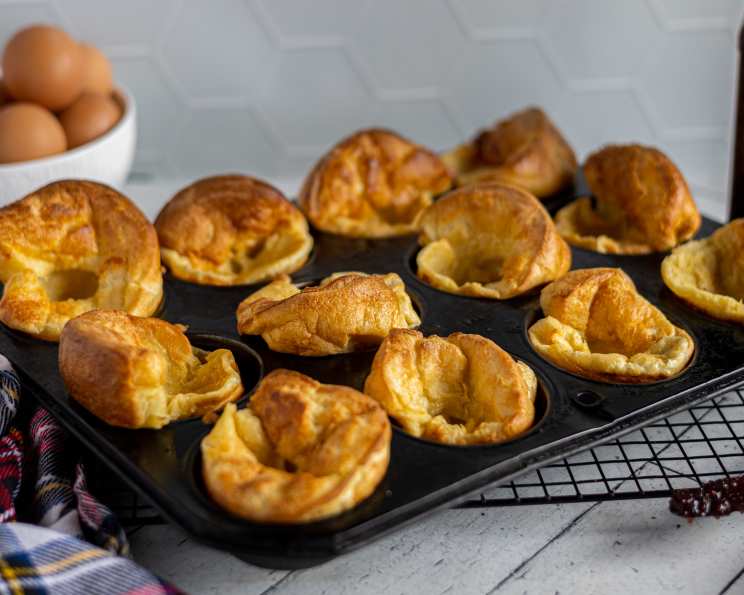
Mastering Gordon Ramsay’s Yorkshire Pudding: A Chef’s Guide
The scent of Yorkshire pudding always transports me back to my grandmother’s kitchen. Sunday roasts were a sacred ritual, and no roast was complete without a towering stack of these golden, airy delights. I remember peering into the oven, mesmerized as the batter transformed into puffy clouds, a testament to the magic of simple ingredients and perfect execution. It wasn’t just food; it was family, tradition, and pure, unadulterated comfort. Now, I’m going to teach you to make your own perfect Yorkshire Puddings just like Chef Ramsay.
Recipe Overview
- Prep Time: 35 minutes
- Cook Time: 20 minutes
- Total Time: 55 minutes
- Servings: 6
- Yields: 12 puddings
- Dietary Type: Not Gluten-Free
Ingredients
- 4 large eggs
- 1 1/2 cups whole milk
- 1/2 teaspoon coarse salt
- 1 1/4 cups all-purpose flour
- 4 tablespoons vegetable oil (or beef drippings)
Equipment Needed
- Blender
- 12-hole Yorkshire pudding tray or muffin tray
- Oven
Instructions
- In a blender, combine the eggs, milk, flour, and salt.
- Blend until well combined. This ensures a smooth batter, free of lumps.
- Place the blended batter in the refrigerator and allow it to rest for at least 30 minutes. This resting period is crucial; it allows the gluten in the flour to relax, resulting in a more tender pudding. The batter can be made a day or two in advance.
- Preheat your oven to 425°F (220°C). A hot oven is essential for achieving that dramatic rise.
- Put 1 teaspoon of the vegetable oil (or beef drippings) into each section of a 12-hole Yorkshire pudding tray or muffin tray.
- Place the tray into the oven on the top shelf until the oil is very hot, almost smoking. This intense heat is what creates the initial sizzle when the batter hits the pan, leading to the puffy texture.
- As soon as you take the tray from the oven, pour in the batter to three-quarters fill the tins. It should sizzle immediately upon contact with the hot oil.
- Immediately put the tray back into the oven.
- Bake until the Yorkshire puddings are well risen, golden brown, and crisp, approximately 15 to 20 minutes. Avoid opening the oven door during baking, as this can cause the puddings to collapse. Think of them like a soufflé – they need consistent heat to maintain their structure.
- Once baked, remove from oven and serve immediately.
Expert Tips & Tricks
- Hot Fat is Key: The temperature of the fat is arguably the most important factor. It needs to be screaming hot. If it’s not hot enough, the batter will just sit there and absorb the oil instead of puffing up.
- Don’t Overmix: While a smooth batter is important, avoid overmixing. Overmixing develops the gluten too much, leading to tougher puddings.
- Resting is Essential: The resting period allows the gluten to relax and the air bubbles to form in the batter, contributing to a lighter texture. Don’t skip this step!
- Oven Door Discipline: Resist the urge to peek! Opening the oven door releases heat, which can cause the puddings to deflate.
- Beef Drippings vs. Vegetable Oil: While vegetable oil works perfectly well, using beef drippings adds a richer, more savory flavor that complements a roast beautifully. Save the drippings from your roast dinner to use in your next batch.
- Coarse Salt: A sprinkle of coarse salt just before baking adds a lovely textural contrast and enhances the flavor.
Serving & Storage Suggestions
Yorkshire puddings are best served immediately, while they are still warm, puffy, and crisp. They are traditionally served with a roast dinner and gravy, but they are also delicious with other savory dishes, such as sausages, stews, or even just on their own with a dollop of sour cream or crème fraîche.
Leftover Yorkshire puddings can be stored in an airtight container at room temperature for up to a day, or in the refrigerator for up to 3 days. To reheat, place them in a preheated oven at 350°F (175°C) for a few minutes until warmed through. They will lose some of their crispness upon reheating, but they will still be delicious.
Nutritional Information
| Nutrient | Amount per Serving | % Daily Value |
|---|---|---|
| Calories | 259.8 kcal | N/A |
| Calories from Fat | N/A | N/A |
| Total Fat | 14.5 g | 22% |
| Saturated Fat | 3.4 g | 16% |
| Cholesterol | 130.1 mg | 43% |
| Sodium | 267.9 mg | 11% |
| Total Carbohydrate | 23 g | 7% |
| Dietary Fiber | 0.7 g | 2% |
| Sugars | 3.3 g | N/A |
| Protein | 8.8 g | 17% |
Note: Nutritional information is an estimate and may vary based on specific ingredients and preparation methods.
Variations & Substitutions
- Gluten-Free: To make gluten-free Yorkshire puddings, substitute the all-purpose flour with a gluten-free flour blend. Be sure to use a blend that contains xanthan gum or another binding agent to help with the structure.
- Dairy-Free: You can use a plant-based milk alternative, such as almond milk or soy milk, in place of the whole milk.
- Herb Infusion: Add fresh herbs, such as thyme or rosemary, to the batter for a more aromatic flavor.
- Cheese Please: Sprinkle a little grated cheese into the batter before baking for a cheesy twist.
- Mini Yorkshire Puddings: Use a mini muffin tin for adorable bite-sized puddings, perfect for appetizers or parties.
FAQs (Frequently Asked Questions)
Q: Why didn’t my Yorkshire puddings rise?
A: The most common reason for flat Yorkshire puddings is that the fat wasn’t hot enough or the oven wasn’t hot enough. Ensure the oil is almost smoking before adding the batter, and don’t open the oven door during baking.
Q: Can I make the batter ahead of time?
A: Yes, you can make the batter up to two days in advance and store it in the refrigerator. This actually helps the gluten relax, resulting in a more tender pudding.
Q: Why are my Yorkshire puddings tough?
A: Overmixing the batter can lead to tough puddings. Mix just until the ingredients are combined, and avoid overworking the gluten.
Q: Can I freeze Yorkshire puddings?
A: Yes, you can freeze cooked Yorkshire puddings. Let them cool completely, then wrap them individually in plastic wrap and place them in a freezer bag. Reheat them in a preheated oven at 350°F (175°C) until warmed through.
Q: What can I serve with Yorkshire puddings besides roast beef?
A: Yorkshire puddings are versatile! Try them with sausages and onion gravy, a hearty beef stew, or even as a savory side dish with grilled chicken or pork.
Final Thoughts
Making Gordon Ramsay’s Yorkshire Puddings might seem intimidating at first, but with a little practice and attention to detail, you’ll be whipping up perfect puddings in no time. The key is hot fat, a hot oven, and patience. Don’t be afraid to experiment with different variations and flavors to create your own signature Yorkshire pudding recipe. So, gather your ingredients, preheat your oven, and get ready to experience the joy of a perfectly risen, golden-brown Yorkshire pudding. Share your creations with friends and family, and don’t forget to let me know how they turn out! Happy cooking!