
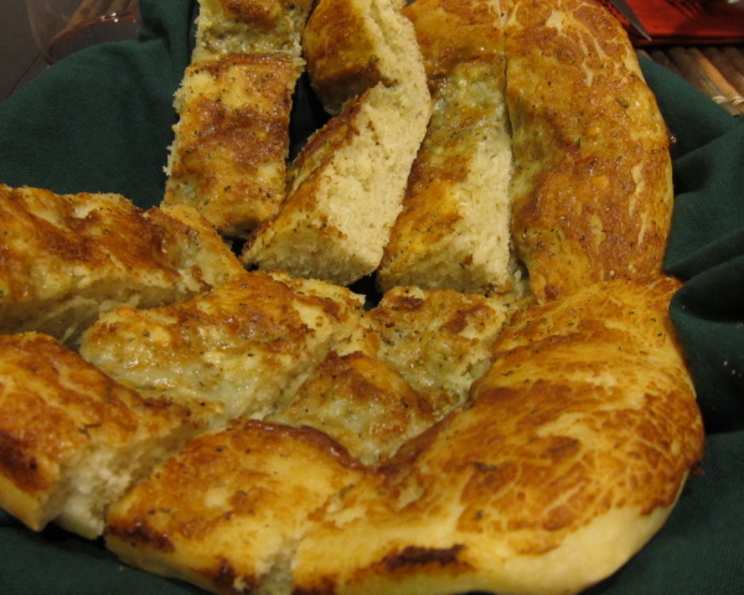
Decadent Gorgonzola Focaccia: A Slice of Italian Heaven
The memory is etched in my mind: a small trattoria tucked away on a cobblestone street in Florence. The aroma of freshly baked bread mingled with the sharp tang of aged cheese, drawing me in like a siren’s call. I ordered a simple focaccia, expecting something ordinary. What arrived was a revelation: a golden, dimpled flatbread, generously topped with creamy, pungent Gorgonzola and a sprinkle of fragrant rosemary. Each bite was an explosion of flavor, a perfect marriage of rustic simplicity and refined indulgence. From that moment on, I was determined to recreate that magical experience in my own kitchen.
Recipe Overview
- Prep Time: 2 hours 40 minutes
- Cook Time: 20 minutes
- Total Time: 3 hours
- Servings: 6
- Yield: 1 focaccia
- Dietary Type: Vegetarian
Ingredients
Bread:
- 1 tablespoon dry active yeast
- 1 1/4 cups warm water
- 1/4 cup olive oil
- 3 1/2 – 4 cups flour (all-purpose or bread flour)
- 1 teaspoon baking powder
Topping:
- 1/4 cup cream (heavy cream or whipping cream)
- 5 ounces Gorgonzola cheese (dolce or piccante, crumbled)
- 1/2 teaspoon rosemary (fresh, chopped, or dried)
- Fresh ground pepper (to taste)
- 2 teaspoons olive oil, for brushing
Equipment Needed
- Large bowl
- Food processor
- Cookie sheet
- Plastic wrap
- Measuring cups and spoons
Instructions
-
In a large bowl, stir the dry active yeast into the warm water. Let it sit for 10 minutes, or until the yeast is foamy. This indicates that the yeast is active and ready to use. If it doesn’t foam, the yeast may be old and you’ll need to start with fresh yeast.
-
In a food processor, combine the flour, olive oil, and the yeast mixture. Process until a ball forms. You may need to add a little more flour if the dough is too sticky, or a little more water if it’s too dry. The dough should be soft and slightly tacky.
-
Lightly flour a clean surface. Knead the dough for a few minutes, until it’s smooth and elastic.
-
Lightly oil a large bowl. Place the dough in the bowl, turning to coat it with oil. This prevents the dough from drying out as it rises.
-
Cover the bowl with plastic wrap and let it rise in a warm place for about 1 1/2 hours, or until doubled in size. A warm environment encourages the yeast to ferment and the dough to rise properly.
-
Preheat your oven to 400 degrees Fahrenheit (200 degrees Celsius).
-
Flatten the dough onto a cookie sheet, using your hands to spread it out to about 1/4 to 1/2 inch in thickness. The shape doesn’t have to be perfect – a rustic, uneven shape adds to the charm of focaccia.
-
Use your fingers to dimple the dough all over. These dimples will create little pockets that hold the topping and olive oil, adding to the flavor and texture of the finished focaccia.
-
In the food processor (you don’t need to wash it after the dough), combine the cream, Gorgonzola cheese, and rosemary. Process until smooth. If you prefer a chunkier topping, you can simply mix the ingredients together by hand.
-
Smooth the cheese mixture evenly over the top of the dough.
-
Brush the top of the focaccia with the olive oil and sprinkle with freshly ground black pepper.
-
Let the focaccia rise for another hour. This second rise helps to create a light and airy texture.
-
Bake in the preheated oven for 20 minutes, or until the focaccia is golden brown and the cheese is bubbly. Keep a close eye on it, as oven temperatures can vary.
-
The focaccia is best served warm. Let it cool slightly before slicing and serving.
Expert Tips & Tricks
- For a richer flavor, use a high-quality extra virgin olive oil.
- If you don’t have a food processor, you can mix the dough by hand. It will require more kneading, but the results will be just as delicious.
- To make the focaccia ahead of time, you can prepare the dough and let it rise in the refrigerator overnight. Bring it to room temperature before flattening and topping.
- If the top of the focaccia is browning too quickly, you can tent it with foil during the last few minutes of baking.
- Don’t be afraid to experiment with different toppings. Sun-dried tomatoes, olives, and caramelized onions are all great additions.
- For extra flavour, try adding a pinch of sea salt on top before baking.
Serving & Storage Suggestions
Serve the Gorgonzola focaccia warm, either on its own as an appetizer or as an accompaniment to a main course. It pairs perfectly with Italian soups, salads, and pasta dishes. You can also serve it with a drizzle of balsamic glaze for a touch of sweetness.
Leftovers can be stored at room temperature for up to 2 days, or in the refrigerator for up to 4 days. To reheat, wrap the focaccia in foil and warm it in a low oven (around 300 degrees Fahrenheit) for about 10 minutes, or until heated through. You can also reheat it in the microwave, but it may become a bit soggy. For longer storage, you can freeze the focaccia for up to 2 months. Wrap it tightly in plastic wrap and then in foil before freezing. Thaw it in the refrigerator overnight before reheating.
Nutritional Information
| Nutrient | Amount per Serving | % Daily Value |
|---|---|---|
| Calories | 477.8 kcal | N/A |
| Calories from Fat | 191 g | 40% |
| Total Fat | 21.2 g | 32% |
| Saturated Fat | 7.9 g | 39% |
| Cholesterol | 28.8 mg | 9% |
| Sodium | 398.2 mg | 16% |
| Total Carbohydrate | 57.5 g | 19% |
| Dietary Fiber | 2.5 g | 10% |
| Sugars | 0.3 g | 1% |
| Protein | 13.6 g | 27% |
Variations & Substitutions
- For a gluten-free version, use a gluten-free flour blend. You may need to adjust the amount of liquid depending on the flour you use.
- For a dairy-free version, use a plant-based cream and a dairy-free Gorgonzola alternative.
- Instead of rosemary, try using other herbs like thyme, oregano, or sage.
- Add other toppings like sun-dried tomatoes, olives, or caramelized onions.
- For a sweeter focaccia, drizzle with honey or balsamic glaze after baking.
- Use different cheeses: try a creamy goat cheese, salty Pecorino Romano, or a mix of cheeses.
FAQs (Frequently Asked Questions)
Q: Can I use instant yeast instead of active dry yeast?
A: Yes, you can. If using instant yeast, you can skip the step of proofing it in warm water. Simply add it to the flour along with the other dry ingredients.
Q: My dough isn’t rising. What did I do wrong?
A: There are several reasons why your dough might not be rising. The yeast might be old or inactive, the water might be too hot or too cold, or the environment might be too cold. Make sure your yeast is fresh, your water is lukewarm, and you let the dough rise in a warm place.
Q: Can I freeze the focaccia dough?
A: Yes, you can freeze the dough after the first rise. Punch down the dough, wrap it tightly in plastic wrap, and freeze for up to 2 months. Thaw in the refrigerator overnight before proceeding with the recipe.
Q: What kind of Gorgonzola cheese should I use?
A: You can use either Gorgonzola dolce (sweet) or Gorgonzola piccante (spicy), depending on your preference. Gorgonzola dolce is milder and creamier, while Gorgonzola piccante is more pungent and assertive.
Q: My focaccia is too dry. How can I fix it?
A: Make sure you are not overbaking it. Also, brushing the top with olive oil before baking and after baking can help keep it moist.
Final Thoughts
This Gorgonzola focaccia is more than just a recipe; it’s a journey back to that charming Florentine trattoria, a celebration of simple ingredients transformed into something extraordinary. I encourage you to try this recipe and experience the magic for yourself. Don’t be afraid to experiment with different toppings and herbs to create your own signature focaccia. And most importantly, share your creations with loved ones and savor the joy of homemade bread. Buon appetito!