
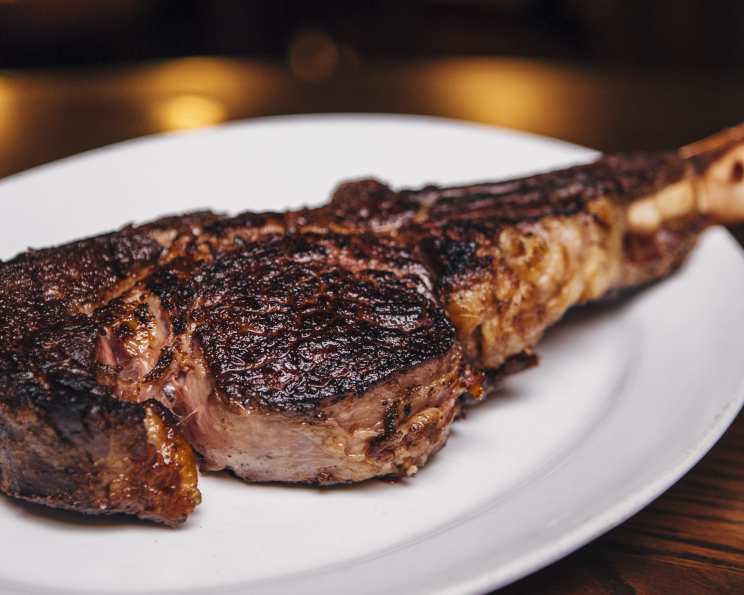
Gotham Rib Steak: A Culinary Tribute to a Classic
The scent of seared steak always takes me back to my grandfather’s backyard barbecues. He was a man of few words, but he knew his way around a grill. His specialty? A thick-cut ribeye, simply seasoned and perfectly cooked. The smoky aroma, the sizzle of the fat rendering, and the shared anticipation around the picnic table – these are the memories that food for me is truly all about. This Gotham Rib Steak recipe, with its focus on quality and simple technique, reminds me of those cherished moments and honors the tradition of a perfectly cooked steak.
Recipe Overview
- Prep Time: 2 hours 5 minutes
- Cook Time: 21 minutes
- Total Time: 2 hours 26 minutes
- Servings: 1
- Yield: 1 steak
- Dietary Type: Carnivore
Ingredients
- 32 ounces rib eye steak
- Kosher salt
- Pepper
- Extra virgin olive oil
Equipment Needed
- Oven
- Broiling pan
- Tongs
- Platter
Instructions
-
Begin by bringing the 32-oz rib eye steak to room temperature. This is a crucial step, as it ensures even cooking throughout. Allow approximately 2 hours for this process. A room temperature steak will cook much more evenly than a cold one, preventing a charred exterior and a cold center.
-
Preheat your oven to 350°F (175°C). This initial oven temperature is important to properly warm the steak before broiling.
-
Brush both sides of the steak generously with extra-virgin olive oil. This creates a beautiful sear and helps the seasonings adhere. Don’t skimp on the oil; it’s essential for achieving that perfect crust.
-
Sprinkle both sides of the steak generously with Kosher salt and pepper. Season generously – this is a large cut of meat, and it needs a good amount of seasoning to truly shine. Freshly cracked black pepper is always preferable.
-
Place the steak in a broiling pan. This will allow the fat to render and drip away from the steak, preventing it from steaming in its own juices.
-
Now, switch your oven to the broiler setting at high heat. The high heat is essential for achieving that beautiful, flavorful sear.
-
Sear one side of the steak for precisely 3 minutes to achieve a rich char. This searing process seals in the juices and creates a flavorful crust. Keep a close eye on the steak to prevent burning.
-
Using tongs, carefully flip the steak to sear the other side for another 3 minutes. Avoid using a fork, as piercing the steak will release valuable juices. Remember, you want to seal in the flavor, not let it escape.
-
After searing both sides, continue broiling for an additional 15 minutes on high heat for a medium-rare finish. The exact broiling time may vary depending on your oven, so use a meat thermometer to ensure the steak reaches your desired level of doneness. For medium-rare, aim for an internal temperature of 130-135°F (54-57°C).
-
Remove the steak from the oven and transfer it to a platter.
-
Before serving, let the steak rest for 15 minutes, allowing the juices to redistribute internally. This is a critical step; don’t skip it! Resting the steak allows the muscle fibers to relax, resulting in a more tender and juicy final product. If you cut into the steak immediately, all the juices will run out, leaving you with a drier piece of meat.
Expert Tips & Tricks
- Dry-Aging: For an even more intense flavor, consider dry-aging your ribeye in the refrigerator for a few days before cooking. Place the steak on a wire rack uncovered, and allow the surface to dry out.
- Reverse Sear: If you prefer a more even cook throughout the steak, try the reverse sear method. Bake the steak at a low temperature (around 250°F/120°C) until it reaches about 115°F/46°C internally, then sear it in a hot pan or under the broiler for a few minutes per side to develop the crust.
- Flavor Infusion: For extra flavor, add some fresh herbs like rosemary or thyme to the pan while broiling. The aromatics will infuse the steak with their fragrance.
- Doneness Check: A meat thermometer is your best friend when cooking steak. Use it to ensure the steak is cooked to your desired level of doneness.
- Rare: 120-130°F (49-54°C)
- Medium-Rare: 130-135°F (54-57°C)
- Medium: 135-145°F (57-63°C)
- Medium-Well: 145-155°F (63-68°C)
- Well-Done: 155°F+ (68°C+)
Serving & Storage Suggestions
Serve your Gotham Rib Steak immediately after resting, accompanied by your favorite sides. Classic pairings include mashed potatoes, roasted vegetables, or a simple green salad.
To store leftovers, wrap the steak tightly in plastic wrap or place it in an airtight container and refrigerate for up to 3-4 days. To reheat, gently warm the steak in a low oven or skillet to prevent it from drying out. Microwaving is not recommended, as it can make the steak tough and rubbery. Cold steak is also delicious in sandwiches or salads.
Nutritional Information
| Nutrient | Amount per Serving | % Daily Value |
|---|---|---|
| Calories | 2490.1 kcal | N/A |
| Calories from Fat | 1805 g | 72% |
| Total Fat | 200.6 g | 308% |
| Saturated Fat | 81.8 g | 408% |
| Cholesterol | 618 mg | 205% |
| Sodium | 508.9 mg | 21% |
| Total Carbohydrate | 0 g | 0% |
| Dietary Fiber | 0 g | 0% |
| Sugars | 0 g | 0% |
| Protein | 159.1 g | 318% |
Variations & Substitutions
- Different Cuts: While this recipe is specifically for a ribeye, you can adapt it for other thick-cut steaks like New York strip or porterhouse. Adjust cooking times accordingly.
- Spice Rub: Instead of just salt and pepper, create a custom spice rub with ingredients like smoked paprika, garlic powder, onion powder, and chili powder.
- Compound Butter: Elevate the steak with a pat of compound butter made with herbs, garlic, and softened butter. Place the butter on top of the steak as it rests, allowing it to melt and infuse the meat with flavor.
- Marinade: For a more tender and flavorful steak, marinate it for a few hours before cooking in a mixture of olive oil, balsamic vinegar, garlic, and herbs.
FAQs (Frequently Asked Questions)
Q: Why is it important to bring the steak to room temperature before cooking?
A: Bringing the steak to room temperature allows for more even cooking. A cold steak will cook unevenly, resulting in a charred exterior and a potentially undercooked center.
Q: Can I use a different type of salt instead of Kosher salt?
A: Kosher salt is recommended because of its coarse texture, which helps to distribute the salt evenly and create a good crust. However, you can use other types of salt, but you may need to adjust the amount to taste.
Q: How do I know when the steak is cooked to the desired level of doneness?
A: The best way to check for doneness is to use a meat thermometer. Insert the thermometer into the thickest part of the steak, avoiding bone. Refer to the internal temperature guide in the “Expert Tips & Tricks” section for the correct temperatures for different levels of doneness.
Q: What if I don’t have a broiling pan?
A: If you don’t have a broiling pan, you can use a regular baking sheet with a wire rack placed on top. This will allow the fat to drip away from the steak.
Q: Why is it important to let the steak rest after cooking?
A: Resting the steak allows the juices to redistribute throughout the meat, resulting in a more tender and juicy final product. If you cut into the steak immediately, all the juices will run out, leaving you with a drier piece of meat.
Final Thoughts
The Gotham Rib Steak is more than just a recipe; it’s an experience. It’s about taking the time to select a quality cut of meat, preparing it with care, and sharing it with those you love. Don’t be intimidated by the size of the steak – the simple techniques outlined in this recipe will guide you to a perfectly cooked and incredibly flavorful meal. I encourage you to try this recipe, experiment with different seasonings and sides, and make it your own. Let me know how it turns out, and most importantly, enjoy the process of creating something delicious! Pair it with a bold Cabernet Sauvignon for a truly unforgettable culinary experience.