
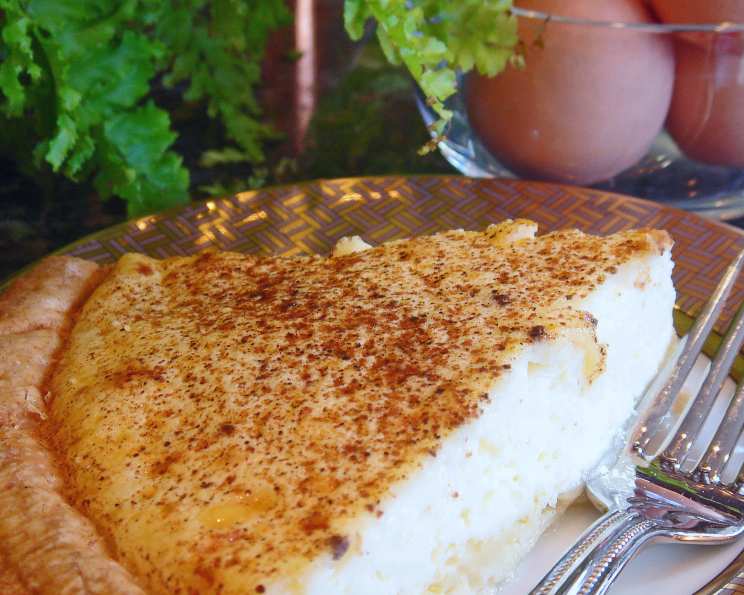
Grandma’s Custard Pie (Yellow Pie)
The aroma alone takes me back – a sun-drenched kitchen, the gentle hum of conversation, and the golden promise of Grandma’s custard pie cooling on the windowsill. It wasn’t just dessert; it was a symbol of love, a treat reserved for special occasions (or when I managed to charm my way into an overnight visit). I remember sneaking slices when she wasn’t looking, the creamy, subtly sweet filling melting in my mouth. While I can’t replicate the feeling of being a kid in her kitchen, this recipe, passed down through generations, gets me incredibly close to that nostalgic perfection.
Recipe Overview
- Prep Time: 15 minutes
- Cook Time: 30-35 minutes
- Total Time: 45-50 minutes
- Servings: 6-8
- Yield: 1 pie
- Dietary Type: Vegetarian
Ingredients
- 4 eggs, slightly beaten
- 1/2 cup sugar
- 1/2 teaspoon salt
- 1/2 teaspoon vanilla extract
- 1/8 teaspoon almond extract
- 2 1/2 cups milk, scalded (see note below for substitution)
- Freshly grated nutmeg, for garnish
- 9-inch unbaked pie shell
Ingredient Note: Grandma always used fresh, whole milk straight from the farm. Since that’s not always available, I find a blend of 1 cup half-and-half mixed with 1 1/2 cups whole milk provides a similar richness.
Equipment Needed
- Large mixing bowl
- Whisk
- Saucepan
- Measuring cups and spoons
- 9-inch pie dish
- Oven
- Knife or toothpick
Instructions
-
Preheat your oven to 400 degrees F (200 degrees C). Make sure the oven rack is in the center position.
-
Begin by scalding the milk. Pour the milk (or your half-and-half and whole milk blend) into a saucepan. Heat over medium heat, stirring occasionally, until small bubbles begin to form around the edges of the pan and steam rises. Do not boil! Boiling can change the flavor and texture of the custard. Once scalded, remove the milk from the heat and set aside to cool slightly.
-
While the milk is heating, prepare the egg mixture. In a large mixing bowl, slightly beat the eggs. You don’t want to whip them into a frenzy; just break the yolks and combine them with the whites.
-
Add the sugar, salt, vanilla extract, and almond extract to the beaten eggs. Blend these ingredients together until well combined and the mixture is smooth. The almond extract enhances the flavor beautifully, but be careful not to overdo it – a little goes a long way.
-
Now, it’s time to temper the eggs. Gradually stir the scalded milk into the egg mixture. It’s crucial to add the milk slowly and in a steady stream, whisking constantly. This prevents the eggs from scrambling due to the heat. Work in additions of about 1/2 cup at a time until incorporated.
-
Do not overbeat the mixture. Overbeating can incorporate too much air, which can lead to an unwanted foamy texture in the finished pie. Just blend until everything is nicely combined.
-
Carefully pour the custard mixture into the unbaked pie shell. Fill it almost to the top, leaving a little room for expansion during baking.
-
Finally, lightly sprinkle freshly grated nutmeg over the top of the custard. This adds a warm, aromatic note that complements the creamy sweetness of the pie.
-
Bake for 30-35 minutes, or until a knife inserted in the center of the pie comes out clean. Start checking for doneness around the 30-minute mark. The center should be just set but still have a slight wobble. If the crust starts to brown too quickly, you can tent it loosely with foil.
-
Once the pie is done, remove it from the oven and let it cool completely on a wire rack for at least 30-60 minutes before slicing and serving. This allows the custard to set properly and prevents it from being too runny.
Expert Tips & Tricks
- Prevent a Soggy Crust: To ensure a crisp crust, try blind baking it for 10 minutes at 350 degrees F before adding the filling.
- Even Baking: Rotate the pie halfway through baking to ensure even browning.
- Fixing Cracks: If cracks appear on the surface of the pie, it may be due to overbaking or sudden temperature changes. To minimize cracking, cool the pie slowly in the oven with the door slightly ajar.
- Make-Ahead Prep: You can prepare the custard filling a day in advance and store it in the refrigerator. Just give it a good whisk before pouring it into the pie shell.
- Spice It Up: Experiment with other spices like cinnamon or cardamom for a unique twist.
Serving & Storage Suggestions
Grandma’s custard pie is best served slightly chilled or at room temperature. A dollop of whipped cream or a sprinkle of extra nutmeg makes a lovely garnish.
Storage: Leftover custard pie should be stored in the refrigerator. It will keep for up to 3 days. Cover it loosely with plastic wrap or foil to prevent it from drying out. Custard pie doesn’t freeze well, as the texture can become grainy upon thawing.
Nutritional Information
(Estimated values per serving)
| Nutrient | Amount per Serving | % Daily Value |
|---|---|---|
| Calories | 332 kcal | 17% |
| Total Fat | 17g | 26% |
| Saturated Fat | 5.8g | 29% |
| Cholesterol | 155mg | 52% |
| Sodium | 446mg | 19% |
| Total Carbohydrate | 35g | 12% |
| Dietary Fiber | 1.1g | 4% |
| Sugars | 17g | N/A |
| Protein | 9.4g | 19% |
Variations & Substitutions
- Gluten-Free Crust: Use a gluten-free pie crust recipe or a store-bought gluten-free crust for a gluten-free option.
- Dairy-Free Custard: While it will alter the classic taste, you can substitute almond milk or coconut milk for the milk in the filling. You may need to adjust the sugar depending on the sweetness of the milk alternative.
- Lemon Custard Pie: Add 2 tablespoons of lemon juice and 1 teaspoon of lemon zest to the filling for a bright, citrusy flavor.
- Chocolate Custard Pie: Stir in 2 tablespoons of unsweetened cocoa powder to the filling for a chocolatey twist.
FAQs (Frequently Asked Questions)
Q: Why is it important to scald the milk?
A: Scalding the milk helps to dissolve the sugar properly and ensures a smoother, creamier custard texture. It also helps to prevent a skin from forming on the surface of the custard during baking.
Q: How can I tell if the pie is done without cutting into it?
A: The pie is done when the edges are set, but the center still has a slight wobble. You can also insert a knife into the center; if it comes out clean, the pie is ready.
Q: My pie cracked on top. What did I do wrong?
A: Cracking can be caused by overbaking, baking at too high a temperature, or sudden temperature changes. Try reducing the baking time, lowering the oven temperature slightly, and letting the pie cool gradually in the oven with the door ajar.
Q: Can I use a pre-made graham cracker crust?
A: While a traditional pastry crust is best, a graham cracker crust can be used in a pinch. However, it will impart a different flavor and texture to the pie.
Q: What if I don’t have almond extract?
A: If you don’t have almond extract, you can simply omit it. The vanilla extract will still provide a lovely flavor. You could also substitute with a different extract like lemon or orange.
Final Thoughts
Grandma’s custard pie is more than just a dessert; it’s a taste of home, a memory, a warm embrace in every bite. This recipe is simple, yet yields a truly special treat that will impress your family and friends. Don’t be afraid to experiment with variations and make it your own. I hope you enjoy baking this classic as much as I do, and that it brings a little bit of Grandma’s kitchen into your own home. Pair a slice with a cup of freshly brewed coffee or tea for the perfect comforting experience. Happy baking!