
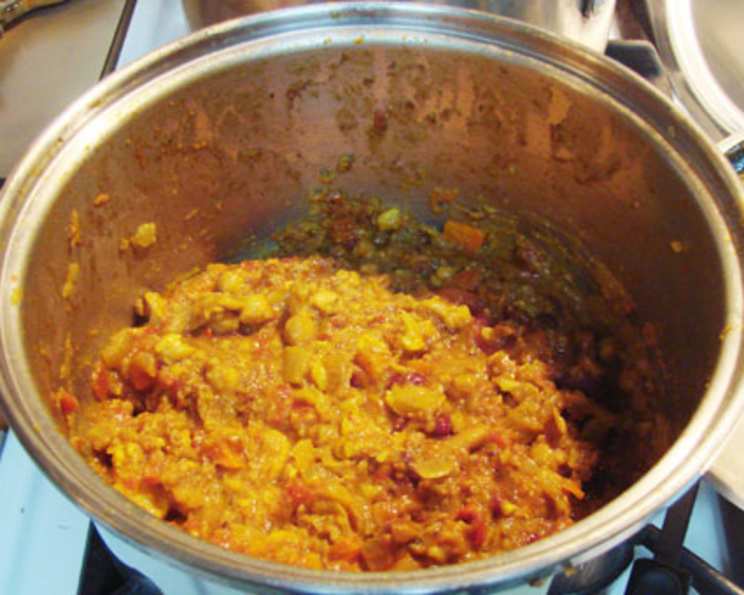
Grandma’s Lebanese Chili: A Taste of Home
The scent of cumin and coriander always transports me back to my grandmother’s kitchen. As a child, I remember being mesmerized by the way she layered spices, transforming simple vegetables into something deeply comforting. This Lebanese Chili isn’t just a dish; it’s a warm hug, a memory etched in flavor, and a testament to her incredible ability to make everyone feel loved through food. Though she never wrote down her recipes, I watched, learned, and experimented until I recreated this beloved classic.
Recipe Overview
- Prep Time: 45 minutes
- Cook Time: 30 minutes
- Total Time: 1 hour 15 minutes
- Servings: 10
- Yield: Large pot of chili
- Dietary Type: Vegan
Ingredients
- 1 1⁄2 cups bulgur
- 3 tablespoons olive oil
- 2 large yellow onions, diced
- 2 medium carrots, chopped or grated
- 3 cups cauliflower, cut into small florets
- 1 teaspoon turmeric
- 2 teaspoons ground coriander
- 1⁄8 teaspoon ground cloves or 1/8 teaspoon ground allspice
- 1⁄4 teaspoon cayenne pepper (to taste)
- 2 tablespoons ground cumin
- 1 (15 ounce) can chickpeas, rinsed & drained
- 2 (28 ounce) cans diced tomatoes
- 1 tablespoon tamari soy sauce
- 1 cup cashews
Equipment Needed
- Medium bowl
- Sieve or fine-mesh strainer
- Large skillet or pot
- Wooden spoon or spatula
Instructions
- Begin by rinsing the bulgur in a sieve under cold running water. This removes any excess starch and helps ensure a fluffier texture.
- Transfer the rinsed bulgur to a medium bowl. Cover it generously with boiling water, ensuring the water level is about 2 inches above the bulgur.
- Let the bulgur soak, uncovered, for 30 minutes, or until it is tender. This allows the grains to fully hydrate and become pleasantly chewy.
- Once the bulgur is tender, it’s crucial to drain it thoroughly. Spoon batches of the soaked bulgur into a sieve.
- Using the back of a spoon, press down firmly on each batch to extract as much liquid as possible. This step prevents the chili from becoming watery.
- As you complete each batch of drained bulgur, transfer it to another medium bowl, ready for the next stage of cooking.
- Heat the olive oil in a large skillet or pot over medium heat. Ensure the oil is shimmering before adding the vegetables.
- Add the diced onions to the heated oil and sauté for about 3 minutes, tossing them frequently. You want the onions to become translucent and slightly softened.
- Next, add the chopped or grated carrots and cauliflower florets to the skillet. Sauté for an additional 2 minutes, stirring to combine them with the onions.
- Sprinkle the turmeric, coriander, cumin, cloves (or allspice), and cayenne pepper over the vegetables.
- Cook for 1 minute, stirring frequently, allowing the spices to bloom and release their fragrant aromas.
- Add the drained chickpeas to the skillet. Mix well with the vegetables and spices.
- Cook for 2 minutes, ensuring the chickpeas are heated through and coated in the flavorful spice mixture.
- Stir in the drained bulgur, diced tomatoes (with their juices), and tamari soy sauce. Mix thoroughly to combine all the ingredients.
- Bring the chili to a simmer, then reduce the heat to low. Cook, tossing occasionally, for 15 minutes, or until the chili is piping hot throughout. This allows the flavors to meld together beautifully.
- Just before serving, toss the cashews on top of the chili. Serve hot with a dollop of plain yogurt (or vegan yogurt alternative) for a contrasting flavor and texture.
Expert Tips & Tricks
- Spice Level: Adjust the amount of cayenne pepper to your liking. A pinch adds warmth, while a larger quantity will bring the heat.
- Bulgur Texture: Soaking time for the bulgur can vary depending on the grind. Check for tenderness after 30 minutes and add more soaking time if needed.
- Vegetable Prep: For a smoother texture, you can pulse half of the diced tomatoes in a blender before adding them to the chili.
- Make-Ahead: This chili is fantastic made ahead of time. The flavors deepen overnight, making it even more delicious.
- Fixing Watery Chili: If your chili ends up too watery, simmer it uncovered for a few extra minutes to allow some of the liquid to evaporate. You can also add a tablespoon of tomato paste to thicken it.
Serving & Storage Suggestions
Serve Grandma’s Lebanese Chili hot, garnished with the cashews and a dollop of plain yogurt (or vegan yogurt alternative) for a cool, creamy contrast. A sprinkle of fresh cilantro or parsley also adds a vibrant touch.
Leftover chili can be stored in an airtight container in the refrigerator for up to 3-4 days. For longer storage, freeze in freezer-safe containers for up to 2-3 months.
To reheat, simply warm the chili in a saucepan over medium heat, stirring occasionally, until heated through. You can also reheat it in the microwave. If frozen, thaw the chili in the refrigerator overnight before reheating.
Nutritional Information
| Nutrient | Amount per Serving | % Daily Value |
|---|---|---|
| Calories | 310.9 kcal | N/A |
| Calories from Fat | 106 g | 34% |
| Total Fat | 11.9 g | 18% |
| Saturated Fat | 2 g | 10% |
| Cholesterol | 0 mg | 0% |
| Sodium | 684.2 mg | 28% |
| Total Carbohydrate | 46.9 g | 15% |
| Dietary Fiber | 10.2 g | 40% |
| Sugars | 9.3 g | 37% |
| Protein | 9.5 g | 18% |
Variations & Substitutions
- Gluten-Free: While the original recipe is naturally gluten-free (assuming your tamari is gluten-free), you can ensure it by using certified gluten-free tamari.
- Lentils: Substitute the chickpeas with green or brown lentils for a different texture and flavor.
- Spicier Version: Add a finely chopped jalapeño or serrano pepper along with the onions for an extra kick.
- Seasonal Variation: In the fall, consider adding diced butternut squash or sweet potato for a sweeter, earthier flavor.
- Nut-Free: Omit the cashews or substitute with toasted pumpkin seeds for a nut-free option.
FAQs (Frequently Asked Questions)
Q: Can I use canned bulgur instead of soaking it?
A: While canned bulgur is available, soaking it from its dried state is recommended for the best texture and flavor. Soaking allows it to fully hydrate and become tender.
Q: Can I use different types of beans?
A: Absolutely! Feel free to experiment with other beans like kidney beans, black beans, or cannellini beans. Adjust the cooking time as needed.
Q: What if I don’t have tamari soy sauce?
A: You can substitute it with regular soy sauce or coconut aminos. Keep in mind that soy sauce is saltier, so you may need to reduce the amount slightly.
Q: Is this chili suitable for freezing?
A: Yes, this chili freezes very well. Store it in freezer-safe containers for up to 2-3 months. Thaw overnight in the refrigerator before reheating.
Q: Can I make this in a slow cooker?
A: Yes, you can adapt this recipe for a slow cooker. Sauté the onions, carrots, and cauliflower as directed, then transfer all ingredients to the slow cooker. Cook on low for 6-8 hours or on high for 3-4 hours.
Final Thoughts
This Lebanese Chili is more than just a recipe; it’s a piece of my family history, a comforting taste of home. I encourage you to try it, adapt it to your liking, and share it with your loved ones. Food has the power to connect us, and I hope this dish brings you as much joy as it brings me. Don’t hesitate to share your creations and variations – I’m excited to see how you make it your own!