
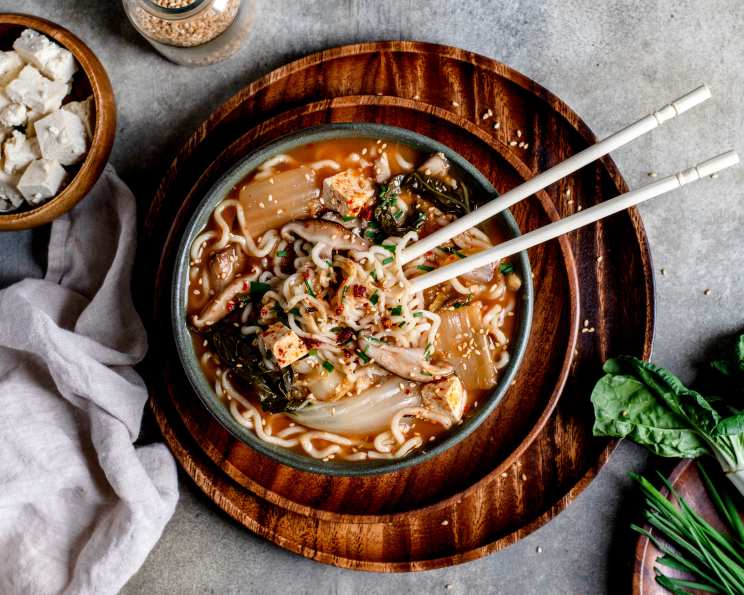
Grandma’s Rainy Day Kimchi Noodle Soup
The scent of simmering kimchi and garlic always takes me back to my grandmother’s cozy kitchen. On blustery days when the rain lashed against the windows, she would conjure up this soul-warming soup. It wasn’t just the savory broth and chewy noodles that made it special; it was the feeling of being wrapped in her love, safe and warm, as the storm raged outside. Every spoonful felt like a hug.
Recipe Overview
- Prep Time: 15 minutes
- Cook Time: 30 minutes
- Total Time: 45 minutes
- Servings: 4
- Dietary Type: Not Vegetarian
Ingredients
- 16 ounces of fresh Chinese egg noodles (Lo mein noodles)
- 3 tablespoons vegetable oil
- 6 garlic cloves, minced
- 8 ounces pork tenderloin, thinly sliced
- 2 teaspoons rice wine vinegar
- 6-8 cups water
- 3 tablespoons soy sauce
- 2 tablespoons dashida, powder (Beef flavored soup stock)
- 2 teaspoons ginger, grated
- 2 cups cabbage kimchi, chopped in big pieces
- 4 ounces shiitake mushrooms, thinly sliced
- 7 ounces firm tofu, cut into 1-inch squares
- 4 baby bok choy, quartered
- 2 scallions, thinly sliced
- 2 teaspoons dark sesame oil
- Salt and pepper (Add a little at a time and taste as you go. The kimchi and soy sauce may be enough)
- Sriracha sauce (Optional but highly recommended)
Equipment Needed
- Large Pot
Instructions
-
In a large pot, add vegetable oil and minced garlic. Sauté over medium heat until the garlic is fragrant and softened, about 2 minutes. Be careful not to burn the garlic, as this will impart a bitter taste to the soup.
-
Add the thinly sliced pork tenderloin to the pot. Cook, stirring occasionally, until the pork is slightly browned on all sides. This usually takes about 5-7 minutes. Season the pork with a pinch of salt and pepper to taste.
-
Deglaze the pot by adding the rice wine vinegar. Stir for about 2 minutes, scraping up any browned bits from the bottom of the pot. This adds depth and complexity to the broth.
-
Pour in 6-8 cups of water, depending on how soupy you prefer your noodles. Add the soy sauce, dashida powder (beef flavored soup stock), and grated ginger. Stir well to combine all the ingredients.
-
Bring the mixture to a simmer over medium heat. Add the chopped kimchi to the pot. The amount of kimchi can be adjusted to your liking, depending on how spicy and tangy you want the soup to be.
-
Reduce the heat to low and let the soup simmer gently for about 15 minutes. This allows the flavors to meld together and the kimchi to infuse the broth.
-
Add the thinly sliced shiitake mushrooms and firm tofu, cut into 1-inch squares. Turn up the heat to medium and cook for another 3 minutes, allowing the mushrooms and tofu to absorb the flavors of the broth.
-
Carefully add the fresh Chinese egg noodles (Lo mein noodles) and quartered baby bok choy to the pot. Add just enough water to cover all of the ingredients; the noodles will absorb some of the liquid as they cook.
-
Stir gently, making sure to scrape the bottom of the pot to prevent the noodles from sticking. Season with additional salt and pepper to taste, remembering that the kimchi and soy sauce already contribute saltiness.
-
Simmer for about 3 minutes, or until the noodles are cooked through but still slightly chewy. The bok choy should be tender but still retain a bit of crunch.
-
To serve, equally divide the soup among four large bowls. Drizzle each bowl with dark sesame oil and top with thinly sliced scallions. For those who enjoy a bit of heat, add a dollop of sriracha sauce to each bowl.
Expert Tips & Tricks
- For a richer broth, use chicken or vegetable broth instead of water.
- If you don’t have dashida powder, you can use a bouillon cube or a teaspoon of Better Than Bouillon.
- Add a splash of fish sauce for extra umami flavor, but be careful not to overdo it!
- If you prefer a vegetarian version, omit the pork and use vegetable broth. You can also add extra tofu or other vegetables like carrots, spinach, or bean sprouts.
- For a spicy kick, add a tablespoon of gochujang (Korean chili paste) to the soup.
Serving & Storage Suggestions
Serve Grandma’s Rainy Day Kimchi Noodle Soup immediately while it’s hot and the noodles are at their best. Garnish generously with scallions and a drizzle of sesame oil for added flavor and visual appeal. The sriracha sauce allows each person to customize the heat level to their liking.
Leftovers can be stored in an airtight container in the refrigerator for up to 2 days. Keep in mind that the noodles will continue to absorb the broth as it sits, so the soup may become thicker over time. When reheating, you may need to add a little extra water or broth to thin it out.
Reheat the soup gently on the stovetop over medium-low heat, stirring occasionally, until heated through. Avoid boiling the soup, as this can cause the noodles to become mushy. You can also reheat individual portions in the microwave, but be sure to use a microwave-safe container and heat in short intervals to prevent splattering.
Freezing this soup is not recommended due to the noodles becoming overly soft and the tofu changing texture.
Nutritional Information
| Nutrient | Amount per Serving | % Daily Value |
|---|---|---|
| Calories | 685.6 kcal | N/A |
| Calories from Fat | 197 g | 29% |
| Total Fat | 21.9 g | 33% |
| Saturated Fat | 4.1 g | 20% |
| Cholesterol | 132.6 mg | 44% |
| Sodium | 854.9 mg | 35% |
| Total Carbohydrate | 88.3 g | 29% |
| Dietary Fiber | 5.8 g | 23% |
| Sugars | 4.1 g | N/A |
| Protein | 35.1 g | 70% |
Variations & Substitutions
- Vegetarian: Omit the pork tenderloin and use vegetable broth instead of water. Increase the amount of tofu or add other vegetarian protein sources like tempeh or seitan.
- Spicy: Add a tablespoon or two of gochujang (Korean chili paste) to the soup for an extra kick of heat. You can also add a pinch of red pepper flakes or a dash of hot sauce.
- Seafood: Substitute the pork tenderloin with shrimp, scallops, or mussels. Add the seafood during the last few minutes of cooking to prevent it from becoming overcooked.
- Chicken: Use thinly sliced chicken breast or thigh meat instead of pork tenderloin.
- Noodle Options: Feel free to experiment with different types of noodles, such as udon, ramen, or soba noodles.
- Vegetable Additions: Add other vegetables like carrots, bean sprouts, spinach, or Napa cabbage for extra nutrients and flavor.
FAQs (Frequently Asked Questions)
Q: Can I make this soup ahead of time?
A: While the soup is best enjoyed fresh, you can prepare the broth ahead of time and store it in the refrigerator for up to 2 days. Add the noodles and bok choy just before serving to prevent them from becoming soggy.
Q: What if I don’t have dashida powder?
A: If you don’t have dashida powder, you can substitute it with a bouillon cube or a teaspoon of Better Than Bouillon. Alternatively, you can use anchovy broth for a more traditional Korean flavor.
Q: Can I use different types of kimchi?
A: Yes, you can use different types of kimchi depending on your preference. Napa cabbage kimchi is the most common, but you can also use radish kimchi (kkakdugi) or cucumber kimchi (oi sobagi).
Q: How can I adjust the spice level?
A: To adjust the spice level, you can add more or less kimchi, sriracha sauce, or gochujang. You can also add a pinch of red pepper flakes for an extra kick.
Q: Can I freeze this soup?
A: Freezing this soup is not recommended, as the noodles and tofu can become mushy and change texture when thawed. It’s best to enjoy the soup fresh or store leftovers in the refrigerator for up to 2 days.
Final Thoughts
Grandma’s Rainy Day Kimchi Noodle Soup is more than just a recipe; it’s a warm hug in a bowl, a comforting reminder of simpler times. The savory broth, the chewy noodles, and the tangy kimchi come together to create a symphony of flavors that will tantalize your taste buds and warm your soul. So, gather your ingredients, put on some cozy music, and transport yourself to a place of pure comfort and joy. I hope this recipe brings you as much happiness as it has brought me and my family over the years. I encourage you to try this recipe and make it your own! Add your favorite vegetables, adjust the spice level to your liking, and share it with the people you love. And don’t forget to let me know how it turns out!