
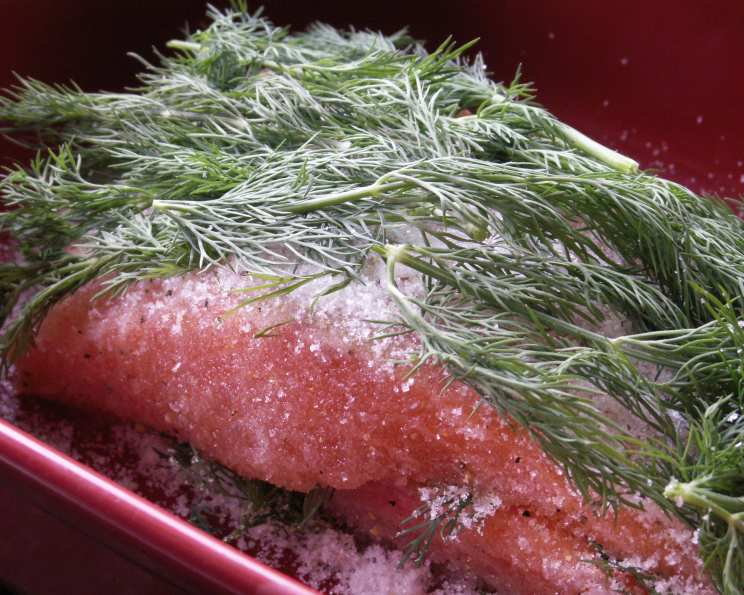
Gravlax: A Taste of Nordic Tradition
The first time I tasted gravlax, I was standing on a windswept dock in Stockholm, the crisp Baltic air stinging my cheeks. A local fisherman, weathered and smiling, offered me a sliver of the ruby-red cured salmon on a piece of dark rye bread. The taste – a delicate balance of sweetness, salt, and fresh dill – was an epiphany. It was more than just food; it was a story of the sea, of generations preserving and celebrating the bounty of their land. That single bite sparked a lifelong love affair with gravlax, a dish that continues to transport me back to that chilly, beautiful morning.
Recipe Overview
- Prep Time: 30 minutes
- Cook Time: 48-72 hours (curing time)
- Total Time: 48-72 hours
- Servings: 6
- Yield: Approximately 1.5 pounds gravlax
- Dietary Type: Gluten-Free, Dairy-Free
Ingredients
- 2 lbs center cut salmon fillets (approximately 1 pound each, with skin left on)
- ⅔ cup sugar
- ⅓ cup coarse salt
- 15 coarsely crushed white peppercorns
- 1 bunch dill
- Mustard Dill Sauce (for serving)
Equipment Needed
- Tweezers or needle-nosed pliers
- Mixing bowl
- Baking dish (large enough to hold both salmon fillets)
- Plastic wrap
- Cutting board
- Heavy weights (cans, bricks, etc.)
Instructions
-
Begin by inspecting the salmon fillets. Use tweezers or needle-nosed pliers to carefully remove any small bones that may be present. This step ensures a smoother texture and a more enjoyable eating experience.
-
In a mixing bowl, combine the sugar, salt, and coarsely crushed white peppercorns. Mix thoroughly until the ingredients are evenly distributed. This mixture forms the curing base, drawing out moisture and infusing the salmon with flavor.
-
Prepare the baking dish. Cover the bottom of the dish with about ⅓ of the dill. This bed of dill will impart its aromatic essence to the salmon during the curing process.
-
Take one of the salmon fillets and rub half of the sugar-salt mixture into both sides, ensuring an even coating. Pay particular attention to the thicker parts of the fillet.
-
Place the coated salmon fillet skin side down on top of the dill in the baking dish.
-
Cover the first fillet with another ⅓ of the dill. This second layer of dill further enhances the flavor profile and creates a barrier between the fillets.
-
Prepare the second salmon fillet in the same manner as the first, rubbing it with the remaining half of the sugar-salt mixture on both sides.
-
Place the second salmon fillet on top of the dill-covered first fillet, with the skin side facing up.
-
Top the second salmon fillet with the remaining ⅓ of the dill.
-
Cover the entire baking dish tightly with plastic wrap, ensuring a good seal. This will help to maintain consistent pressure and prevent unwanted flavors from entering the curing process.
-
Place a cutting board on top of the plastic-wrapped salmon, and then weigh it down with heavy objects such as cans, bricks, or cookbooks. The weight is crucial for pressing the fillets together, drawing out moisture, and creating the desired firm texture.
-
Transfer the baking dish to the refrigerator and marinate for 24 hours.
-
After the initial 24-hour period, remove the dish from the refrigerator and discard any accumulated juices that have been drawn out of the salmon. This is an important step in ensuring the proper curing process.
-
Rewrap the salmon tightly in plastic wrap and return it to the refrigerator for another 24-48 hours. The longer it cures, the firmer and more flavorful the gravlax will become. Taste-test a small piece after 48 hours to determine if it has reached your desired level of cure.
-
Once the curing process is complete, remove the salmon from the refrigerator. Scrape off the marinade mixture of sugar, salt, pepper, and dill from the fillets.
-
Slice the gravlax paper-thin on a slight bias, using a sharp knife. This allows for the best presentation and texture.
-
Serve the sliced gravlax with Mustard Dill Sauce.
Expert Tips & Tricks
- Choosing the Right Salmon: Opt for center-cut salmon fillets, as they have a more uniform thickness and are less likely to have bones. Look for salmon that is firm, bright in color, and smells fresh.
- Adjusting the Cure Time: The curing time can be adjusted to suit your taste. For a milder cure, 48 hours is sufficient. For a stronger, saltier flavor, cure for up to 72 hours.
- Freezing for Easier Slicing: For exceptionally thin slices, consider freezing the gravlax for about 30 minutes before slicing. This will firm it up and make it easier to handle.
- Infusing Additional Flavors: Experiment with adding other aromatics to the curing mixture, such as citrus zest, juniper berries, or aquavit.
- Don’t Skip the Weight: Applying adequate weight during the curing process is essential for achieving the desired texture. Be sure to use enough weight to press the fillets firmly together.
- Use Fresh Dill: Fresh dill is essential for the best flavor. Dried dill will not impart the same vibrant taste.
Serving & Storage Suggestions
Gravlax is best served chilled or at room temperature. Arrange the thin slices artfully on a platter and garnish with fresh dill sprigs. It pairs perfectly with dark rye bread, crispbread, or crackers. Serve with a generous dollop of Mustard Dill Sauce.
Store leftover gravlax tightly wrapped in plastic wrap in the refrigerator for up to 3-4 days. It can also be frozen for longer storage, but the texture may be slightly affected upon thawing. To freeze, wrap the sliced gravlax tightly in plastic wrap and then in aluminum foil. Thaw in the refrigerator overnight. Avoid leaving gravlax at room temperature for more than 2 hours to prevent bacterial growth.
Nutritional Information
| Nutrient | Amount per Serving | % Daily Value |
|---|---|---|
| Calories | 262 kcal | N/A |
| Calories from Fat | 47 g | 18% |
| Total Fat | 5.2 g | 8% |
| Saturated Fat | 0.8 g | 4% |
| Cholesterol | 78.8 mg | 26% |
| Sodium | 6382.9 mg | 265% |
| Total Carbohydrate | 22.2 g | 7% |
| Dietary Fiber | 0 g | 0% |
| Sugars | 22.2 g | 88% |
| Protein | 30.2 g | 60% |
Note: Nutritional information is an estimate and may vary based on specific ingredients and preparation methods.
Variations & Substitutions
- Beet-Cured Gravlax: Add grated beets to the curing mixture for a beautiful color and subtly earthy flavor.
- Aquavit Gravlax: Infuse the curing mixture with a few tablespoons of aquavit for a traditional Nordic twist.
- Spice Variations: Experiment with different spices, such as coriander seeds, fennel seeds, or star anise, to create unique flavor profiles.
- Smoked Salt: Substitute regular coarse salt with smoked salt for a smoky flavor.
- Herbs: Try other herbs in addition to or instead of dill, such as chives, parsley, or tarragon.
FAQs (Frequently Asked Questions)
Q: Can I use frozen salmon for gravlax?
A: Yes, you can use frozen salmon, but it’s crucial to thaw it completely in the refrigerator before using it. Ensure that all excess water is removed before curing.
Q: How long will gravlax last in the refrigerator?
A: Properly stored gravlax will last for about 3-4 days in the refrigerator. Wrap it tightly in plastic wrap to prevent it from drying out.
Q: Can I freeze gravlax?
A: Yes, you can freeze gravlax, but the texture may change slightly upon thawing. Wrap it tightly in plastic wrap and then in aluminum foil for the best results.
Q: What is the best way to slice gravlax?
A: Use a very sharp knife and slice the gravlax thinly on a slight bias. This will create beautiful and flavorful slices.
Q: Can I reduce the amount of salt in the recipe?
A: While you can reduce the amount of salt slightly, it’s important to remember that salt is essential for the curing process and preserving the salmon. Reducing it too much may affect the texture and safety of the gravlax.
Final Thoughts
Gravlax is more than just a recipe; it’s an experience, a journey into the heart of Nordic cuisine. From the careful selection of the freshest salmon to the patient curing process, each step is an act of culinary artistry. I encourage you to try your hand at making gravlax and to share your creation with friends and family. Serve it with a crisp glass of aquavit or a light beer, and savor the unique flavors of this timeless delicacy. Don’t be afraid to experiment with different variations and personalize the recipe to your own taste. Most importantly, enjoy the process and the delicious results!