
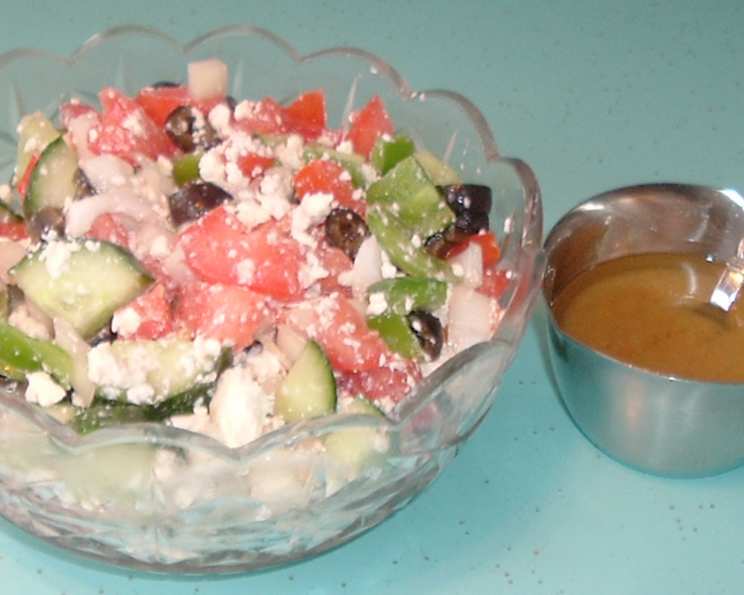
Great Greek Salad: A Culinary Journey to the Mediterranean
The scent of ripe tomatoes mingling with salty feta cheese always transports me back to a tiny taverna on the island of Crete. Sunlight streamed through the vine-covered terrace as I savored my first authentic Greek salad. The simplicity of the ingredients, each bursting with flavor, was a revelation. It was more than just a salad; it was a taste of pure joy, a celebration of fresh, vibrant ingredients that I’ve been chasing ever since.
Recipe Overview
- Prep Time: 20 minutes
- Cook Time: 0 minutes
- Total Time: 20 minutes (+6 hours chilling)
- Servings: Variable, depending on bowl size
- Yield: 1 large bowl of salad
- Dietary Type: Vegetarian, Gluten-Free (can be adapted to vegan – see variations)
Ingredients
For Salad
- 1 long English cucumber
- 1 large tomatoes
- 1 red onion
- 1 large green pepper
- Kalamata olives, reserve brine for dressing
- Feta cheese, reserve brine for dressing
For Dressing
- Oil (I use corn or olive oil)
- Red wine vinegar (not the cheap stuff)
- Oregano
- Reserved Kalamata olive brine
- Reserved Feta cheese brine
Equipment Needed
- Large mixing bowl
- Small mixing bowl or jar
- Knife
- Cutting board
- Measuring spoons (optional, for dressing)
Instructions
- Begin by preparing the vegetables. Wash the cucumber, tomatoes, and green pepper thoroughly.
- Chop the cucumber into bite-sized pieces. I prefer to cut them into half-moons or chunks, but you can also dice them.
- Chop the tomatoes into wedges or chunks, similar in size to the cucumber.
- Peel and slice the red onion thinly. You can use a mandoline for even slices, or simply slice it by hand. If you find red onion too strong, you can soak the sliced onion in cold water for 10-15 minutes to mellow its flavor.
- Remove the seeds from the green pepper and chop it into bite-sized pieces.
- In a large bowl, combine the chopped cucumber, tomatoes, red onion, and green pepper.
- Add the kalamata olives and feta cheese to the bowl. Be sure to reserve some of the brine from both the olives and the feta, as you will use it in the dressing.
- Now, prepare the dressing. In a small mixing bowl or a jar with a lid, combine the oil, red wine vinegar, oregano, reserved olive brine, and reserved feta brine. The exact amounts of each ingredient are to your taste – start with a 2:1 ratio of oil to vinegar, and then add the brines and oregano to balance the flavors.
- Taste the dressing and adjust the seasonings as needed. The olive brine and cheese brine are used to balance out the acidity of the vinegar and add a salty, savory note to the dressing. Feel free to experiment with the ratios to find your perfect blend. This is the most crucial step, so don’t skip it!
- Whisk or shake the dressing ingredients together until they are well combined.
- Pour the dressing over the vegetables, olives, and cheese in the large bowl.
- Toss gently to coat all the ingredients evenly with the dressing. Make sure everything is nicely coated, but don’t overmix or the tomatoes will get mushy.
- Cover the bowl and chill in the refrigerator for at least 6 hours. This allows the flavors to meld together and the vegetables to marinate in the dressing. The longer it chills, the better it tastes!
- Before serving, toss the salad again to redistribute the dressing.
Expert Tips & Tricks
- Quality Ingredients: The key to a great Greek salad is using the freshest, highest-quality ingredients. Look for ripe, in-season tomatoes, crisp cucumbers, and flavorful feta cheese.
- Feta Cheese: Authentic Greek feta is made from sheep’s milk and has a tangy, salty flavor. Avoid pre-crumbled feta, which tends to be dry. Opt for a block of feta packed in brine for the best flavor and texture.
- Red Onion Mellowing: As mentioned earlier, if the taste of raw red onion is too strong for you, soak it in cold water for 10-15 minutes before adding it to the salad. This will help to mellow its flavor.
- Dressing Adjustment: The dressing is where you can really customize this salad to your liking. Experiment with different ratios of oil to vinegar, and adjust the amount of olive brine and feta brine to balance the flavors. Some people also like to add a pinch of sugar or a clove of minced garlic to the dressing.
- Marinating Time: Don’t skip the chilling time! This is essential for allowing the flavors to meld together and the vegetables to marinate in the dressing. The longer it chills, the better it tastes.
- Don’t Overdress: Be careful not to overdress the salad, as this can make it soggy. Start with a small amount of dressing and add more as needed.
Serving & Storage Suggestions
Serve your Greek salad chilled as a refreshing side dish or a light lunch. It pairs perfectly with grilled meats, fish, or pita bread. You can also add it to a wrap or sandwich for a burst of fresh flavor.
Leftover Greek salad can be stored in an airtight container in the refrigerator for up to 2-3 days. However, the vegetables will continue to release moisture, so the salad may become a bit soggy over time. It’s best to eat it within a day or two for the best flavor and texture. This salad does not freeze well.
Nutritional Information
| Nutrient | Amount per Serving | % Daily Value |
|---|---|---|
| Calories | 154.7 kcal | N/A |
| Calories from Fat | 9 g | 6% |
| Total Fat | 1.1 g | 1% |
| Saturated Fat | 0.3 g | 1% |
| Cholesterol | 0 mg | 0% |
| Sodium | 24.4 mg | 1% |
| Total Carbohydrate | 35.9 g | 11% |
| Dietary Fiber | 8.3 g | 33% |
| Sugars | 18.4 g | N/A |
| Protein | 6.2 g | 12% |
Note: Nutritional information is an estimate and may vary based on specific ingredients and serving sizes.
Variations & Substitutions
- Vegan Greek Salad: To make this salad vegan, simply omit the feta cheese and use a vegan feta alternative, or nutritional yeast for a cheesy flavor.
- Add Protein: Add grilled chicken, shrimp, or chickpeas to the salad for a more substantial meal.
- Different Vegetables: Feel free to add other vegetables to the salad, such as bell peppers (red or yellow), cucumbers, or capers.
- Herbs: In addition to oregano, you can also add other fresh herbs to the salad, such as mint, parsley, or dill.
- Vinegar: Experiment with different types of vinegar, such as white wine vinegar or balsamic vinegar.
- Oil: Use extra virgin olive oil for a richer flavor.
- Make it Spicy: Add a pinch of red pepper flakes to the dressing for a little heat.
FAQs (Frequently Asked Questions)
Q: Can I make this salad ahead of time?
A: Yes, this salad actually tastes better when made ahead of time, as it allows the flavors to meld together. Just be sure to store it in the refrigerator for at least 6 hours before serving.
Q: Can I use dried oregano instead of fresh?
A: Yes, you can use dried oregano if you don’t have fresh oregano on hand. Use about 1 teaspoon of dried oregano for every tablespoon of fresh oregano.
Q: What kind of feta cheese should I use?
A: Authentic Greek feta is made from sheep’s milk and has a tangy, salty flavor. Look for a block of feta packed in brine for the best flavor and texture. Avoid pre-crumbled feta, which tends to be dry.
Q: Can I add lettuce to this salad?
A: Traditionally, Greek salad does not contain lettuce. However, if you prefer to add lettuce, you can do so. Just be aware that it may make the salad a bit more watery.
Q: How long does this salad last in the refrigerator?
A: Leftover Greek salad can be stored in an airtight container in the refrigerator for up to 2-3 days. However, the vegetables will continue to release moisture, so the salad may become a bit soggy over time. It’s best to eat it within a day or two for the best flavor and texture.
Final Thoughts
I hope this recipe inspires you to create your own delicious Greek salad at home. Don’t be afraid to experiment with the ingredients and adjust the seasonings to your liking. This is a simple, versatile dish that is perfect for any occasion. Gather your freshest ingredients, follow these steps, and let the vibrant flavors transport you to the sunny shores of Greece. Kali Orexi! (Good appetite!) I encourage you to try this recipe and share your creations and feedback. Pair it with grilled lamb or chicken and a crisp glass of Greek wine for a truly authentic Mediterranean experience.