
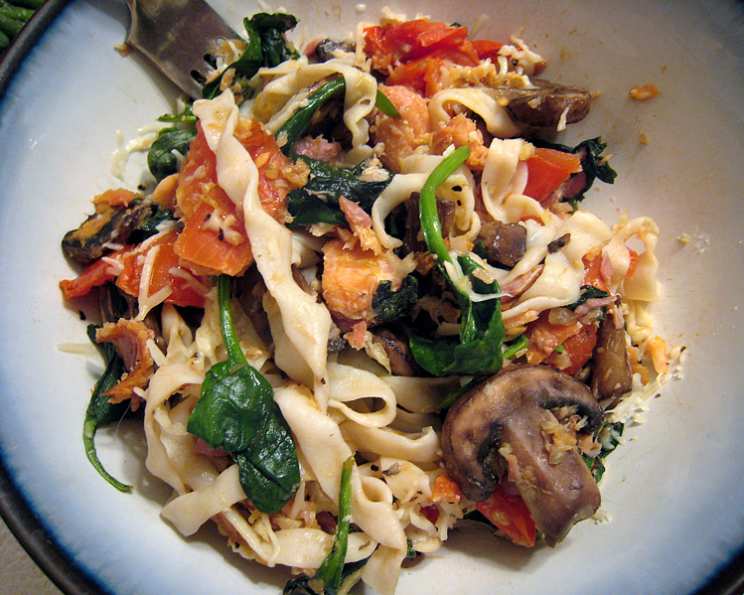
Great Northwest Smoked Salmon Pasta
The ferry horn echoed across Puget Sound, a mournful bellow that always seemed to amplify my hunger. It was on just such a trip, returning from a windswept day of beachcombing on Whidbey Island, that I first encountered this incredible pasta. The tiny bistro overlooking Penn Cove was filled with the aroma of the sea, smoke, and garlic. Each bite was a revelation: the delicate smokiness of the salmon, the bright acidity of the tomatoes, and the comforting embrace of perfectly cooked pasta – a culinary poem celebrating the bounty of the Pacific Northwest. I knew I had to recreate it when I got home.
Recipe Overview
- Prep Time: 10 minutes
- Cook Time: 10 minutes
- Total Time: 20 minutes
- Servings: 4
- Dietary Type: Pescatarian
Ingredients
- 8 ounces dried linguine
- 8 ounces smoked salmon (alder smoked salmon is recommended; do NOT use lox-style smoked salmon)
- 2 tablespoons olive oil
- 2 large shallots, minced
- 1 clove garlic, crushed
- 8 ounces mushrooms, sliced
- 2 large roma tomatoes, diced
- 1 (6 ounce) package organic baby spinach leaves, divided
- 2 cups chicken broth (or more, as needed)
- Fresh ground pepper, to taste
Equipment Needed
- Large skillet
- Large pot
Instructions
- Begin by bringing a large pot of salted water to a boil. Add the linguine and cook according to package directions, but reduce the cooking time by a minute or two, as it will continue to cook in the sauce.
- While the pasta is cooking, prepare the sauce. In a large skillet, heat the olive oil over medium heat. Add the minced shallots and crushed garlic and sauté until softened and fragrant, about 2-3 minutes. Be careful not to burn the garlic; lower the heat if necessary.
- Add the sliced mushrooms and diced roma tomatoes to the skillet. Sauté for another 2 minutes, stirring occasionally, until the mushrooms begin to soften.
- Pour in the chicken broth and add 3/4 of the baby spinach leaves to the skillet. Gently simmer over low heat while the pasta finishes cooking. The spinach will wilt as it cooks down.
- Once the pasta is cooked al dente, drain it well, reserving about a cup of the pasta water. Gently stir the drained pasta into the skillet with the sauce.
- Simmer gently until the pasta absorbs some of the sauce and is cooked to your preferred tenderness. If the sauce becomes too thick, add a little of the reserved pasta water to loosen it.
- Crumble the smoked salmon into chunks and gently stir it into the pasta. Be careful not to overcook the salmon, as it will become dry.
- If needed, add more chicken broth to reach your desired sauce consistency. Heat the pasta through, ensuring the salmon is warmed through as well, but not overcooked.
- Serve the pasta on a bed of the reserved fresh spinach leaves. Sprinkle with freshly ground pepper to taste.
Expert Tips & Tricks
- Quality Salmon is Key: The flavor of this dish hinges on the quality of your smoked salmon. Opt for alder-smoked salmon if you can find it; its subtle sweetness complements the other ingredients beautifully. Avoid lox-style salmon, as its texture and flavor are not suitable for this recipe.
- Don’t Overcook the Pasta: Cooking the pasta slightly under al dente ensures it will be perfectly cooked after simmering in the sauce.
- Mind the Salt: Smoked salmon is already salty, so be mindful of adding extra salt to the dish. Taste the sauce before adding any additional salt.
- Brighten with Lemon: A squeeze of fresh lemon juice just before serving can brighten the flavors and add a touch of acidity.
- Pasta Water is Your Friend: Reserve pasta water before draining the pasta. The starchy water will help to emulsify the sauce, creating a creamier, more cohesive dish.
- Wilted Spinach Tip: If you prefer your spinach more wilted, add it to the sauce earlier in the cooking process.
Serving & Storage Suggestions
Serve the Great Northwest Smoked Salmon Pasta immediately after preparation for the best flavor and texture. Garnish with a sprinkle of fresh parsley or dill for a pop of color. This dish pairs well with a crisp white wine, such as a Pinot Grigio or Sauvignon Blanc.
Leftovers can be stored in an airtight container in the refrigerator for up to 2 days. Reheat gently in a skillet over low heat, adding a splash of chicken broth or water if needed to prevent the pasta from drying out. While freezing is not recommended due to the texture of the salmon and pasta, refrigeration works perfectly.
Nutritional Information
| Nutrient | Amount per Serving | % Daily Value |
|---|---|---|
| Calories | 398 kcal | N/A |
| Calories from Fat | 102g | 26% |
| Total Fat | 11.3 g | 17% |
| Saturated Fat | 1.9 g | 9% |
| Cholesterol | 13.8 mg | 4% |
| Sodium | 895.5 mg | 37% |
| Total Carbohydrate | 49.8 g | 16% |
| Dietary Fiber | 3.8 g | 15% |
| Sugars | 3.5 g | N/A |
| Protein | 24.4 g | 48% |
Variations & Substitutions
- Gluten-Free: Use gluten-free linguine for a gluten-free version of this dish.
- Creamy Sauce: Add a splash of heavy cream or crème fraîche to the sauce for a richer, creamier texture.
- Spicy Kick: Add a pinch of red pepper flakes to the sauce for a touch of heat.
- Vegetarian Option: Substitute the smoked salmon with grilled halloumi cheese for a vegetarian alternative.
- Seasonal Vegetables: Incorporate other seasonal vegetables, such as asparagus, peas, or zucchini, into the sauce.
FAQs (Frequently Asked Questions)
Q: Can I use a different type of pasta?
A: While linguine is the recommended pasta for this dish, you can substitute it with other long pasta shapes like spaghetti or fettuccine.
Q: Can I use fresh salmon instead of smoked salmon?
A: While you can use fresh salmon, the dish will lack the characteristic smoky flavor. If using fresh salmon, consider grilling or pan-searing it separately and adding it to the pasta at the end.
Q: Can I make this dish ahead of time?
A: It’s best to make this dish fresh, as the pasta can become mushy and the salmon can dry out if reheated. However, you can prep the vegetables ahead of time to save time during cooking.
Q: What’s the best way to reheat leftovers?
A: Reheat gently in a skillet over low heat, adding a splash of chicken broth or water to prevent the pasta from drying out. Avoid microwaving, as it can make the salmon tough.
Q: Can I use vegetable broth instead of chicken broth?
A: Yes, you can substitute vegetable broth for chicken broth. The flavor will be slightly different, but it will still be delicious.
Final Thoughts
This Great Northwest Smoked Salmon Pasta is more than just a recipe; it’s a culinary journey to the heart of the Pacific Northwest. The combination of smoky salmon, fresh vegetables, and perfectly cooked pasta is a symphony of flavors that will transport you to the shores of Whidbey Island with every bite. I encourage you to try this recipe and share your feedback. Pair it with a crisp white wine and a side of crusty bread for a truly unforgettable meal. Enjoy!